Case Study
How a European RTE Manufacturer Achieved Potato Precision
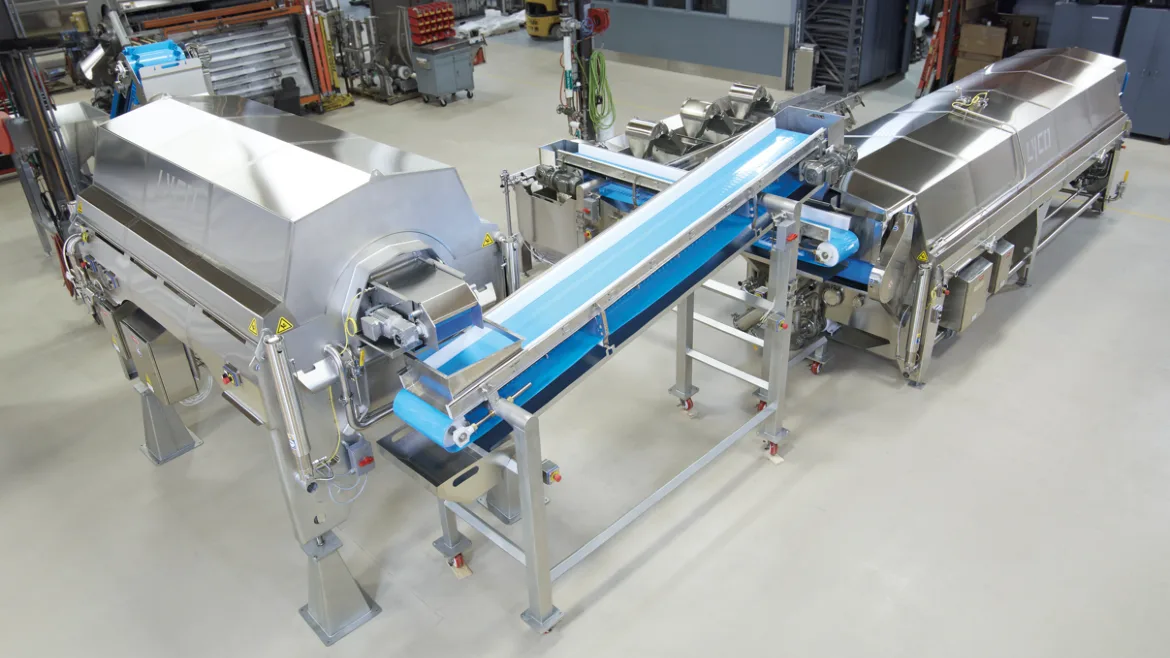
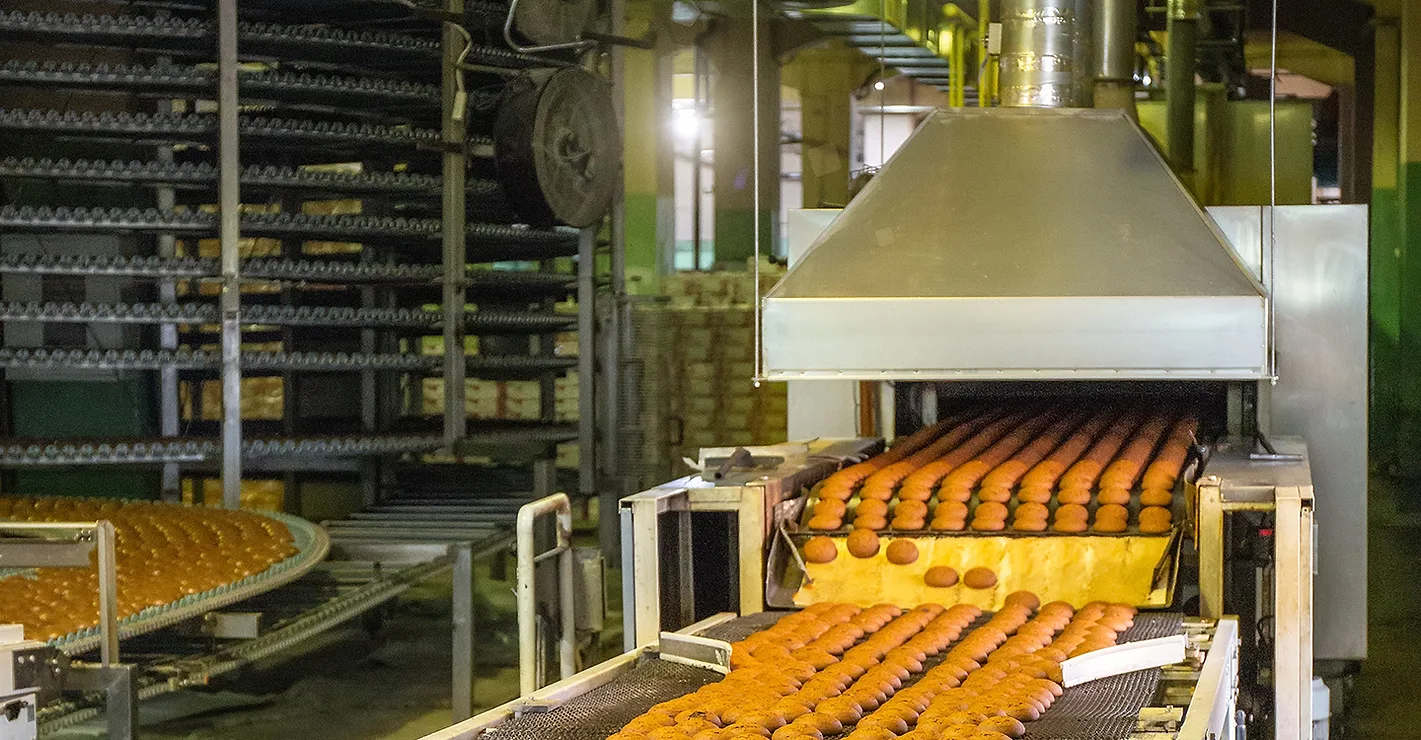
Lyco’s system for a European ready-to-eat meal manufacturer combines two capabilities into an all-in-one preparation solution. Image courtesy of Lyco Manufacturing.
When a European manufacturer of ready-to-eat meals set out to find a solution that could increase production of its staple product — mashed potatoes — while preserving the cook integrity and offering flexibility to prepare other food products, it ran into a bit of a problem. Such a system did not exist.
After a search across Europe, the company set its sights overseas and found Columbus, Wisconsin-based Lyco Manufacturing. After meeting with the food producer, Lyco developed a first-of-its-kind solution that met all the company’s needs with room for future growth.
Hot Potatoes
One of the challenges of increasing output for starches like potatoes is maintaining a quality cook throughout the entire product. When potatoes are boiled, especially in high volumes, the outside cooks quicker than the inside. In many lines, this results in either the outside being overcooked or inside being undercooked, and the producer must decide whether to waste some of the yield or deliver a subpar product.
Before the European food manufacturer came to Lyco, it had a long history of producing quality mashed potatoes. Its existing customers would notice if the standard decreased as it looked to increase output. The manufacturer also prioritized consistent output and was strongly against any decline in yields. With the amount of potato it produced, throwing out even a small amount per unit would add up to a significant loss in revenue.
To solve both problems, Lyco combined two of its products into one solution, complete with conveyor belts and feeding systems engineered in-house to ensure success from the raw product entering the line to the perfectly cooked result at the end. Using the Clean-Flow blancher, potatoes are boiled to a certain temperature, quickly starting the cooking process on large quantities of product. Then, the products are fed via an incline directly into the Temper-Flow cooker.
While in the Temper-Flow, the heat already captured in the potato from blanching continues to work its way to the center, which allows the potato to cook on the inside without overcooking the outside. Temperature can be regulated by line operators to speed up or slow down this process, producing potatoes cooked perfectly all the way through. After the desired temperature and texture is accomplished, the products are then delivered for further processing. This process separates the level that a food product is cooked and its texture into two independently controlled machines, and it did not come at the expense of usability.
Hashing out the Details
The manufacturer required the line to be diverse, equipped for a variety of foods. While mashed potatoes are the primary product run on this line, they are far from the only ready-to-eat item the company produces. In addition to cooking potatoes, the line needed to cook and chill rice and pasta, producing results at the same high level of quality.
Like potatoes, mass production of rice can present unique challenges. The easiest way to ensure rice is fully cooked is to boil it to completion. However, that method causes the grain to become fully saturated with water, leaving no space for any sauce to be absorbed. Solving this problem was the inspiration for engineering the Temper-Flow system. By finishing the cook outside of direct contact with boiling water, operators have control over the texture and moisture level of the final product. This patented technology was then applied to a variety of other products, including potatoes.
The two-process production line engineered by Lyco enhanced efficiency for these additional products as well. Both lines start in the Clean-Flow blancher then move to either the Temper-Flow for the mashed potato line or the 4-stage Easy-Flow line for quickly cooling rice and pasta, where the product is chilled to 40° F in 28 seconds.
While developing the processing solution, Lyco understood that quick, intuitive changeovers between recipes are important to maintaining high throughput. Both lines offer memory to save temperatures and cook times. This “cookbook” can host hundreds of recipes that allow operators to quickly move between products. The controls are password protected, ensuring no one accidentally tweaks with the settings, and the machine logs all the recipes it runs for future reference. Not only does this help with accountability and quality control, but it also allows operators to easily experiment and find the best solution.
Eyes on the Future
By incorporating both the Clean-Flow and Temper-Flow into its line, the European food manufacturer is now able to produce 3,000 pounds of perfectly cooked potatoes every hour. This capacity supports the customer’s current expected output while also giving the company room to grow. Though long-term results on yield are not yet known — the machines were installed in spring 2025 — conservative estimates predict at least a 10% improvement in pasta and rice production and at least a 20% increase in mashed potatoes.
Looking for a reprint of this article?
From high-res PDFs to custom plaques, order your copy today!