How Coriolis Meter Advancements Can Support Food Manufacturing
Reduced sensor size, multiple transmitter offerings and advanced software further expand Coriolis flow meter capability.
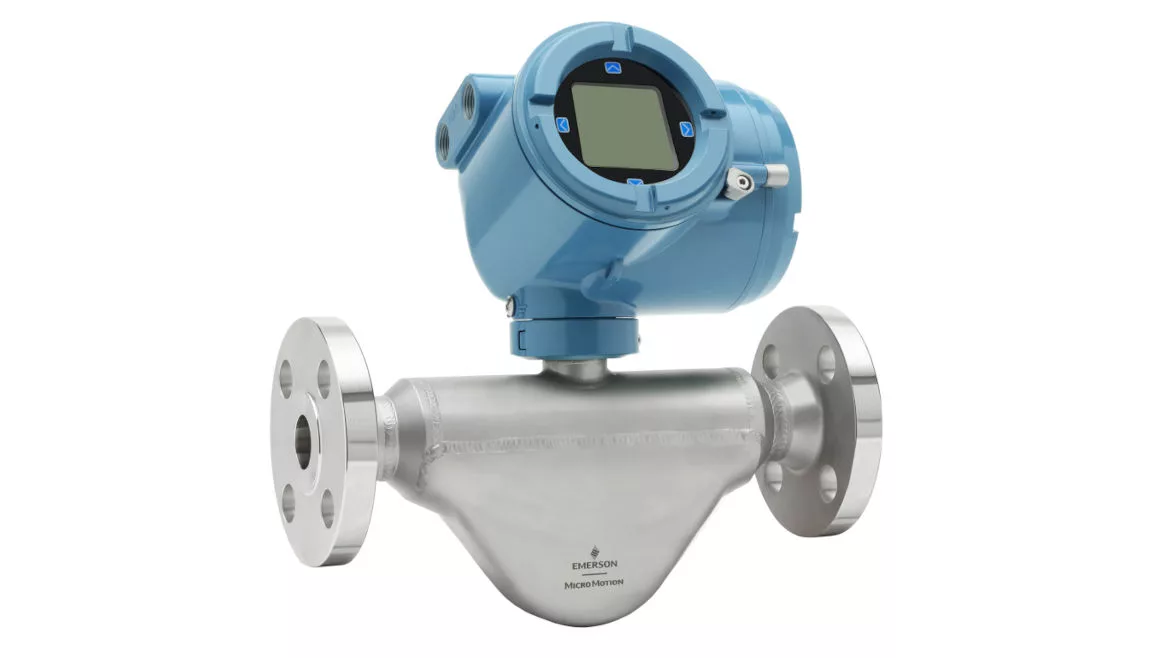
The newest Coriolis flow meters, including Emerson’s Micro Motion G-Series Flow and Density Meter shown with Micro Motion 4700 Coriolis Configurable Inputs and Outputs Transmitter installed,offer the same level of accuracy in a much smaller and compact footprint.
Coriolis flow meters are the de facto standard when accurate mass flow measurement is required. The ability to directly measure mass flow of either liquids or gases, while offering a wide turndown range, makes them the obvious choice for raw material addition or final product metering.
These meters also provide accurate density and temperature measurement, and this data can be used to calculate inferred values — such as entrained air, process media concentration and a host of other difficult measurements.
New Coriolis transmitter and sensor designs have become available that enhance the capability of these meters. This article reviews those features and offers details on the latest improvements and available upgrades.
Benefits of Coriolis
Coriolis meters are one of the few technologies that can directly measure the density and mass flow of liquids. Most other flow meters measure velocity to obtain a volumetric flow and then convert that reading to a calculated mass flow based on an assumed density. Since density often varies in food processing, a volumetric-based mass flow reading can have significant errors.
However, Coriolis meters measure true mass with accuracy, even as process conditions change. These meters also provide simultaneous measurements of both density and temperature. These measurements can often be combined to create a variety of inferred measurements useful to food processing, such as air entrainment, level of solvent in oil and the strengths of acids or bases.
While Coriolis flow meters are the standard for flow measurement, performance may come at the cost of a larger face-to-face dimension and other constraints, but new designs address these and other issues.

Coriolis Sensor Improvements
New Coriolis sensors are lighter and take up less space than legacy sensor designs, while maintaining the same level of accuracy. A typical dual tube 1-inch Coriolis sensor may have a face-to-face length of 20 inches, with the body extending down more than 9 inches from the pipe centerline. The 1-inch model sensor of the type shown below is less than 12 inches long, with the body extending less than 4 inches off pipe centerline, reducing the overall installation space by a factor of nearly four.
These smaller sensors also weigh less, making them an ideal option for skid-mounted applications or other challenging installations where space is at a premium. The flow meter shown above is now offered in a hygienic, sanitary model and is tabletop drainable.
Coriolis Transmitter Improvements
In addition to the much smaller sensors now available, there are a range of new Coriolis transmitters that offer expanded input/output (I/O) offerings, as well as new software features that can be licensed individually.
The latest Coriolis transmitters (below) offer a range of functionality, housing options and electrical classification ratings to meet the requirements of different applications. For instance, some applications may require limited, fixed I/O offerings and a Class 1 Div 2 / Zone 2 rating, which can be satisfied with a less costly transmitter. Other applications may require a Class 1 Div 1 / Zone 1 rating, or have more complicated I/O requirements, requiring a higher-tier model. Users can choose the appropriate transmitter and features to meet their requirements, with only the required features, for example a stainless steel housing instead of an aluminum housing.
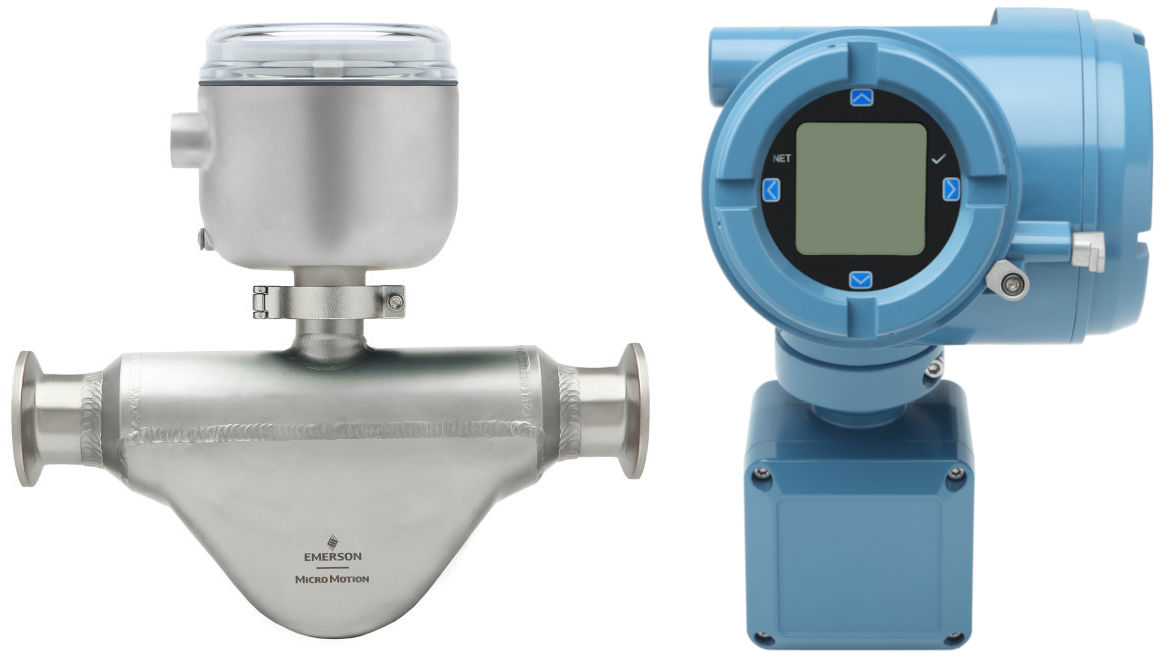
The I/O offerings vary with the style of transmitter. Some transmitters offer configurable I/O channels, which can be licensed to provide HART-enabled 4-20mA, frequency output, discrete inputs or outputs, Modbus or HART RS-485. Many of these transmitter offerings allow scalable channel usage, so users only pay for what they need.
Depending on the model, transmitters can be configured without opening the cover using WirelessHART, secure Bluetooth connectivity or the capacitance touch buttons on the backlit graphical display. A USB port is also included for fast and easy configuration and/or backup.
The electrical energy input can be AC, DC, 2-wire DC or power over ethernet. The transmitter housings can be remote or integrally mounted, with all stainless hygienic or standard painted aluminum housings, and they provide explosionproof or intrinsically safe ratings.
Coriolis Software Improvements
Technological advances can also be found within the software hosted on the transmitters. The newest models of transmitters offer a range of licensable options, empowering the user to choose only the required capabilities. A partial list of the software advancements includes:
- Smart Meter Verification can fully check the functionality of the meter, either on a schedule or on demand.
- Concentration measurement software can calculate °Brix, °Plato, °Balling, °Baume, %HFCS, %HNO3, %NaOH, and other concentration measurements.
- Advanced Phase Measurement can measure entrained air, gas void fraction and provide gas/oil/water mixture measurements.
- Fuel efficiency software provides the information needed by energy measurement software applications.
- Data historian with a real-time embedded clock can store data for extended periods of time.
Any or all these features can be purchased with the transmitter or added later as the need arises.
Coriolis Upgrades
Many facilities already own Coriolis flow meters that continue to work reliably and accurately after decades of service. However, the transmitters are legacy styles that lack the advanced software and hardware features offered in today’s models. Historically, the only option for utilizing this advanced software likely required a complete replacement of the sensor and transmitter. Fortunately, that is no longer the case. (Figure 3).
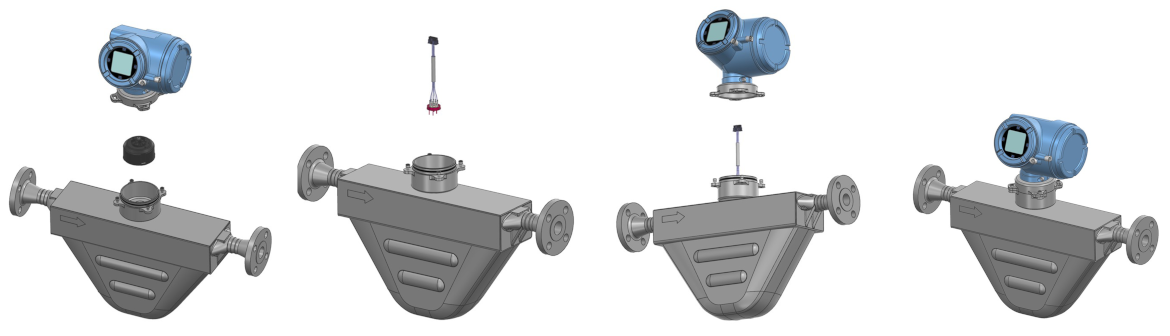
The latest generation transmitter models can be installed on both 4-wire and l 9-wire legacy sensors, allowing the user to simply replace the transmitter and then gain immediate access to an advanced suite of diagnostics, measurement options and I/O offerings.
Coriolis mass flow meters have long been considered one of the most accurate and reliable flow measurement technologies, and they are commonly used in critical raw material charging, custody transfer and density measurement applications where the accuracy justifies the cost.
The latest generation of Coriolis sensors and transmitters are smaller, lighter and offer a range of I/O offerings and advanced software capabilities. In addition, these devices are now offered with tiered pricing, allowing users to choose and pay for only the features they need. This can reduce the meter cost, allowing Coriolis technology to be applied to a range of measurement challenges.
New fully featured transmitters are also backwards compatible, enabling facilities to keep their existing sensors in place and simply upgrade the transmitter to provide full access to a broad range of diagnostics and advanced measurement capabilities.
When faced with a new or existing flow measurement challenge, users should consult with their Coriolis flowmeter salesperson to fully understand the assortment of sensor and transmitter options that are now available. The latest technological advances make Coriolis even more capable, and more affordable, than ever before.
Looking for a reprint of this article?
From high-res PDFs to custom plaques, order your copy today!