Automation/Robotics
Automating Reverse Packaging: A True Food Processing Challenge
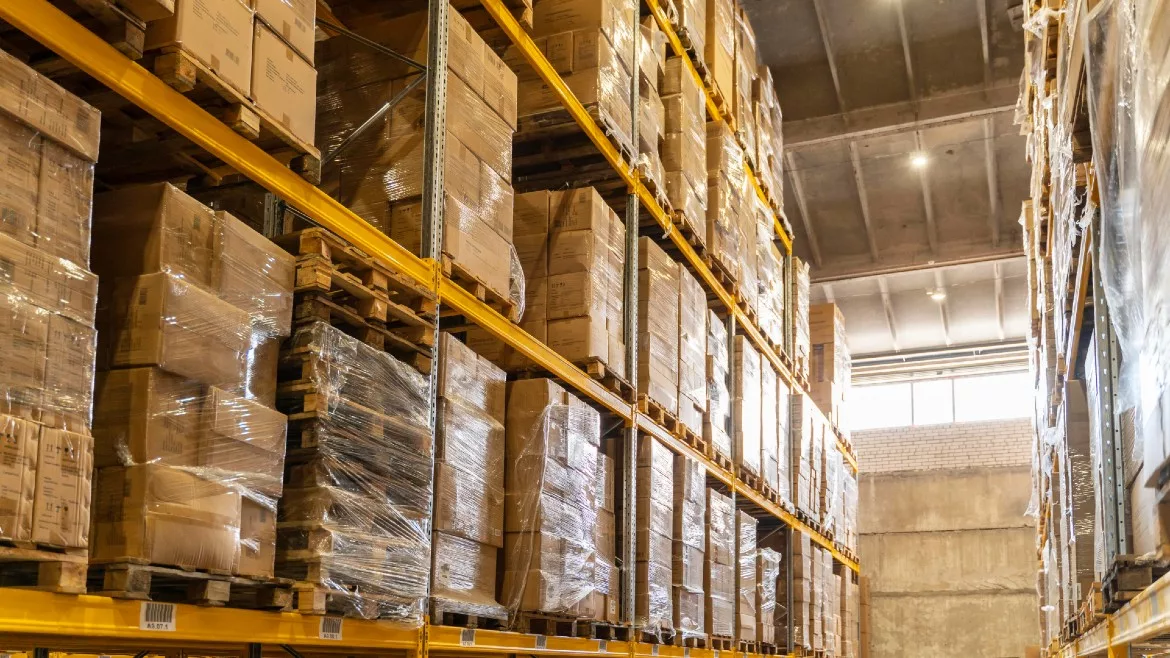
The food industry often spotlights automated systems that load products into cartons and stacks them onto pallets, yet when those same products are required for further processing, the flow must reverse. Extracting bulk goods from their containers efficiently and safely is its own discipline, known as reverse packaging.
While often required in their operations, not all food processors acknowledge reverse packaging as part of their workflow. On top of that, the amount of packaging involved with bulk products is multi-layered and complex and makes automating the reverse packaging process of de-palletizing, de-boxing and de-bagging quite challenging.
Bulk food items come to a processing line protected by two levels of containment: a primary layer that directly encloses the product and a secondary layer (often various shapes and sizes of cardboard boxes) for handling and transport. In the cheese industry, for example, the primary packaging encases blocks of cheese that are 40 lb. up to 640 lb., while in the meat industry, primal cuts would be in bags or vacuum-shrink packaging.
EXPLORE MORE


Essentially, automated reverse packaging systems remove bulk food from pallets, then from both its secondary (de-boxing) and primary packaging (de-bagging) in that order. After which, the automation deposits the contents on to conveyors for subsequent processing.
Within the meat and cheese industries, reverse packaging is still performed manually by hundreds of employees, leaving a significant portion of the food processing sector under-automated. While these operations are ripe for automation, processors remain hesitant — a main reason being floorspace.
As opposed to automated systems, two or three individuals manually de-boxing typically take up a smaller footprint. The caveat, however, are issues associated with human labor that drive most processors to consider automation. Those issues include high turnover, demanding environmental conditions, ergonomic strain, safety risks from knife handling, and the potential of product damage or cross contamination — especially if employees are using the same knife for both primary and secondary packaging removal.
Employee retention is closely tied to working conditions. Once an employee is hired and trained, food processors struggle to keep workers because of the demanding nature of the job. Employees often work in cold, refrigerated environments and repeatedly perform the strenuous physical tasks of lifting and moving boxes along with cutting away packaging with box cutters. Additionally, processors must deal with employees not showing up for work because of illness or other reasons. When left short-staffed, production lines slow or completely halt.
Rethinking the operation could unlock more productivity, and the key to successful automated reverse packaging hinges on robot 3D vision system technology. With it, robots can recognize various packaging shapes and sizes, as well as detect if that packaging is misshapen as a result of palletizing patterns, long-term storage or damage. Using a 3D camera that generates an image of the item, the robot calculates height differences, whether the box is bulged or if its top is crushed.
Instead of looking for specific box shapes, vision systems identify a box’s current shape and size. The system then feeds that information into proprietary software that adjusts the robot path to compensate for variations in shape and size dimensions.
Bulk product suppliers in the food industry have specific ways of stacking goods on pallets, so there are exponential pallet patterns with which to contend when automating de-palletizing operations. These patterns, in turn, determine how the robot will approach the boxes. Plus, there are often layers of cardboard sheeting between each stack of boxes that the robot must also detect and remove.
For de-palletizing, robots outfitted with 3D vision systems and sophisticated vacuum-type end-effector technology reliably detect box positions, clamp and remove them. Once boxes and cartons are unloaded from pallets, automated de-boxing robots remove the product. Most automated de-boxing processes involve robots equipped with enclosed cutting features to support a safer de-boxing process.
Currently, automated de-boxing uses two types of robot end-effector blades: pneumatically or electrically driven circular blades and nine-sided blades. While using blades may appear an obvious choice, extensive time and testing is invested to achieve mechanical and pneumatic compliance.
The automation allows for adjusting the blade pressure because not all boxes are as rigid as others. More compliance, or give, is applied to thinner boxes and less for driving blades into thicker box material. Besides rotating type blades, there are non-rotating paddle blades. Once a box is cut with a blade, the paddle slices down the box sides for removal.
For de-bagging and primary package removal, food processors commonly rely on two types of automated work stations. One is a mechanical de-bagger that uses compressed air to inflate and separate the packaging from the product — cutting the bag using simple mechanical cutting arms then pulling the bag down and off through belts. The second type removes the packaging by having a robot cut the bag and then capture it with a grapple and feed it into bag pull rollers. The robotic cutting and bag capture/pull down allow for greater variability in product shape and type.
As opposed to the cheese industry, the only automated reverse packaging in the meat industry is the de-boxing operation. However, suppliers of automation are applying the same skills and technology developed for the cheese industry and adapting them to the meat and other protein processing industries.
Automation engineering companies continue to explore technologies to automate the removal of primary packaging or primal de-bagging. The task is involved and has many more variables when compared to primary cheese packaging, which makes automating primal de-bagging quite difficult. But as vision system technology progresses, automated primal de-bagging is becoming a viable process.
After any automated de-bagging process, defect and foreign object detection (DFOD) is mandatory. This is done with a DFOD machine that also uses vision technology. These systems detect any remaining pieces of packaging or other foreign objects. Fragments of packaging or traces of mold, for instance, that enter operations such as slicing, shredding or cubing can contaminate downstream processes as well as the final product. When contamination occurs, processors must shut down the entire line for hours to perform a full cleanup.
When planning an automated reverse-packaging system, food processors can expect suppliers to evaluate and price multiple design iterations before arriving at the best fit for an operation. Automation engineering suppliers will determine the best machinery for the application, what amount of floorspace is needed, de-boxing rates and what box formats the system will encounter. Depending on the complexity, an engineering team may provide anywhere from a single layout to as many as 20 before finalizing the most efficient and cost-effective solution.
With the best plan and customer approval in hand, the automation project moves to a project management team. They would then work with the automation crew, electrical design, mechanical design teams and other engineers to implement each integration phase. For seamless results, reverse packaging requires an automation company with a proven track record, a well-established reputation and a portfolio of working systems in the food processing industry.
Looking for a reprint of this article?
From high-res PDFs to custom plaques, order your copy today!