Food Engineering logo
search
cart
facebook twitter linkedin youtube
  • Sign In
  • Create Account
  • Sign Out
  • My Account
Food Engineering logo
  • NEWS
    • Latest Headlines
    • Manufacturing News
    • People & Industry News
    • Plant Openings
    • Recalls
    • Regulatory Watch
    • Supplier News
  • PRODUCTS
    • New Plant Products
    • New Retail Products
  • TOPICS
    • Alternative Protein
    • Automation
    • Cannabis
    • Cleaning | Sanitation
    • Cross-Functional Food Innovation
    • Fabulous Food Plants
    • Food Safety
    • Maintenance Strategies
    • OEE
    • Packaging
    • Sustainability
    • More
  • EXCLUSIVES
    • Plant Construction Survey
    • Plant of the Year
    • Sustainable Plant of the Year
    • State of Food Manufacturing
    • Top 100 Food & Beverage Companies
  • MEDIA
    • Podcasts
    • Videos
    • Webinars
    • White Papers
  • FOOD MASTER
  • EVENTS
    • Food Automation & Manufacturing Symposium and Expo
    • Industry Events
  • RESOURCES
    • Newsletter
    • Custom Content & Marketing Services
    • FE Store
    • Government Links
    • Industry Associations
    • Market Research
    • Sponsor Insights
    • Classified Ads
  • EMAGAZINE
    • eMagazine
    • Archive Issue
    • Advertise
  • SIGN UP!
Sustainability

Coffee

Nescafé: Half of Green Coffee Sourced from Farmers Adopting Regenerative Agriculture Practices
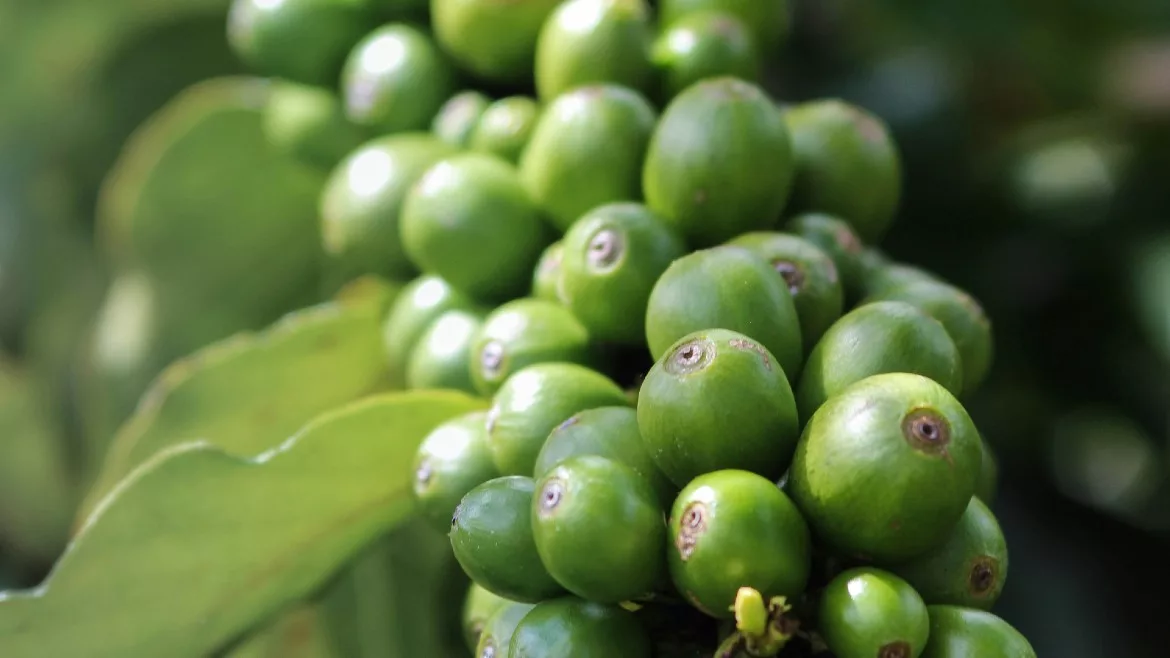
Green coffee
Rachel Clark via Unsplash
June 19, 2026

According to the latest Nescafé Plan 2030 Progress Report, Nescafé sourced 53% of its green coffee from farmers adopting regenerative agriculture practices in 2025. 

Nescafé says the increase was driven by a higher volume of green coffee received from those farmers and the expansion of its field programs. In 2025, more than 1,600 Nescafé agronomists and field staff supported farmers in 15 countries through training and technical support on regenerative agriculture. Nescafé also adapted its procurement approach to source more coffee from farmer units adopting these regenerative practices.

The Nescafé Plan 2030 prioritizes regenerative agriculture to enhance farming practices and coffee supply resilience, benefiting farmers and farmland ecosystems. Practices such as agroforestry, cover crops and optimized fertilization can help improve soil health and support long-term yields. Intercropping can also create new revenue streams for farmers and help diversify their income. In 2025, Nescafé reported an 18.3% reduction in greenhouse gas (GHG) emissions from its green coffee, compared with its 2018 baseline.

"With more than half of our green coffee sourced from farmers adopting regenerative agriculture practices in 2025, Nescafé has reached a major milestone," says Antje Shaw, head of sustainability for Nescafé. "This shows how we are working with farmers to scale regenerative agriculture across our coffee supply chain. We aim to support farmers in this transition, strengthen resilience to climate change and help secure Nestlé's long-term access to coffee, a key growth driver for the company."

As coffee trees age, they naturally become less productive and may become more vulnerable to climate change, further reducing yields. Nestlé therefore helps farmers renovate their plots with new coffee varieties that are more resilient to climate change and disease. In 2025, Nescafé distributed 20.3 million coffee plantlets to farmers.

In the same year, 94.3% of Nescafé coffee was responsibly sourced, meaning green coffee lots were traceable to identified groups of farmers and independently certified or verified as being produced in alignment with Nestlé's responsible sourcing requirements.

Beyond farming, the 2025 Nescafé Plan progress report also covers manufacturing, distribution and packaging across Nescafé's value chain. Within Nescafé's operations, the three main sources of carbon emissions are manufacturing, logistics and packaging. In 2025, 98.6% of the electricity used in Nescafé coffee manufacturing sites was renewably sourced, contributing to GHG emissions reductions.

The report also highlights Nescafé's efforts to strengthen human rights in coffee-growing communities through due diligence, supplier capability building and partnerships to expand impact on the ground.

In 2025, Nescafé co-developed the Nescafé Plan Child Protection Framework with its strategic partner, Terre des Hommes, to strengthen child protection systems in coffee supply chains. In 2026, Nescafé extended its partnership with the International Labour Organization (ILO) to advance labor rights in coffee supply chains.

"We believe in supporting systems that protect children today and help secure better opportunities for the future,” says Roy Tjan, child rights and business global advisor, Terre des Hommes. "Our partnership with Nescafé reinforces this belief by integrating the company's child protection efforts on the ground with the community and public State systems already in place."

KEYWORDS: agriculture coffee Nestle

Share This Story

Looking for a reprint of this article?
From high-res PDFs to custom plaques, order your copy today!
Recommended Content

JOIN TODAY
to unlock your recommendations.

Already have an account? Sign In

  • CJ Schwan’s Salina facility.

    Recipe for Growth: How CJ Schwan’s Powers Pizza Production with People and Automation

    Blending advanced automation with purposeful design, this...
    Plant of the Year
    By: Alyse Thompson-Richards
  • Paris Baguette rendering

    FOOD ENGINEERING’s 49th Annual Plant Construction Survey

    Food and beverage manufacturers continue to invest in...
    Plant Openings
    By: Alyse Thompson-Richards
  • Bottling machine

    How Optical and X-Ray Inspection Supports Bottling Safety and Quality

    By transitioning from legacy single-technology systems to...
    Food Safety
    By: Dan McKee
Manage My Account
  • eMagazine
  • Newsletter
  • Online Registration
  • Manage My Preferences
  • Customer Service

More Videos

Sponsored Content

Sponsored Content is a special paid section where industry companies provide high quality, objective, non-commercial content around topics of interest to the Food Engineering audience. All Sponsored Content is supplied by the advertising company and any opinions expressed in this article are those of the author and not necessarily reflect the views of Food Engineering or its parent company, BNP Media. Interested in participating in our Sponsored Content section? Contact your local rep!

close
  • Worker in protective food-processing attire uses a tablet beside stainless-steel conveyor equipment in a modern food manufacturing facility.
    Sponsored bySafetyChain

    Your Biggest Losses Are Hiding in Data You Already Have

  • Stainless steel conveyor system transferring cut food pieces—likely pasta or fries—through an enclosed industrial processing line using a flexible hose and screw conveyor in a manufacturing facility.
    Sponsored byHapman

    What’s Slowing Down Your Bulk Material Handling Process?

  • AI-enhanced technology in CIP operations
    Sponsored byEcolab

    Using AI to unlock new value from your CIP processes

Popular Stories

Idaho Milk Products Ice Cream and Powder Plant

Idaho Milk Products Opens $190M Ice Cream and Powder Blending Facility

JBS Logo on Sign

JBS USA to Close Two Facilities

Worker in protective food-processing attire uses a tablet beside stainless-steel conveyor equipment in a modern food manufacturing facility.

Your Biggest Losses Are Hiding in Data You Already Have

Promo for the 2026 Plant of the Year: CJ Shwan

Events

July 23, 2025

Decarbonizing Process Heat: What You Should Know and Next Steps

On Demand Driven by climate goals, business risk, client interest, and resilience considerations, food and beverage companies are increasingly turning their attention to decarbonizing their production processes.

July 23, 2025

Decarbonizing Process Heat: What You Should Know and Next Steps

Driven by climate goals, business risk, client interest, and resilience considerations, food and beverage companies are increasingly turning their attention to decarbonizing their production processes.

View All Submit An Event

Products

Recent Advances in Ready-to-Eat Food Technology

Recent Advances in Ready-to-Eat Food Technology

See More Products

June 18 FE Webinar: Step-Change Solutions: What’s Next for Automation in Food & Beverage Manufacturing?


CHECK OUT OUR NEW ESSENTIAL TOPICS

Alternative ProteinAutomationCleaning/SanitationFabulous Food Plants

Food SafetyMaintenance StrategiesOEE

PackagingSustainability

Related Articles

  • Wheat field

    Grupo Bimbo Reports 500,000 Hectares Under Regenerative Agriculture Practices

    See More
  • Farmer holds cover crop seed mix

    Mars to Provide Regenerative Agriculture Incentives to Farmers in Pet Food Supply Chain

    See More
  • Pepsico STEP up for Ag

    PepsiCo, Unilever Launch STEP up for Ag to Support Regenerative Agriculture

    See More

Related Products

See More Products
  • Optimizing Social Media from a B2B Perspective

  • gin 2.jpg

    Lessons from Gin: Business the Four Pillars Way

  • The 10 Principles of Food Industry Sustainability

See More Products
×

Elevate your expertise in food engineering with unparalleled insights and connections.

Get the latest industry updates tailored your way.

JOIN TODAY!
  • RESOURCES
    • Advertise
    • Contact Us
    • Food Master
    • Store
    • Want More
  • SIGN UP TODAY
    • Create Account
    • eMagazine
    • Newsletter
    • Customer Service
    • Manage Preferences
  • SERVICES
    • Marketing Services
    • Reprints
    • Market Research
    • List Rental
    • Survey/Respondent Access
  • STAY CONNECTED
    • LinkedIn
    • Facebook
    • YouTube
    • X (Twitter)
  • PRIVACY
    • PRIVACY POLICY
    • TERMS & CONDITIONS
    • DO NOT SELL MY PERSONAL INFORMATION
    • PRIVACY REQUEST
    • ACCESSIBILITY

Copyright ©2026. All Rights Reserved BNP Media, Inc. and BNP Media II, LLC.

Design, CMS, Hosting & Web Development :: ePublishing