Food Engineering logo
search
cart
facebook twitter linkedin youtube
  • Sign In
  • Create Account
  • Sign Out
  • My Account
Food Engineering logo
  • NEWS
    • Latest Headlines
    • Manufacturing News
    • People & Industry News
    • Plant Openings
    • Recalls
    • Regulatory Watch
    • Supplier News
  • PRODUCTS
    • New Plant Products
    • New Retail Products
  • TOPICS
    • Alternative Protein
    • Automation
    • Cannabis
    • Cleaning | Sanitation
    • Cross-Functional Food Innovation
    • Fabulous Food Plants
    • Food Safety
    • Maintenance Strategies
    • OEE
    • Packaging
    • Sustainability
    • More
  • EXCLUSIVES
    • Plant Construction Survey
    • Plant of the Year
    • Sustainable Plant of the Year
    • State of Food Manufacturing
    • Top 100 Food & Beverage Companies
  • MEDIA
    • Podcasts
    • Videos
    • Webinars
    • White Papers
  • FOOD MASTER
  • EVENTS
    • Food Automation & Manufacturing Symposium and Expo
    • Industry Events
  • RESOURCES
    • Newsletter
    • Custom Content & Marketing Services
    • FE Store
    • Government Links
    • Industry Associations
    • Market Research
    • Sponsor Insights
    • Classified Ads
  • EMAGAZINE
    • eMagazine
    • Archive Issue
    • Advertise
  • SIGN UP!
Sustainability

Sustainability

KIND: Half of Almond Supply Comes from Farms Using Regenerative Agriculture
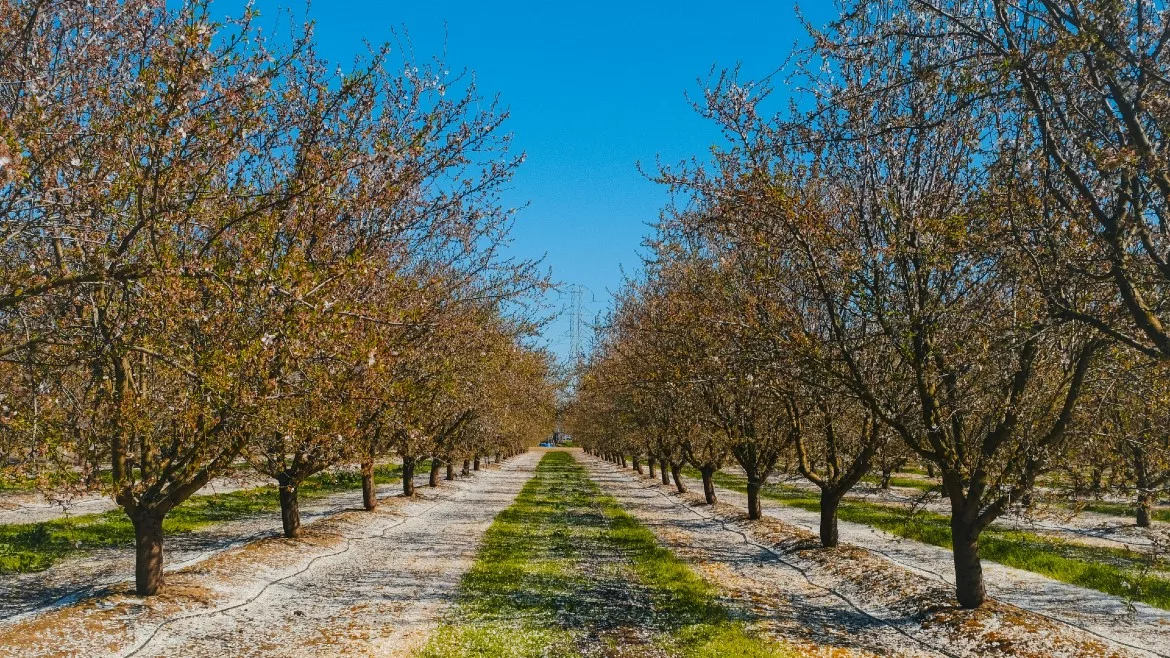
Almond trees
DuoNguyen via Unsplash
June 24, 2026

KIND says it has scaled regenerative agriculture practices across its almond supply chain, sourcing approximately 50% of its almond volume from farms leveraging regenerative agriculture practices on a mass-balance basis in 2026.

The company launched the three-year KIND Almond Acres initiative in 2023 in partnership with ofi. This initiative was the first step in KIND's goal to source 100% of its almonds from farms leveraging regenerative agriculture practices on a mass-balance basis by 2030.

As one of the nation's largest almond buyers, sourcing millions of pounds of almonds each year, KIND says it recognizes the role it can play in helping advance more sustainable almond production. Through the KIND Almond Acres Initiative, the company tested regenerative agriculture practices and innovative technologies in California, home to approximately 80% of the world's almond production, to better understand what works on the ground and at scale.

From the outset, the initiative was designed to generate the data and insights needed to identify the most effective combination of practices and technologies for improving soil health, resource efficiency and on-farm resilience. Now, the learnings from the pilot are helping inform KIND's path forward while contributing insights that can support broader adoption of regenerative agriculture across the industry.

While transitioning to regenerative agriculture requires significant farm management changes and investments, KIND scaled the KIND Almond Acres Initiative after one year of testing and learning. In year two, KIND and ofi doubled the initiative to nearly 1,000 acres by expanding from Madera, California, to 500 additional acres in Bakersfield, California, to test how regenerative practices perform across different growing conditions and climates. The initiative functioned as a "living, learning lab" and allowed continuous evaluation to see which practices could deliver the greatest benefits for almond production.

Following three years of data collection through the KIND Almond Acres Initiative, including data provided by ofi's Carbon Trust certified Digital Footprint Calculator, part of its AtSource sustainable sourcing solution, KIND says the pilot's results demonstrate that combining regenerative agriculture with new technologies can drive critical outcomes.

In addition to achieving 50% sourcing of almond volume from farms leveraging regenerative agriculture practices on a mass-balance basis, key results in the pilot that have led to this achievement include:

  • Increased water use efficiency: The pilot drove a 19.5% efficiency gain in water management.
  • Reduced reliance on costly inputs: Reduced the need for nitrogen fertilizer by 33%, demonstrating that regenerative soil management is a direct driver of operational efficiency.
  • Reduced overall carbon intensity: After the three-year pilot, the acres saw a decrease in overall carbon intensity of 28%.
  • Improved soil health: Improvements in soil health metrics like increased soil organic carbon and decreased compaction were demonstrated across all pilot plots.

"We are incredibly proud to hit the halfway mark in our almond sourcing pledge,” says KIND Noth America CEO Daniel Calderoni. The KIND Almond Acres Initiative has proven that regenerative agriculture is a scalable, operational engine. By sharing our outcomes and learnings, we are aiming to move the needle in encouraging the industry to build a more sustainable supply chain – one that's better for the planet and for business."

With the results from the pilot and having achieved the halfway mark in the pledge to exclusively source almonds from farms leveraging regenerative agriculture, KIND says it is ready to enter the next phase of future-proofing its supply chain. The results validate sustainable practices such as cover crops, compost and subsurface irrigation that KIND is now working to expand across its top almond suppliers.

"KIND is moving quickly from a test environment to large-scale implementation," says Zac Ellis, senior director of agronomy, ofi, North America. "In almond orchards, a variety of regenerative practices such as cover crops, lower-carbon fertilizers, compost and biochar can directly enhance ingredient quality and resilience. We are proud to partner with KIND to help demonstrate a model that can be replicated and scaled across the broader industry."

During this pilot, KIND invested in partnerships with the University of California Merced, the University of California Davis, the California Water Action Collaborative (CWAC) and Mad Agriculture.

KEYWORDS: agriculture nut processing sustainability practices sustainable farming

Share This Story

Looking for a reprint of this article?
From high-res PDFs to custom plaques, order your copy today!
Recommended Content

JOIN TODAY
to unlock your recommendations.

Already have an account? Sign In

  • CJ Schwan’s Salina facility.

    Recipe for Growth: How CJ Schwan’s Powers Pizza Production with People and Automation

    Blending advanced automation with purposeful design, this...
    Plant of the Year
    By: Alyse Thompson-Richards
  • Paris Baguette rendering

    FOOD ENGINEERING’s 49th Annual Plant Construction Survey

    Food and beverage manufacturers continue to invest in...
    Plant Openings
    By: Alyse Thompson-Richards
  • Bottling machine

    How Optical and X-Ray Inspection Supports Bottling Safety and Quality

    By transitioning from legacy single-technology systems to...
    Food Safety
    By: Dan McKee
Manage My Account
  • eMagazine
  • Newsletter
  • Online Registration
  • Manage My Preferences
  • Customer Service

More Videos

Sponsored Content

Sponsored Content is a special paid section where industry companies provide high quality, objective, non-commercial content around topics of interest to the Food Engineering audience. All Sponsored Content is supplied by the advertising company and any opinions expressed in this article are those of the author and not necessarily reflect the views of Food Engineering or its parent company, BNP Media. Interested in participating in our Sponsored Content section? Contact your local rep!

close
  • Worker in protective food-processing attire uses a tablet beside stainless-steel conveyor equipment in a modern food manufacturing facility.
    Sponsored bySafetyChain

    Your Biggest Losses Are Hiding in Data You Already Have

  • Stainless steel conveyor system transferring cut food pieces—likely pasta or fries—through an enclosed industrial processing line using a flexible hose and screw conveyor in a manufacturing facility.
    Sponsored byHapman

    What’s Slowing Down Your Bulk Material Handling Process?

  • AI-enhanced technology in CIP operations
    Sponsored byEcolab

    Using AI to unlock new value from your CIP processes

Popular Stories

Idaho Milk Products Ice Cream and Powder Plant

Idaho Milk Products Opens $190M Ice Cream and Powder Blending Facility

JBS Logo on Sign

JBS USA to Close Two Facilities

Kraft Heinz PA HQ

Kraft Heinz Reorganizes Global Operating Structure

Promo for the 2026 Plant of the Year: CJ Shwan

Events

July 23, 2025

Decarbonizing Process Heat: What You Should Know and Next Steps

On Demand Driven by climate goals, business risk, client interest, and resilience considerations, food and beverage companies are increasingly turning their attention to decarbonizing their production processes.

July 23, 2025

Decarbonizing Process Heat: What You Should Know and Next Steps

Driven by climate goals, business risk, client interest, and resilience considerations, food and beverage companies are increasingly turning their attention to decarbonizing their production processes.

View All Submit An Event

Products

Recent Advances in Ready-to-Eat Food Technology

Recent Advances in Ready-to-Eat Food Technology

See More Products

June 18 FE Webinar: Step-Change Solutions: What’s Next for Automation in Food & Beverage Manufacturing?


CHECK OUT OUR NEW ESSENTIAL TOPICS

Alternative ProteinAutomationCleaning/SanitationFabulous Food Plants

Food SafetyMaintenance StrategiesOEE

PackagingSustainability

Related Articles

  • Green coffee

    Nescafé: Half of Green Coffee Sourced from Farmers Adopting Regenerative Agriculture Practices

    See More
  • Farmer holds cover crop seed mix

    Mars to Provide Regenerative Agriculture Incentives to Farmers in Pet Food Supply Chain

    See More
  • combine harvester

    Regenerative agriculture initiative seeks worldwide participation

    See More

Related Products

See More Products
  • Food Authentication Using Bioorganic Molecules

  • gin 2.jpg

    Lessons from Gin: Business the Four Pillars Way

  • Optimizing Social Media from a B2B Perspective

See More Products

Events

View AllSubmit An Event
  • June 1, 2009

    Food Plant of the Future: Using Design to Increase Productivity and Drive Down Unit Costs

    On-Demand: The need for food and beverage processors to drive down unit costs never ends. How can new/retrofitted plants be designed to optimize productivity?
View AllSubmit An Event
×

Elevate your expertise in food engineering with unparalleled insights and connections.

Get the latest industry updates tailored your way.

JOIN TODAY!
  • RESOURCES
    • Advertise
    • Contact Us
    • Food Master
    • Store
    • Want More
  • SIGN UP TODAY
    • Create Account
    • eMagazine
    • Newsletter
    • Customer Service
    • Manage Preferences
  • SERVICES
    • Marketing Services
    • Reprints
    • Market Research
    • List Rental
    • Survey/Respondent Access
  • STAY CONNECTED
    • LinkedIn
    • Facebook
    • YouTube
    • X (Twitter)
  • PRIVACY
    • PRIVACY POLICY
    • TERMS & CONDITIONS
    • DO NOT SELL MY PERSONAL INFORMATION
    • PRIVACY REQUEST
    • ACCESSIBILITY

Copyright ©2026. All Rights Reserved BNP Media, Inc. and BNP Media II, LLC.

Design, CMS, Hosting & Web Development :: ePublishing