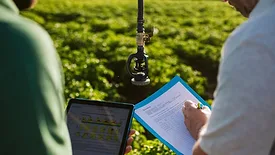
McCain says the program gives its teams and potato growers a shared, consistent view of crop performance throughout the season, using data-driven insights to help identify variability earlier and prioritize attention where it matters most.
This program focuses on key growing regions where General Mills sources wheat from ADM for products sold through Walmart and Sam’s Club, demonstrating a shared commitment to strengthening supply chain resilience and farming communities.
PepsiCo highlights progress against its 2030 Positive Agriculture (pep+) goals, with gains in scaling regenerative agriculture and restorative and protective practices, advancing sustainable sourcing, and improvements in livelihoods.
The executive order directs HHS, USDA and the EPA to strengthen research, innovation and public-private partnerships that support regenerative agriculture while advancing the Make America Healthy Again agenda.
Through the KIND Almond Acres Initiative, the company tested regenerative agriculture practices and innovative technologies in California, home to approximately 80% of the world's almond production.
In 2025, more than 1,600 Nescafé agronomists and field staff supported farmers in 15 countries through training and technical support on regenerative agriculture.
The Cheonan facility is scheduled for completion in the first half of 2027, and bibigo offerings made with gim, a Korean seaweed product, will be supplied to global markets including the U.S.
The company’s regenerative agriculture strategy is based on three core principles: improving soil health, strengthening biodiversity and ecosystems, and supporting farming communities in their transition toward more resilient practices.
The new pilot program directly compensates farmers for adopting regenerative agriculture practices such as composting, biological inputs and reducing chemical fertilizer use.
Rob Dongoski, global lead, agriculture and food, for management consulting firm Kearney, discusses major drivers for change in the U.S. food system, including generational purchasing patterns, growing interest in health and sustainability, and implementing technology to harness consumer insights and improve efficiency.