Cleaning/Sanitation
How Impedance Sensors Advance CIP Processes
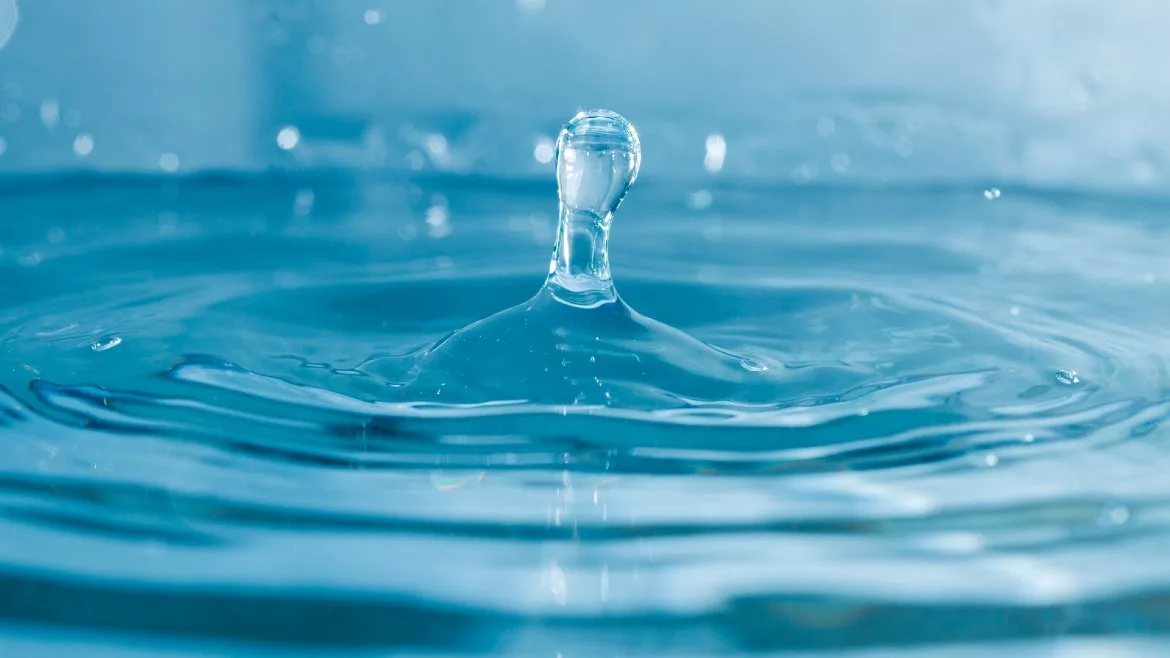
When the specifics of a food safety process are unknown, manufacturers and processors tend to compensate by building a wall of precaution around those processes to keep facilities, products and consumers safe.
It’s a sensible philosophy, but it can also create waste and inefficiency. In CIP, this approach has often meant overlong rinse cycles that eat up time, resources and margin.
New technology –– specifically, impedance sensors –– are changing that. Impedance sensors give operators a new method of observing soil removal in real time, reducing the uncertainty that undermines CIP efficiency.
This article will explore what that looks like and what it means for manufacturers.
The Origins of Precaution Bias
The realities of CIP often pit food safety against efficiency. This “conflict” is not evenly matched. Food safety always comes first, and rightfully so.
Producers choose conservative SSOPs that call for long CIP rinse cycles to reduce the chances of stubborn residual soils. These rinses eat away at production time, but when the alternative to lost production time is a high-profile, brand-damaging food safety or quality incident, the choice is clear: Accept the lost time, live with the wasted resources and continue operating.
EXPLORE MORE


For decades, this outlook has become central to how the industry cleans in place. Without a dependable way of monitoring and analyzing soil removal in real time, overlong rinse cycles have become a commonplace (if operationally painful) aspect of CIP.
How Impedance Sensors Can Change CIP
In contrast to previous generations of sensor technology, impedance sensors make it possible to observe how effectively CIP rinses are removing soils. In fact, impedance sensors can produce readings with such consistent accuracy that operators can use them to remove excessive rinsing from the CIP equation –– without risking food safety.
By shooting an electrical current through process water, impedance sensors produce a “fingerprint” of that water based on three core properties:
- Conductivity: The ability of a fluid to transfer charge
- Capacitance: The ability of a fluid to hold charge
- Temperature: The degree of thermal energy present in a fluid, which can influence the above two parameters
By placing one sensor at the entrance of a CIP line and one at the end, impedance analysis can compare the two readings in real time and produce a simplified reading of how much soil is currently being removed. When the two readings become immeasurably close –– i.e., when the water coming out of the CIP line matches the water going in –– operators can confidently use that impedance analysis to stop the rinse and move on to the next step.
With this process, there is no more waiting for a long CIP rinse to complete based on a rigid SSOP. No more running water through already-clean equipment. No more lost time that could have been avoided with better visibility.
Results include more usable production time, lower resource usage, better sustainability performance and higher overall capacity that manufacturers can apply to strategic objectives that require their attention. Whether that means boosting output, adding new SKUs or pivoting to a new vertical, impedance technology arms manufacturers with the real-time information they need to optimize and streamline their approach to CIP.
A New Tool in the Sensor Toolkit
Impedance sensors are not the first sensor to give manufacturers better visibility into their rinse water. However, they represent a step forward in monitoring technology. In our recent beverage and brewery CIP applications, impedance sensors are resolving key monitoring issues that have capped the usefulness of previous options.
For example: conductivity sensors, which also shoot an electrical current through rinse water. These sensors are useful because they can measure the concentration of a conductive chemistry in process water, which can help prevent that level from getting too low or too high. But conductivity sensors can’t measure organic matter, which means they can’t provide insights into how effectively that caustic chemistry has removed soils.
Impedance sensors fulfill the promise of real-time CIP visibility and resolve the limitations of other sensors. By augmenting conductivity analysis with capacitance analysis, impedance sensors can distinguish between organic soils and non-soil elements (like bubbles), which makes it possible to generate an accurate soil load reading in a variety of CIP contexts.
Toward Precision-Based CIP
Impedance sensing as a category isn’t new, but historically, impedance analysis has been too complicated to be effective within a CIP environment. Most operators don’t have the technical skillset and data analytics background required to read the results.
The newest generation of impedance sensors is removing this final barrier to CIP optimization, integrating seamlessly with plant systems that can simplify readings and make them immediately actionable.
Soon, the power of impedance will be in the hands of every operator, allowing them to cut excessive rinsing out of the CIP process without risking essential food safety.
Looking for a reprint of this article?
From high-res PDFs to custom plaques, order your copy today!