Food Engineering logo
search
cart
facebook twitter linkedin youtube
  • Sign In
  • Create Account
  • Sign Out
  • My Account
Food Engineering logo
  • NEWS
    • Latest Headlines
    • Manufacturing News
    • People & Industry News
    • Plant Openings
    • Recalls
    • Regulatory Watch
    • Supplier News
  • PRODUCTS
    • New Plant Products
    • New Retail Products
  • TOPICS
    • Alternative Protein
    • Automation
    • Cannabis
    • Cleaning | Sanitation
    • Cross-Functional Food Innovation
    • Fabulous Food Plants
    • Food Safety
    • Maintenance Strategies
    • OEE
    • Packaging
    • Sustainability
    • More
  • EXCLUSIVES
    • Plant Construction Survey
    • Plant of the Year
    • Sustainable Plant of the Year
    • State of Food Manufacturing
    • Top 100 Food & Beverage Companies
  • MEDIA
    • Podcasts
    • Videos
    • Webinars
    • White Papers
  • FOOD MASTER
  • EVENTS
    • Food Automation & Manufacturing Symposium and Expo
    • Industry Events
  • RESOURCES
    • Newsletter
    • Custom Content & Marketing Services
    • FE Store
    • Government Links
    • Industry Associations
    • Market Research
    • Sponsor Insights
    • Classified Ads
  • EMAGAZINE
    • eMagazine
    • Archive Issue
    • Advertise
  • SIGN UP!
Manufacturing News

Bringing Temperature Control to Over-the-Road Tankers and ISO Tanks
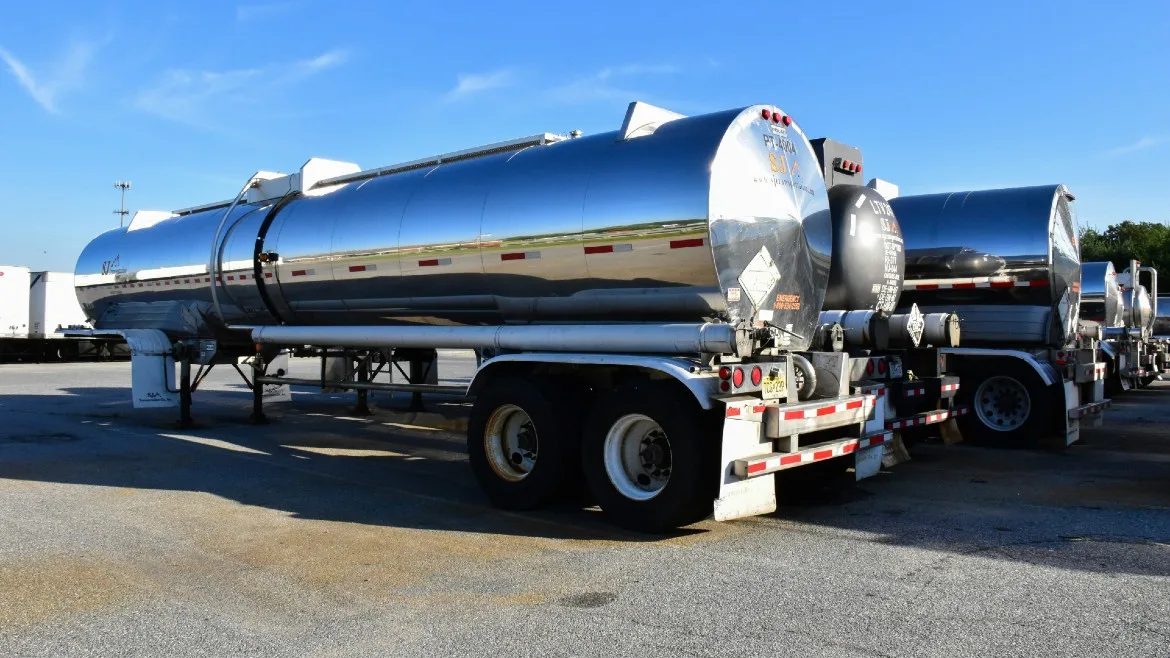
Liquid tanker trailers
Jason Mitrione via Unsplash
September 19, 2026

In food processing, temperature control is critical. From maintaining product quality to meeting strict safety standards, processors invest heavily in systems that ensure consistency inside their facilities. 

But one critical part of the process often goes overlooked: temperature management during transport and staging in tanker trucks and ISO tanks. That’s beginning to change.

Across the industry, processors are recognizing a long-standing blind spot — how bulk liquids are heated, maintained and managed inside tanker trailers both upon arrival and prior to shipment. And increasingly, they’re turning to bulk tanker glycol circulation heaters.


The Hidden Challenge in Bulk Liquid Handling

Whether transporting molasses, chocolate, edible oils, syrups or other products, temperature loss during transit — or inconsistency during staging — can create costly downstream problems:

  • Extended unloading times due to increased viscosity 
  • Product solidification or stratification 
  • Increased energy use during reheating 
  • Disruptions to production schedules 
  • Inconsistent product quality 

Traditional approaches such as tank steaming, temporary heating methods or relying on ambient conditions are often inefficient, labor-intensive and difficult to manage or control. As a result, many processors have simply accepted these inefficiencies as part of doing business. With growing pressure to improve throughput and reduce costs, that mindset is shifting.


Extending Temperature Control Beyond the Plant

Bulk tanker glycol circulation heaters are designed to bring temperature control directly to the tanker, whether a load has just arrived at the facility or is being staged prior to shipment.

By allowing processors to maintain bulk liquid product at optimal temperature at their facilities, the system helps eliminate the disconnect between transportation and production. Product can be kept within specification before unloading begins or maintained at the proper temperature while waiting to be shipped.

This capability supports receiving by ensuring incoming product is ready for immediate unloading and use. It also supports staging and shipping maintaining product temperature prior to loading or dispatching, ensuring consistency throughout transit. The result is greater flexibility and control across the entire handling process.


Built for Throughput and Operational Efficiency

Bulk tanker glycol circulation heating systems are designed to maintain multiple over-the-road tankers or ISO tanks simultaneously, allowing facilities to manage several loads at once. This is particularly valuable for high-volume operations where timing and coordination between logistics and production are essential.

By keeping product temperature controlled and ready when needed, processors can maintain continuous line operation, reduce delays at receiving and shipping, minimize reliance on energy-intensive reheating and improve overall plant efficiency.

In short, these heating systems transform tanker trucks and ISO tanks from passive storage vessels into active, temperature-controlled assets.


How Bulk Tanker Heating Systems Work

The PLC-controlled system circulates heated glycol through the tanker’s steam coil loop, providing uniform, indirect heat transfer to the product inside. This method ensures consistent temperature without the risk of localized overheating.

These systems are designed for reliability and ease of use, often featuring:

  • Remote monitoring of status, temperature, refill tank and alarm modes
  • Automatic tank refill for continuous operation 
  • Availability in electric, natural gas or propane configurations to match facility requirements 
  • Weatherproof, allowing for installation outside the plant and freeing up valuable indoor space 
  • Utilizing either ethylene glycol or non-toxic propylene glycol

Because these systems operate outdoors, they integrate into existing facility layouts while avoiding costly building modifications.


From Workaround to Best Practice

As the food industry continues to evolve, the focus on end-to-end process control is expanding. It’s no longer enough to optimize what happens inside the plant — processors are now looking at every step of the supply chain for opportunities to improve performance.

Temperature-controlled tanker management is quickly becoming part of that conversation.

By enabling processors to control product conditions during receiving, staging and shipping, bulk tanker heating systems help bridge the gap between logistics and production. What was once an unpredictable step is now a controlled, repeatable process.

And for many processors, discovering the benefits of bulk tanker heating isn’t just about adopting new equipment — it’s about finally solving a problem they’ve been managing for years.

AI tools were used to organize and summarize source material used in this article. Final reporting and verification were conducted by the editorial team.

KEYWORDS: bulk material handling heating liquid handling tanks

Share This Story

Looking for a reprint of this article?
From high-res PDFs to custom plaques, order your copy today!

Recommended Content

JOIN TODAY
to unlock your recommendations.

Already have an account? Sign In

  • FE Top100 Food & Beverage Companies hero, gold lettering with black background.

    FOOD ENGINEERING’s 2026 Top 100 Food and Beverage Companies

    See where the world’s leading food and beverage companies...
    Manufacturing News
    By: Alyse Thompson-Richards
  • CJ Schwan’s Salina facility.

    Recipe for Growth: How CJ Schwan’s Powers Pizza Production with People and Automation

    Blending advanced automation with purposeful design, this...
    Plant of the Year
    By: Alyse Thompson-Richards
  • Paris Baguette rendering

    FOOD ENGINEERING’s 49th Annual Plant Construction Survey

    Food and beverage manufacturers continue to invest in...
    Plant Openings
    By: Alyse Thompson-Richards
Manage My Account
  • eMagazine
  • Newsletter
  • Online Registration
  • Manage My Preferences
  • Customer Service

More Videos

Sponsored Content

Sponsored Content is a special paid section where industry companies provide high quality, objective, non-commercial content around topics of interest to the Food Engineering audience. All Sponsored Content is supplied by the advertising company and any opinions expressed in this article are those of the author and not necessarily reflect the views of Food Engineering or its parent company, BNP Media. Interested in participating in our Sponsored Content section? Contact your local rep!

close
  • Close-up of a group of freshly baked stuffed empanadas being transferred onto a conveyor belt.
    Sponsored byDorner

    Smarter Line Design Improves Food Manufacturing Efficiency and Throughput

  • An old and tattered manual titled 'Revised 5/20/1971' on a desk along with a cellphone, sunglasses, Apple iWatch, laptop and keyboard, and a water bottle.
    Sponsored byEnSight Solutions

    Redefining Quality: Has the Industry Lost Sight of What Actually Matters?

  • Worker in protective food-processing attire uses a tablet beside stainless-steel conveyor equipment in a modern food manufacturing facility.
    Sponsored bySafetyChain

    Your Biggest Losses Are Hiding in Data You Already Have

Popular Stories

FE Top100 Food & Beverage Companies hero, gold lettering with black background.

FOOD ENGINEERING’s 2026 Top 100 Food and Beverage Companies

FE August 2021 Plant of the Year: Keurig Dr Pepper Facility. Photos courtesy of Keurig Dr Pepper

Chobani to Invest $1.2B in Pennsylvania Manufacturing Campus

AB Baldwinsville Investment

Anheuser-Busch Invests $13M in New York Brewery

Graphic with text on the left: ‘Food Engineering 2026 Top 100 - Explore leaders.’ Right side: images of juice bottles and chicken on a conveyor. Bottom text 'View Rankings'.


Promo for the 2027 Plant of the Year Award

Events

September 23, 2026

An In-Depth Look at 2026's Top 100 Food and Beverage Companies

Join Lynn Dornblaser, Client Advisor at Mintel, and Alyse Thompson-Richards, Editor-in-Chief of FOOD ENGINEERING, as they break down the 2026 Top 100 Food and Beverage Companies and discuss the factors affecting this year’s rankings.

September 29, 2026

Food Safety Execution and Your Bottom Line

Explore food safety strategies that strengthen sanitation, risk management, operational efficiency, and compliance across foodservice and facility environments.

View All Submit An Event

Products

Recent Advances in Ready-to-Eat Food Technology

Recent Advances in Ready-to-Eat Food Technology

See More Products

September 23 FE Editorial Webinar


CHECK OUT OUR NEW ESSENTIAL TOPICS

Alternative ProteinAutomationCleaning/SanitationFabulous Food Plants

Food SafetyMaintenance StrategiesOEE

PackagingSustainability

Related Articles

  • Temperature control

    See More
  • Temperature control system

    See More
  • Temperature control system

    See More

Related Products

See More Products
  • statical.jpg

    Statistical Process Control for the Food Industry: A Guide for Practitioners and Managers

  • food crime.jpg

    Food Crime: An Introduction to Deviance in the Food Industry

See More Products
×

Elevate your expertise in food engineering with unparalleled insights and connections.

Get the latest industry updates tailored your way.

JOIN TODAY!
  • RESOURCES
    • Advertise
    • Contact Us
    • Food Master
    • Store
    • Want More
  • SIGN UP TODAY
    • Create Account
    • eMagazine
    • Newsletter
    • Customer Service
    • Manage Preferences
  • SERVICES
    • Marketing Services
    • Reprints
    • Market Research
    • List Rental
    • Survey/Respondent Access
  • STAY CONNECTED
    • LinkedIn
    • Facebook
    • YouTube
    • X (Twitter)
  • PRIVACY
    • PRIVACY POLICY
    • TERMS & CONDITIONS
    • DO NOT SELL MY PERSONAL INFORMATION
    • PRIVACY REQUEST
    • ACCESSIBILITY

Copyright ©2026. All Rights Reserved BNP Media, Inc. and BNP Media II, LLC.

Design, CMS, Hosting & Web Development :: ePublishing