Wayne Labs has more than 30 years of editorial experience in industrial automation. He served as senior technical editor for I&CS/Control Solutions magazine for 18 years where he covered software, control system hardware and sensors/transmitters. Labs ran his own consulting business and contributed feature articles to Electronic Design, Control, Control Design, Industrial Networking and Food Engineering magazines. Before joining Food Engineering, he served as a senior technical editor for Omega Engineering Inc. Labs also worked in wireless systems and served as a field engineer for GE’s Mobile Communications Division and as a systems engineer for Bucks County Emergency Services. In addition to writing technical feature articles, Wayne covers FE’s Engineering R&D section.
For any beverage producer, water quality is a critical ingredient of the finished product. No one wants a product that’s off color, has a strange taste or contains sediment. Without crystal-clear water, a processor wouldn’t have a viable product.
The partnership includes joint distributorship, sales and promotional efforts for new and existing grain milling, processing and packaging plants in the U.S.
Bratney Companies and F.H. Schule Mühlenbau (member of the Kahl Group) have signed a strategic partnership agreement, which specifies joint distributorship, sales and promotional efforts for new and existing milling plants in the United States. This agreement allows both companies to combine their expertise, resources and experiences in grain milling applications to achieve their shared philosophy of customer satisfaction.
Dandies Marshmallows (a product of Chicago Vegan Foods) got its start when its cofounder, President and Resident Engineer Ryan Howard, wanted his son to try a marshmallow for the first time. But his son, who was a vegan since birth, was not to consume traditional marshmallows, which contain gelatin, an animal-based ingredient. So it was time for Howard, being a food process engineer, to come up with an alternative, truly vegan marshmallow—which he did in his test kitchen in April of 2008. He called the marshmallows Dandies.
Imagine the ability to track a product anywhere in the world with accuracy of within one foot—less than 31 cm. Sounds impossible, but with technology that LocatorX is developing, it can be done.
TreeHouse Foods, Inc. has entered into a definitive agreement to sell its snacks division to Atlas Holdings LLC of Greenwich, Conn. Atlas owns and operates 19 manufacturing and distribution businesses, which together employ more than 17,000 associates at more than 150 facilities worldwide. Atlas agreed to pay $90 million for the division, subject to closing adjustments.
With meat production on the rise—in fact tripling over the last four decades, according to the Worldwatch Institute—HPP (high-pressure processing) has proven itself not only to kill dangerous microbes, but also to extend shelf life by a factor of two to four times. Trouble is, with these merits, HPP meats tend to lose their color, which is a turnoff to some consumers.
Michael Taylor, former deputy commissioner for food for FDA and present co-chair of the Stop Foodborne Illness Board, suggested that in spite of all the technology, collaboration and education to improve food safety, crisis management still drives changes.
When we think of IIoT, we often consider the roles it plays in fine tuning processes to peak efficiency, minimizing downtime through predictive or prescribed maintenance, or acquiring data and processing it to improve food quality and safety. But, we don’t always think of another role IIoT can play, and that is using its capabilities to produce unique products in a very small quantity and package and ship them to individual customers.
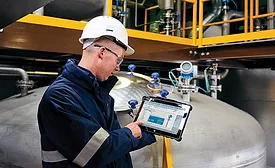
Food Engineering's recent Food Automation & Manufacturing Conference addressed several high-tech Industry 4.0 topics, including predictive maintenance (PdM). I’d like to show how you can use IIoT tools to improve your maintenance program—and maybe even better your OEE scores in the process.