How Continuous Mixing Supports Efficient and Sustainable Baked Good Production
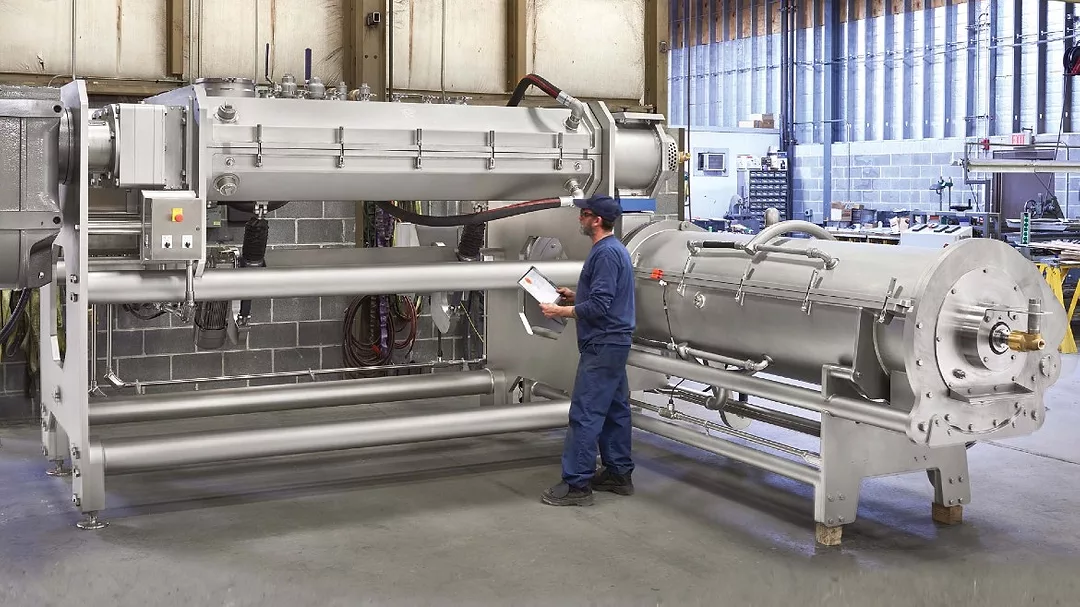
Reading Bakery Systems' Exact Hight Development Continuous Mixer.
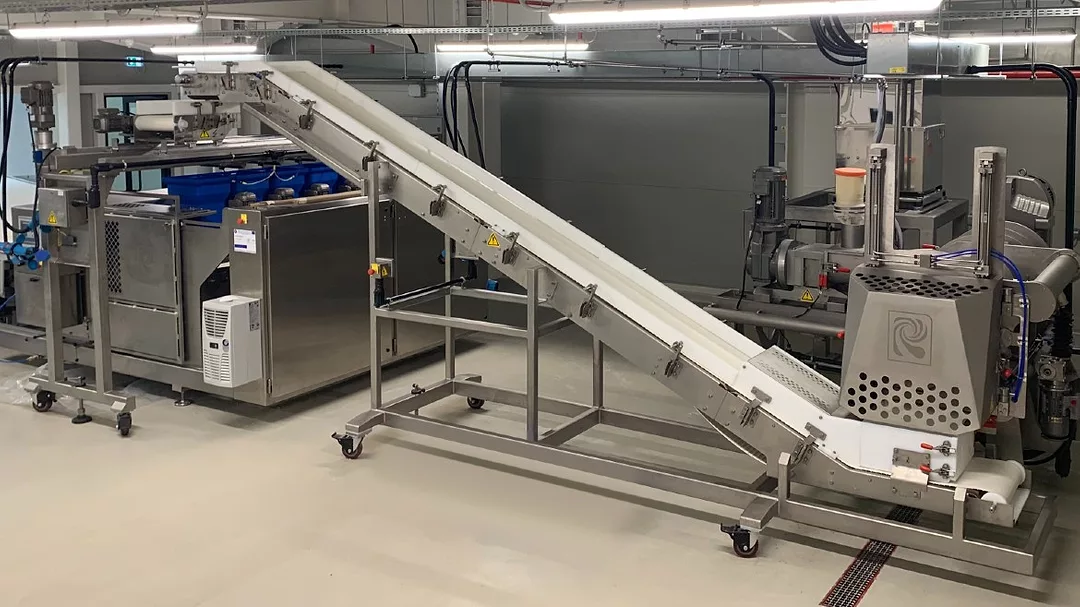
A continuous mixer feeds dough into pretzel-forming equipment.
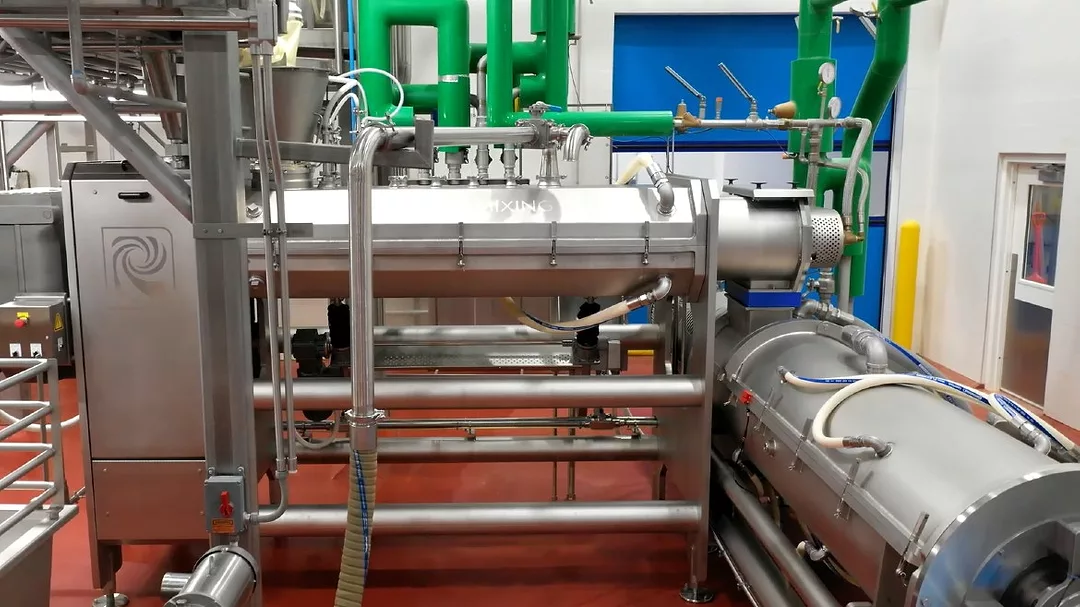
Reading Bakery Systems' Exact High Development Continuous Mixer.
KEY TAKEAWAYS
- Continuous mixers have improved over the last three decades and support a variety of bakery applications.
- Continuous mixers aren’t only for high-volume lines – they can serve operations with throughputs as low as 1,500 kg per hour.
- Continuous mixing can reduce water and energy consumption.
Introduced in the early 1990s, the first continuous mixing systems were designed for low-volume production of stiffer doughs and products such as pretzels, crackers and bagels. But in the 30-plus years since, several kinds of continuous mixers have emerged to handle many distinct application challenges and all dough types.
Today, continuous mixers are being used for virtually every baked product imaginable, in cost-effective throughput volumes from 1,500 to 20,000 lbs./hour. Here’s a look at how continuous mixing systems have evolved and the products they support:
Gentle mixers
Representing an improved version of the first continuous mixers, today’s “gentle” systems feature a single-shaft design that mixes dough gently and develops it without generating excessive heat. These systems can mix stiff, low-moisture doughs as well as those with very high moisture levels. Ideal for wheat-based products such as pretzels, pizza, sweet goods, crackers and pet treats, gentle mixers can handle all but the lowest viscosity powder/liquid mixtures.
High energy mixers
Appearing about 15 years after the first continuous mixers, high-energy systems feature a twin-screw shaft that applies an intense cutting action on doughs that need more energetic mixing. Suited for high-moisture/high-fat content doughs such as icings, cremes, batters and fillings, these systems can also add inclusions without damaging the uniformity of the mix.
High development mixers
Introduced in 2015, these mixers employ a two-stage design to process highly developed dough at low temperatures. In the first stage, a twin-screw shaft mixes the ingredients into a uniform level. In the second stage, a single-screw shaft kneads the dough to the proper development level. These systems are ideal for buns, breads, English muffins and similar products.
Two-stage cookie mixers
Appearing just a few years after high development mixers, these two-stage systems are designed for cookies and other products that benefit from crème-up and final mixing stages. All minor ingredients and a portion of flour are combined in the first crème-up stage, during which special mixing elements cut the fat into the other ingredients. In the second stage, the remaining flour is added to create the final dough.
High-speed lofting mixers
The most recently developed continuous mixing system, high-speed lofting mixers evenly distribute small amounts of moisture into large amounts of powder. A high-speed shaft lifts hydroscopic powders into and through a spray of atomized liquids. These systems were developed for hydroscopic powders such as potato flakes used to make fabricated potato chips or similar low-moisture mixes.
Continuous Mixing Misconceptions
Continuous mixing systems are now more flexible, efficient and cost-effective than ever. Nonetheless, misconceptions about continuous mixing persist. Here are a few:
Myth: Continuous mixing is for high-volume lines only
It’s true that the first continuous mixing systems were developed for high-volume production. But thanks to specialized designs and ongoing advances in ingredient metering and process controls, today’s continuous mixers can be a cost-effective option for baking systems with a throughput as low as 1,500 kg/hour.
Myth: Continuous mixing is unproven versus batch mixing
Continuous mixing systems have a three-decade history of success and are installed in thousands of production lines worldwide for some of the world’s biggest brands.
Since 2010, Domino’s Pizza Group’s UK production facility has been relying on continuous mixing to produce 144,000 pizza dough balls per day. Since 2018, the vertically integrated Kwik Trip convenience store chain in Wisconsin has been using continuous mixing to produce 96,000 buns per hour.
Beyond serving big brands, continuous mixing systems have also proven they can process all dough types and produce everything from waffles, snacks, crisps and cookies to bread, buns, rolls and many other products.
Myth: Continuous mixing isn’t great for changeovers
Changeovers that require a washdown before another dough can be made are no more difficult or time-consuming on a continuous mixer than those on a batch mixer. Continuous mixing systems also feature clamshell barrels and retractable shafts for fast and easy cleanup and inspection.
Minor dough changes, where the second dough can push out the first dough, are more efficient on a continuous mixer than a batch mixer. That’s because with modern metering systems, recipes can be changed with a few taps on a touchscreen instead of mixing a new batch of dough by hand.
Myth: Continuous mixing is more expensive than batch mixing
It’s true that the purchase costs of a continuous mixing system can be up to 50% higher than a batch mixer. But that’s only true for lower throughput rates – 1,500-2,000 kg/hour. At rates of 2,000-6,000 kg/hour, purchase costs are about even. On the largest lines – 6,000-20,000 kg/hour – upfront costs are less than batch mixing.
Once installed, continuous mixing systems can cut labor, energy and materials costs, contributing to operating cost reductions that allow most bakeries to achieve payback in under two years.
Continuous Mixing and Sustainability
It’s no secret that industrial baking is an energy- and labor-intensive process with significant water requirements. Traditional batch mixing systems only add to the challenge, as they require frequent hands-on intervention and can produce inconsistent doughs that slow production, waste energy and drive costs.
By streamlining dough preparation and ensuring dough consistency, continuous mixing systems offer high-capacity lines a more sustainable alternative to batch mixing. Consider how continuous mixing slashes labor requirements while cutting energy and water use.
Reduced and simplified labor
On a typical high-speed production line, each batch mixer will generally require three operators versus one for a continuous mixer. That’s because batch mixing involves many manual steps, and higher dough volumes require more operators. Batch mixing also needs at least one operator per shift trained on all recipe mixing steps, since every action they take (or don’t) affects product quality and line efficiency.
In contrast, continuous mixing is a hands-off process that only needs one operator regardless of dough throughput. With continuous mixing, a recipe control system handles all ingredient selection, metering and mixing. Dough is automatically cut into smaller chunks or allowed to flow as a rope, with no other manual sizing or handling required.
Accordingly, operator tasks are limited to dough quality checks before forming and addressing system alarms should a parameter fall out of range. With a continuous mixer, an operator has time to handle other responsibilities on the line, whatever the production volume.
Lower energy use and costs
Continuous mixing uses less energy than batch mixing, enabling savings of at least $25,000 annually for every 5,000 lbs. of dough mixed per hour. The big energy and cost reductions are due to several factors.
Unlike batch mixers, continuous mixers run without frequent start-stop cycles. The steady flow of dough saves energy versus batch systems that idle between loads. Continuous mixers also generate less frictional heat, so their cooling and air handling equipment uses less power than batch mixers to maintain proper dough temperature. Finally, the precise moisture consistency of continuously mixed dough helps optimize oven energy efficiency.
The result? Continuous mixing systems can cut energy use by 15-40% versus batch mixers. In one side-by-side comparison trial, a production line that mixed 8,000 lbs. of hamburger bun dough over one hour found the continuous mixer used 29% less energy than the batch mixer.
Less water required
Continuous mixing systems also help bakeries use less water to produce the same dough. By combining flour and water more precisely and efficiently than batch mixing, continuous mixers avoid overhydration and use less water in the mix.
Combining hands-off line efficiency with energy and water-efficient production, continuous mixers enable more sustainable and cost-effective production.
Looking for a reprint of this article?
From high-res PDFs to custom plaques, order your copy today!