Food Engineering logo
search
cart
facebook twitter linkedin youtube
  • Sign In
  • Create Account
  • Sign Out
  • My Account
Food Engineering logo
  • NEWS
    • Latest Headlines
    • Manufacturing News
    • People & Industry News
    • Plant Openings
    • Recalls
    • Regulatory Watch
    • Supplier News
  • PRODUCTS
    • New Plant Products
    • New Retail Products
  • TOPICS
    • Alternative Protein
    • Automation
    • Cannabis
    • Cleaning | Sanitation
    • Cross-Functional Food Innovation
    • Fabulous Food Plants
    • Food Safety
    • Maintenance Strategies
    • OEE
    • Packaging
    • Sustainability
    • More
  • EXCLUSIVES
    • Plant Construction Survey
    • Plant of the Year
    • Sustainable Plant of the Year
    • State of Food Manufacturing
    • Top 100 Food & Beverage Companies
  • MEDIA
    • Podcasts
    • Videos
    • Webinars
    • White Papers
  • FOOD MASTER
  • EVENTS
    • Food Automation & Manufacturing Symposium and Expo
    • Industry Events
  • RESOURCES
    • Newsletter
    • Custom Content & Marketing Services
    • FE Store
    • Government Links
    • Industry Associations
    • Market Research
    • Sponsor Insights
    • Classified Ads
  • EMAGAZINE
    • eMagazine
    • Archive Issue
    • Advertise
  • SIGN UP!
Sustainability

Sustainability

Barilla Touts Sustainability Improvements in Packaging, Water Management
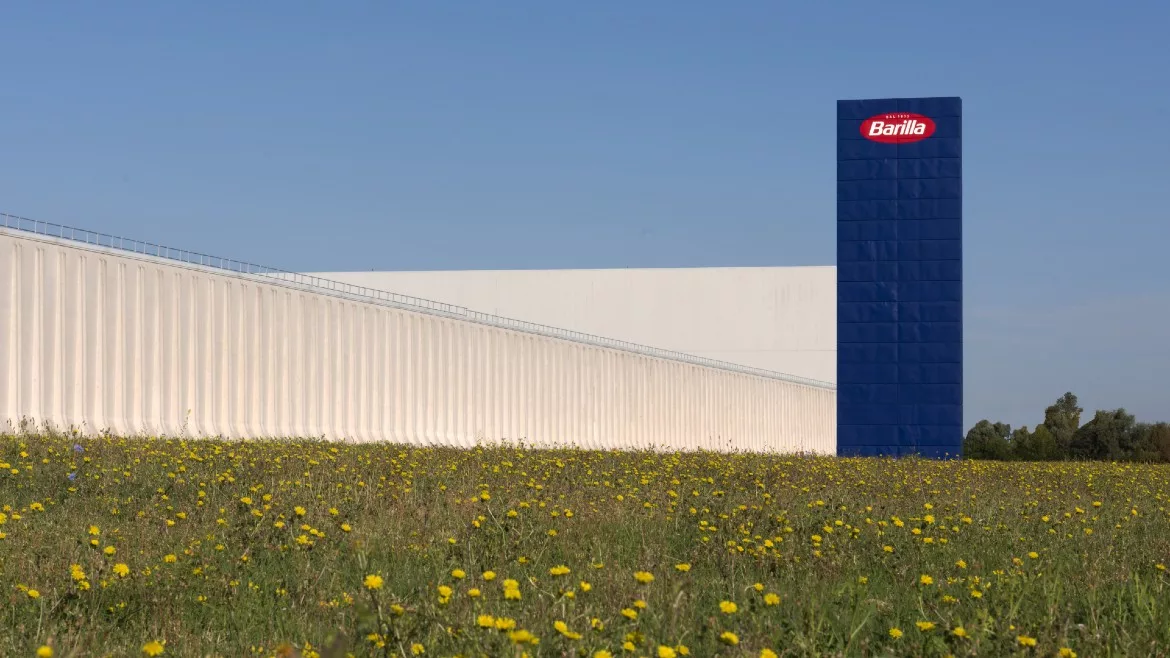
Barilla Rubbiano plant
Barilla Group

Barilla Group's plant in Rubbiano, Parma, Italy.

March 27, 2026

Barilla says it continues to strengthen its commitment to the responsible management of resources, from efficient water management to the design of more circular packaging solutions.

A fundamental resource for pasta production, water is a central element in Barilla’s management of its operations. The company says it works to progressively reduce water consumption in its production processes, encouraging recovery, recycling and reuse practices within its plants and across the supply chain. 

To support this integrated approach, Barilla has adopted an environmental management system compliant with the UNI EN ISO 14001 standard and has long conducted life cycle assessments (LCA) of its products, with particular attention to the Water Scarcity Index, which measures water consumption in relation to regional water availability. At its production sites, water – sourced mainly from aqueducts, wells or surface waters – is continuously monitored to ensure compliance with environmental regulations, while wastewater treatment systems are subject to strict controls to prevent pollution.

Each production site sets annual targets to reduce water consumption, which are monitored monthly through the Supply Chain Scorecard, Barilla’s global platform that tracks environmental performance indicators. Water recovery and reuse are becoming increasingly important: in 2024, the total volume of water recycled and reused increased by 45% compared to 2022, with an even more significant rise in water-stressed areas, where the increase reached 164%. An important contribution comes from the Rubbiano plant in Parma, dedicated to the production of sauces and pesto. Improvements to wastewater treatment systems enabled the recovery of over 62,000 m³ of water between 2022 and 2024, thanks to advanced water recycling solutions. This commitment also extends to the agri-food supply chain, with voluntary collaborations with tomato and basil suppliers to promote farming practices that use water resources more efficiently.

Looking ahead, Barilla will continue to invest in improving water efficiency across its facilities. At the Rubbiano plant, investments of over €5 million ($5.76 million) are planned as part of the Energy & Water Plan, the €168 million ($194 million) program launched in 2024, with the goal of increasing the recycled water index by 250% in the most water-stressed areas by 2030 compared to 2022.

One of the most tangible examples of Barilla’s sustainability strategy concerns packaging, an environmental challenge linked to the waste generated and the emissions associated with production. The company works to improve product protection, reducing food waste and to increase the use of recycled materials, decreasing the use of fossil-based resources. Today, 99.8% Barilla Group’s packaging is designed to be recyclable. Globally, over 50% of the materials used in Barilla’s packaging are recycled, while 71% of packaging is paper- or cardboard-based. This journey is guided by the Sustainable Packaging Principles, introduced in 1997 and continuously updated. Among its concrete goals, the company aims to eliminate around 4,000 tons of packaging material from the market by 2030 through redesign projects.

KEYWORDS: recyclability recyclable packaging water management water reuse

Share This Story

Looking for a reprint of this article?
From high-res PDFs to custom plaques, order your copy today!
Recommended Content

JOIN TODAY
to unlock your recommendations.

Already have an account? Sign In

  • CJ Schwan’s Salina facility.

    Recipe for Growth: How CJ Schwan’s Powers Pizza Production with People and Automation

    Blending advanced automation with purposeful design, this...
    Plant of the Year
    By: Alyse Thompson-Richards
  • Paris Baguette rendering

    FOOD ENGINEERING’s 49th Annual Plant Construction Survey

    Food and beverage manufacturers continue to invest in...
    Plant Openings
    By: Alyse Thompson-Richards
  • Bottling machine

    How Optical and X-Ray Inspection Supports Bottling Safety and Quality

    By transitioning from legacy single-technology systems to...
    Food Safety
    By: Dan McKee
Manage My Account
  • eMagazine
  • Newsletter
  • Online Registration
  • Manage My Preferences
  • Customer Service

More Videos

Sponsored Content

Sponsored Content is a special paid section where industry companies provide high quality, objective, non-commercial content around topics of interest to the Food Engineering audience. All Sponsored Content is supplied by the advertising company and any opinions expressed in this article are those of the author and not necessarily reflect the views of Food Engineering or its parent company, BNP Media. Interested in participating in our Sponsored Content section? Contact your local rep!

close
  • Stainless steel conveyor system transferring cut food pieces—likely pasta or fries—through an enclosed industrial processing line using a flexible hose and screw conveyor in a manufacturing facility.
    Sponsored byHapman

    What’s Slowing Down Your Bulk Material Handling Process?

  • AI-enhanced technology in CIP operations
    Sponsored byEcolab

    Using AI to unlock new value from your CIP processes

Popular Stories

Little Sesame staff standing outside at the opening of its new facility in Capitol Heights, Maryland with a ribbon-cutting ceremony.

All Roads Lead to Growth for Hummus Maker Little Sesame

The Campbell's Company logo

The Campbell’s Company Acquires 49% Stake in Rao’s Maker

Ecolab CIP IQ

Looking Toward Water-Smart Cleaning and Sanitation

Promo for the 2026 Plant of the Year: CJ Shwan

Events

June 17, 2025

Refrigerated & Frozen Foods’ State of the Cold Chain

On Demand Kelley Rodriguez, Editor in Chief of Refrigerated & Frozen Foods, will be joined in this 60-minute webinar by industry experts to help unpack the latest research.

July 23, 2025

Decarbonizing Process Heat: What You Should Know and Next Steps

On Demand Driven by climate goals, business risk, client interest, and resilience considerations, food and beverage companies are increasingly turning their attention to decarbonizing their production processes.

View All Submit An Event

Products

Recent Advances in Ready-to-Eat Food Technology

Recent Advances in Ready-to-Eat Food Technology

See More Products

June 3 Webinar: Integrating Heating and Colling in Food Production


CHECK OUT OUR NEW ESSENTIAL TOPICS

Alternative ProteinAutomationCleaning/SanitationFabulous Food Plants

Food SafetyMaintenance StrategiesOEE

PackagingSustainability

Related Articles

  • HACCP models project showing improvements in food safety

    See More
  • Improvements in nutrition top consumers’ reasons for support of biotechnology

    See More
  • PepsiCo Solar Panel Farm in Poland

    PepsiCo Refines Sustainability Goals for Climate, Packaging, Agriculture and Water

    See More

Related Products

See More Products
  • GlobalData_logo_blue_header.png

    Trends and Opportunities in the US Packaging Industry...

  • The 10 Principles of Food Industry Sustainability

  • Milk Processing and Quality Management

See More Products
×

Elevate your expertise in food engineering with unparalleled insights and connections.

Get the latest industry updates tailored your way.

JOIN TODAY!
  • RESOURCES
    • Advertise
    • Contact Us
    • Food Master
    • Store
    • Want More
  • SIGN UP TODAY
    • Create Account
    • eMagazine
    • Newsletter
    • Customer Service
    • Manage Preferences
  • SERVICES
    • Marketing Services
    • Reprints
    • Market Research
    • List Rental
    • Survey/Respondent Access
  • STAY CONNECTED
    • LinkedIn
    • Facebook
    • YouTube
    • X (Twitter)
  • PRIVACY
    • PRIVACY POLICY
    • TERMS & CONDITIONS
    • DO NOT SELL MY PERSONAL INFORMATION
    • PRIVACY REQUEST
    • ACCESSIBILITY

Copyright ©2026. All Rights Reserved BNP Media, Inc. and BNP Media II, LLC.

Design, CMS, Hosting & Web Development :: ePublishing