Food Waste Management
Managing Facility-Induced Food Waste
While processors have equipment and software fine-tuned to prevent process waste, their building could be working against them.
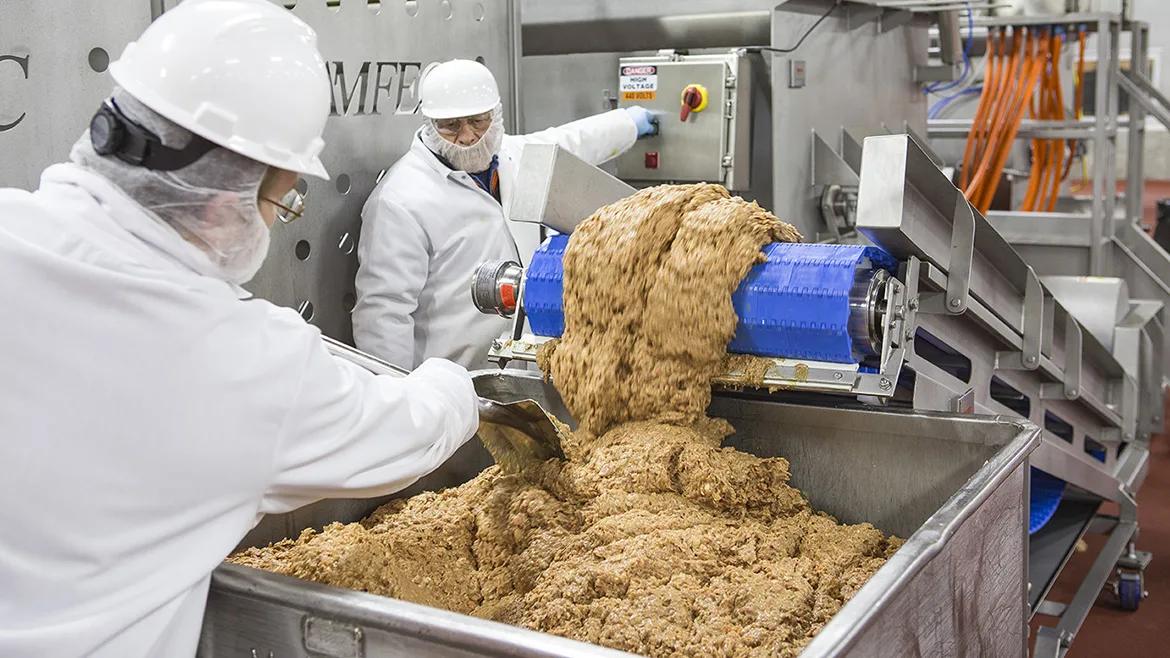
Even in modern facilities, it’s not unusual for certain equipment to be used with a cart to collect the product, which is then wheeled to the next station to be unloaded.
A 2024 UN document titled "Think – Eat – Save: Tracking Progress to Halve Global Food Waste" stated that food waste is a market failure that results in the throwing away of more than $1 trillion’s worth of food every year. It’s also an environmental failure: food waste generates an estimated 8-10% of global greenhouse gas emissions (including from both loss and waste), and it takes up the equivalent of nearly 30% of the world’s agricultural land.
However, while a 2022 ReFED Coresight Research study on food waste blamed farms and consumers for the lion’s share of food waste (21% and 37% respectively), manufacturing still accounts for 14% of the total waste. From a controls point-of-view, manufacturing tackles food waste in many ways — e.g., demand forecasting, automated processing, innovative packaging and process monitoring — but facility design plays an important role in making the process run smoothly and efficiently without spillages, off-temperature excursions and dirty environments —to name a few.
New facilities are custom designed to run safe, efficient operations with minimal product and ingredient waste, but older facilities don’t always lend themselves to efficient operations with minimal waste. For example, ingredient or finished goods storage may be subjected to unsafe temperature or humidity excursions — or even worse, condensate dripping from improperly maintained evaporators or outside weather exposure from a leaky roof.
Some older facilities suffer from inconvenient traffic design, which creates too many manual operations where people have to laboriously move product from one machine or location to the next. For example, a brining step for meat is isolated (requiring operator loading and unloading) and once that process is finished, the machine empties into a wheeled cart to the next process in the next room, making extra work for staff and potential spills. Manual labor isn’t the only problem. Improperly designed conveyance can spill product or ingredients over the edge and onto the floor, or — without scrapers — product can stick to the belt and fall on the floor as the belt makes its complete cycle.
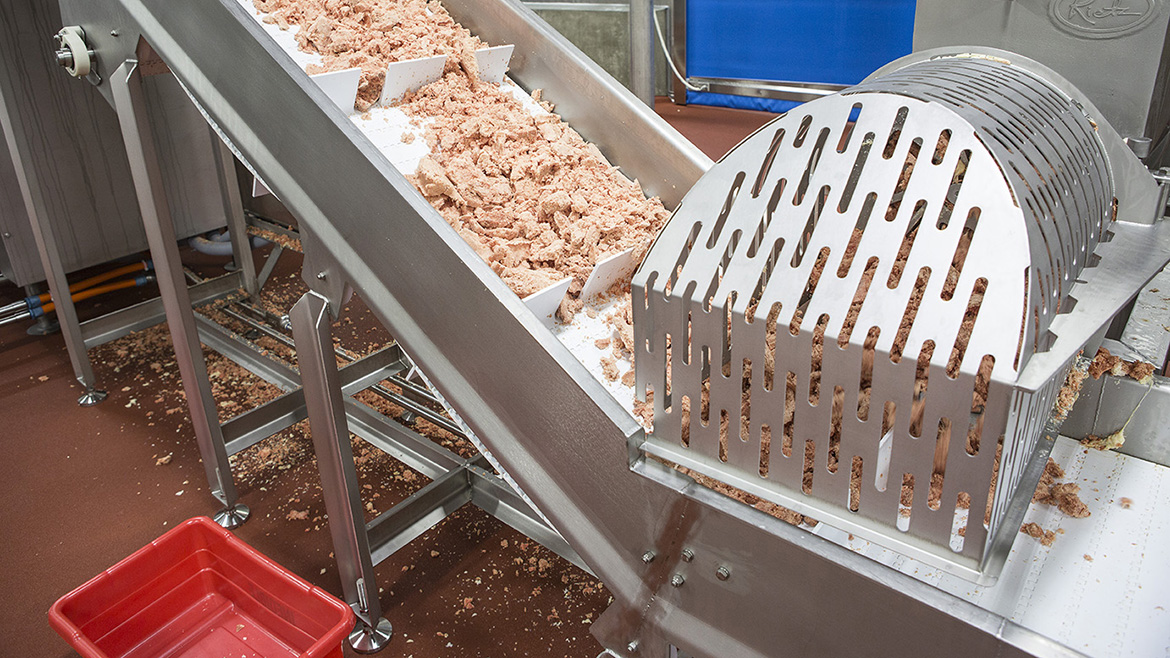
Today’s conveyors have high sides, but with sticky products like meat, some will stick to the surface and spill out to the floor. In this case, there is little to clean up. Photo courtesy of Christopher Ruhaak, HP&D
Newer plants today are designed to maximize food safety and minimize food waste. According to Ken Vonderhaar, CRB engineering director of client engagement, some of these design parameters include the following:
- Material and labor movement between areas to allow for proper area segregation
- Food ingredient waste is generated in part due to unplanned downtime, which can be minimized by proper application of product accumulation between equipment centers, consideration of MTBF (Mean Time Between Failure) and MTTR (Mean Time To Repair)
- Process Loss and Downtime as KPI (what is measured will be improved)
- Incoming materials // process design // automation and QC
- Cross contamination and quality losses
- Segregation // HVAC // SOPs
It’s most effective to design waste out, not managed after the fact, says David Ziskind, managing partner, Mach Global Advisors. Starting with layout, rooms/equipment/process flow should reflect a linear sequence. Minimize manual transfers. Limit manual involvement in the steps that could introduce human error. Take advantage of gravity to help empty lines. For ingredient additions, ensure you are verifying type of ingredient and quantity. Right-sized equipment is important; while you may want to balance flexibility in the future, oversized equipment might not run at design capacity, and a lower capacity may introduce additional concerns around cleaning and efficiency. Buffer is critical — buffer tanks, accumulation conveyor — to protect start/stops of equipment such as a filler, which may introduce waste via under/over fills.
Common Problems in Older Facilities
One of the most common sources of food and ingredient waste in older facilities is product loss caused by equipment that is no longer properly aligned or well-integrated, resulting in leaks, spills or material falling to the floor during transfer and processing, says Kasia Grieco, senior process engineer at Dennis Group. "We also frequently see issues stemming from years of repairs and modifications, where worn components, poor-fitting parts or temporary fixes create issues. Some of the lowest-cost remedies include replacing worn seals and components and optimizing equipment layouts to shorten transfer distances, reducing opportunities for leaks, spills and product loss."
EXPLORE MORE


"Out-of-spec product is usually the largest source of product loss, and it can occur anywhere in the production line, from front-end processing to end-of-the-line packaging," says Andrew Earle, Dennis Group senior process engineer. Small imbalances in a mixing or batching operation can result in product that is out of spec. Automating processes and implementing instrumentation such as mass flow meters and ingredient-tracking systems can significantly improve batching accuracy, resulting in more consistent, in-spec product and less waste.
For liquid processing operations, another common source of waste occurs during line priming and product recovery at the end of a run. Many facilities accept the product left in pipes as an unavoidable yield loss, but instrumentation such as flow meters, conductivity meters and automated controls can optimize these prime-and-push sequences, recovering more product. Investments in automation and instrumentation often pay for themselves quickly by improving yields and reducing product loss.
Many waste-reduction opportunities in older facilities center around improving process control and visibility, says Christy Starner, Dennis Group director of modeling. Automating ingredient delivery, optimizing equipment controls to reduce unnecessary starts and stops and adding sensors and alarms to quickly detect quality issues can significantly reduce product loss. Just as important is tracking waste so facilities understand where losses are occurring and can prioritize improvements.
In addition to food waste, there is also packaging waste, Starner adds. Retrofitting wrappers and baggers with auto-splicing technology minimizes waste generated during roll changes by enabling continuous operation and reducing the amount of film or packaging material that must be discarded.
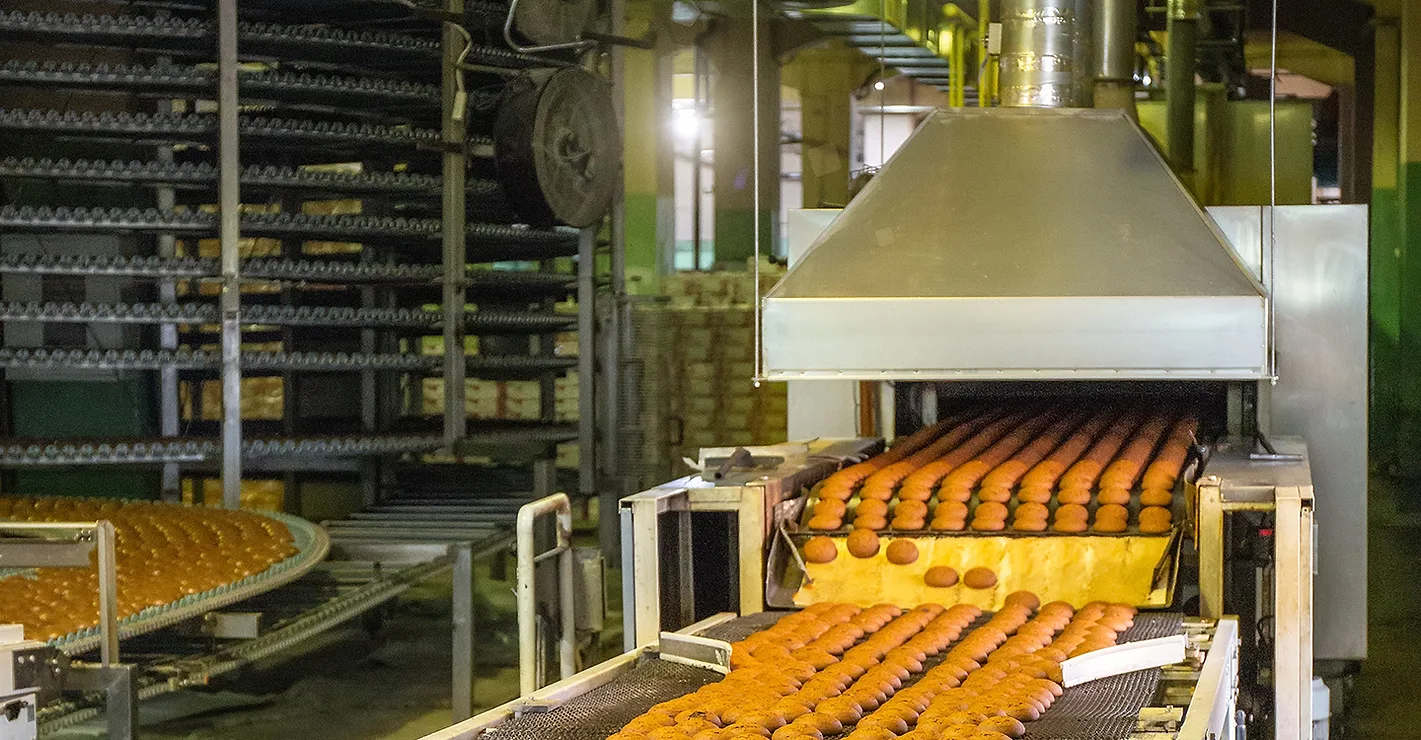
For bakery operations, a lack of product accumulation capacity is a common source of waste, Starner says. Accumulation systems provide a buffer between the oven and downstream equipment, allowing lines to absorb short disruptions and giving operators a place to divert product during longer stoppages. Without that buffer, product moving through the oven may back up and become off-spec. In many cases, adding accumulation can be a relatively straightforward solution to avoid waste.
In older facilities, food and ingredient waste is often tied to issues like poor material flow/handling and gaps in segregation or standard operating procedures for personnel movement, VonderHaar says. "These challenges can show up in different ways — from uncontrolled thawing that leads to spoilage in meat operations to inefficiencies in processes like chocolate conching or excessive product loss during transitions. We also see variability in upstream inputs impacting quality and overly conservative discard practices contributing to unnecessary waste."
Aging equipment may result in production inefficiencies including waste, Ziskind says. Manual transfers offer opportunity for mistakes and spills. Thoughtfully designed changeover processes can help minimize losses during product changes. Inline monitoring (checkweigher, temperature probe, etc.) can help catch issues early before significant production occurs with out-of-spec product.
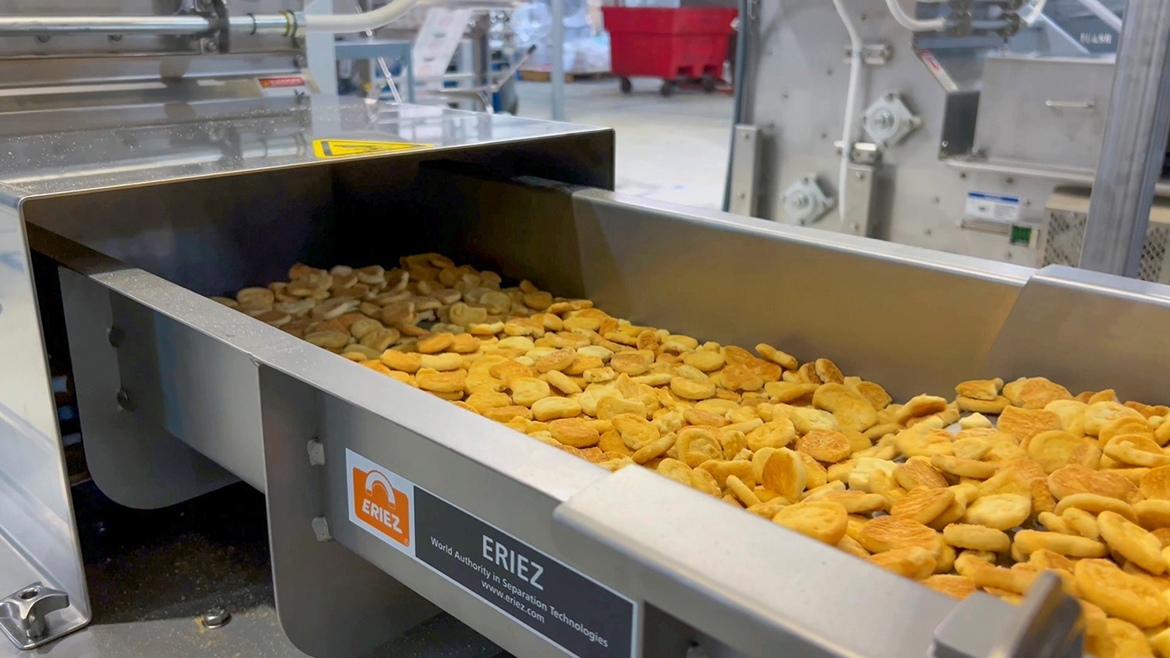
Eriez light and medium duty electromagnetic feeders, powered by the advanced Hi-Vi magnetic drive circuit, offer a versatile and reliable solution for feeding a wide range of materials — from fine powders to bulky chunks. Note the high sides prevent spillage and waste. Photo courtesy of Eriez
In addition, Ziskind suggests that automation of manual processes can help reduce food loss and waste. Enclosed conveyors may offer less opportunity for loss. Relocating equipment to a different temperature area or to improve process flow may help, as would the addition of buffer capacity.
Older Facilities May Not Need Physical Expansion
Many older facilities can reduce waste without expanding their physical footprint by improving data collection, reporting and process visibility, says Dennis Group’s Earle. Facilities that still rely on manual recordkeeping often struggle to identify the root causes of product loss, making recurring issues harder to correct. Implementing manufacturing execution systems (MES) and other digital reporting tools improves real-time visibility into production performance and provides data to help pinpoint when and why losses occur. Enhanced information enables targeted improvements that can reduce waste, improve consistency and increase overall efficiency without requiring major facility modifications.
Waste can occur when residual product remains in piping, transfer lines and equipment between production and CIP, adds Dennis Group’s Grieco. In this scenario, replacing hose-based flow panels with more closely coupled sanitary valve manifolds can reduce trapped product and minimize losses.
Lack of Food Safety and Environmental Controls Makes Food Waste
Cleanliness — or lack thereof — can introduce waste, in addition to food safety issues in the facility, Ziskind adds. Older HVAC equipment or poorly designed mechanical air flows can introduce waste and cause the facility to operate less efficiently.
When you open a door in an older facility, and the airflow changes direction at the other end of the room, there may be an airflow problem. Compound that with evaporators in cold rooms where the condensate drains are clogged, and the condensate drips onto food below. This is a serious problem — enough to warrant notice from FDA or other inspectors, which could end up in them condemning potentially tons of food and closing a facility until the problem is solved.
Temperature control, air quality and storage conditions can absolutely contribute to food and ingredient waste in older facilities, Grieco says. For example, if a silo’s blanketing system is not functioning properly, oxygen or moisture can enter the storage vessel and lead to spoilage of raw ingredients.
Older plants may have outdated building features such as difficult-to-clean ceilings, exposed joists or structural elements, and corrosion-prone surfaces that can make it harder to sanitize production areas effectively, says Dennis Group’s Earle. These conditions can increase the risk of contamination, resulting in more product being discarded. Upgrades to hygienic building materials, airflow management improvements and more cleanable facility designs can help reduce waste by creating a more controlled and sanitary production environment.
When is it Time to Make Major Facility Modifications?
Major modifications to a facility are typically justified when waste levels begin to have a significant impact on profitability and cannot be addressed through process improvements, equipment upgrades or operational changes alone, Grieco says. Before investing in additional space or significant layout changes, manufacturers need to quantify how much product loss is occurring, understand its impact on profit margins and determine whether it can be reduced through less costly alternatives.
In some cases, major facility modifications are justified when waste can be converted from a disposal cost into a revenue stream, says Dennis Group’s Earle. "Food manufacturers have found creative ways to repurpose byproducts, such as using bakery scraps or brewery spent grains as animal feed. We have also worked with processors that leverage organic waste in on-site anaerobic digesters to generate biogas, which can then be used as a supplemental fuel source, reducing their carbon footprint."
Overlooked Floor Drains Harbor Bacteria
Part of the plant facility, floor drains can harbor bacteria like Listeria monocytogenes (Lm), which can spread throughout the plant, causing food to be contaminated, then discarded. The sanitation of floor drains too often receives little attention, falling victim to an "out of sight, out of mind" mindset. Yet, neglecting them is a leading cause of food contamination at food production facilities, says Viking Kristjansson, vice president sales engineering at FoodSafe Drains.
Modern drain systems are designed to resist bacteria buildup and simplify maintenance at the same time. While area and grated drains have been the standard option in older production facilities, newer slot drains are becoming more popular due to less underground piping needed to support them, and they tend to be easier to install and maintain.
Slot drains offer simpler underground preparation. According to Kristjansson, in a 4,800-sq.-ft. facility, an area drain system typically requires 244 feet of underground pipes, whereas a 100-ft. slot drain can achieve the same drainage with 10 ft. of underground piping.
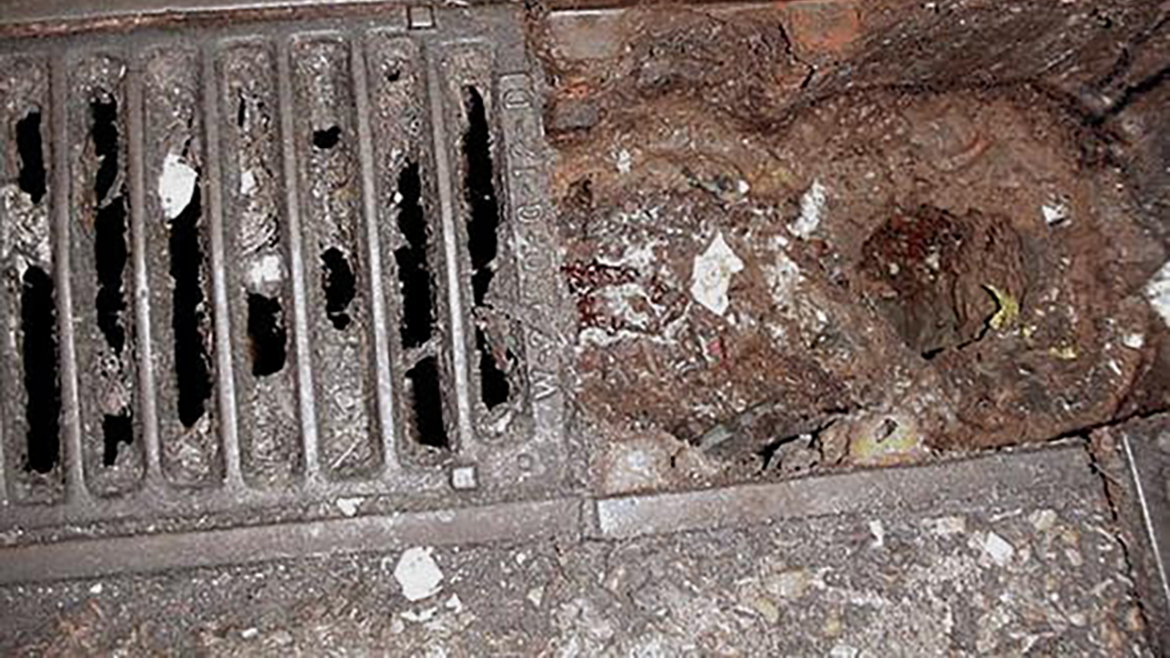
Research consistently shows that over 80% of positive bacterial tests in plants can be traced back to drains and floor areas. Photo courtesy of Global Drain Technologies
Raw Materials Storage
Whether or not the facility is aging or brand new, managing raw materials and ingredients can be a challenge. Areas for raw materials and ingredient storage need to be part of the building design — not an afterthought. Ingredients can be damaged in receiving or expire in storage, and expiration happens faster if there is moisture damage or improper temperature control — such as the leaking condensate issue described earlier. Materials should be used on a first-in-first-out basis, and incorrect inventory forecasting can mean too much of one ingredient and not enough of another.
Fortunately, most inventory and warehouse management systems tie directly to ERP, so purchasing reflects actual production demand rather than historical averages. Temperature and humidity monitoring should be used, and many ERP systems now feature built in AI to forecast both demand and sourcing ingredients from dependable suppliers.
Short Product Life Cycles Challenge Processors to Cut Waste
Pablo Coronel, PhD, CRB senior fellow, food processing and food safety, points out that product lifecycles are so short today that constant innovation is necessary to stay afloat. Gone are the days when the same product ran for 10 to 15 years, where the cleaning routine was performed in the same way every day, and the results were known. With today’s short product lifecycles, new cleaning regimens must be developed for each new product run, and extensive testing and validation need to be done before shipping new products.
As CRB’s Coronel suggests in CRB’s latest "Horizons Food Safety 2026" report, this pressure to put out more frequent and novel products increases food safety risks because of reduced time to develop appropriate tests that include new formulations and packaging changes.
Resources:
"Renovate for the right reasons," FE, Nov. 5, 2014
"A clean slate: Use it wisely," FE, Dec. 2, 2014
"Fighting the Foodborne Bacteria War with Cleaning and Sanitation," FE, May 16, 2025
"Is Your Facility Safe In Processing Dry Products?" FE, Sept. 25, 2024
"Put positive pressure on facility airflows," FE, March 5, 2015
"Horizons: Food Safety Report 2026," CRB, Available here
Looking for a reprint of this article?
From high-res PDFs to custom plaques, order your copy today!