How Automation Supports Variability and Flexibility in Food Manufacturing
Food processing facilities are expected to do more than ever before. Consumers want a broader range of offerings, their constant availability, shorter delivery times and consistently high quality regardless of the season or batch size. Meanwhile, food manufacturers are dealing with labor shortages, increasing hygiene requirements, rising operating costs and growing pressure to improve efficiency without compromising on food product integrity.
These expectations are closely interconnected. When one shifts, it can affect every stage of production downstream. For example, if cleaning and sanitation procedures take longer than planned, subsequent processes may be delayed, impacting production schedules, factory throughput and product availability on store shelves. Every delay reduces available production time and can directly affect profitability.
As product portfolios expand and production requirements become increasingly complex, manufacturers are under growing pressure to maintain efficiency with systems originally designed for predictable, repetitive production.
In response, many food producers are reassessing how automation is deployed across their operations. Rather than focusing solely on maximizing throughput, greater attention is being paid to solutions that can maintain stable performance despite changing product formats, batch sizes and production conditions. The focus is shifting toward systems that can effectively manage variability while supporting consistent and reliable production.
Fixed Systems Become a Liability
For years, food production lines have been designed around a predictive, repetitive flow, with factories typically running one product for long periods of time with minimal to no variation. That structure has become harder to maintain as product portfolios continue to expand. Manufacturers are increasingly required to accommodate a greater variety of formats, sizes and packaging configurations on existing production lines, placing greater demands on flexibility and process stability.
The effects of this variability become apparent at the beginning of the production process, as products enter the line. Feeding, handling, alignment and transfers that were once straightforward become critical when product consistency can no longer be taken for granted. As production systems become more interconnected, even minor disruptions can affect downstream operations, making reliability essential to overall machine performance.
Small deviations early in the process can accumulate as products move through subsequent stages, affecting everything from processing accuracy to packaging. A line may perform well under standard conditions, but small disruptions can quickly affect downstream operations.
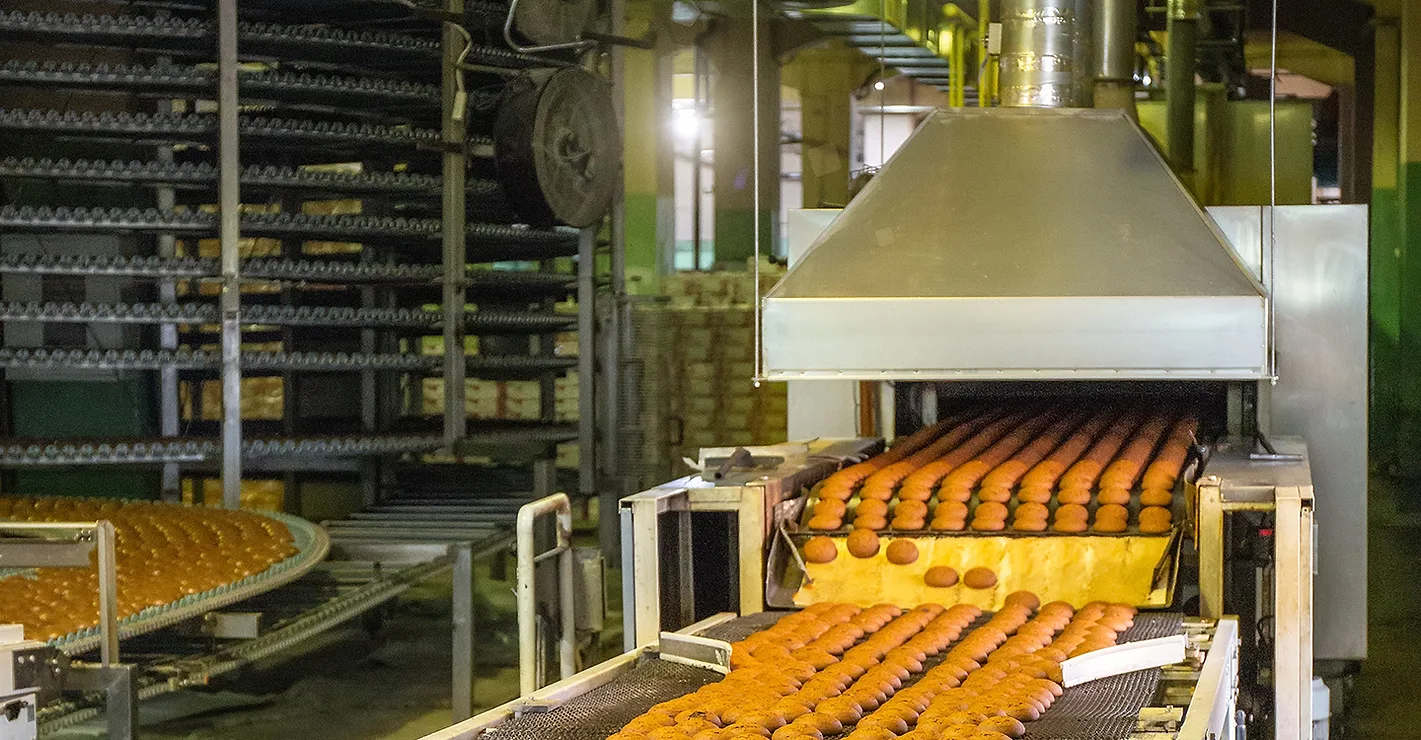
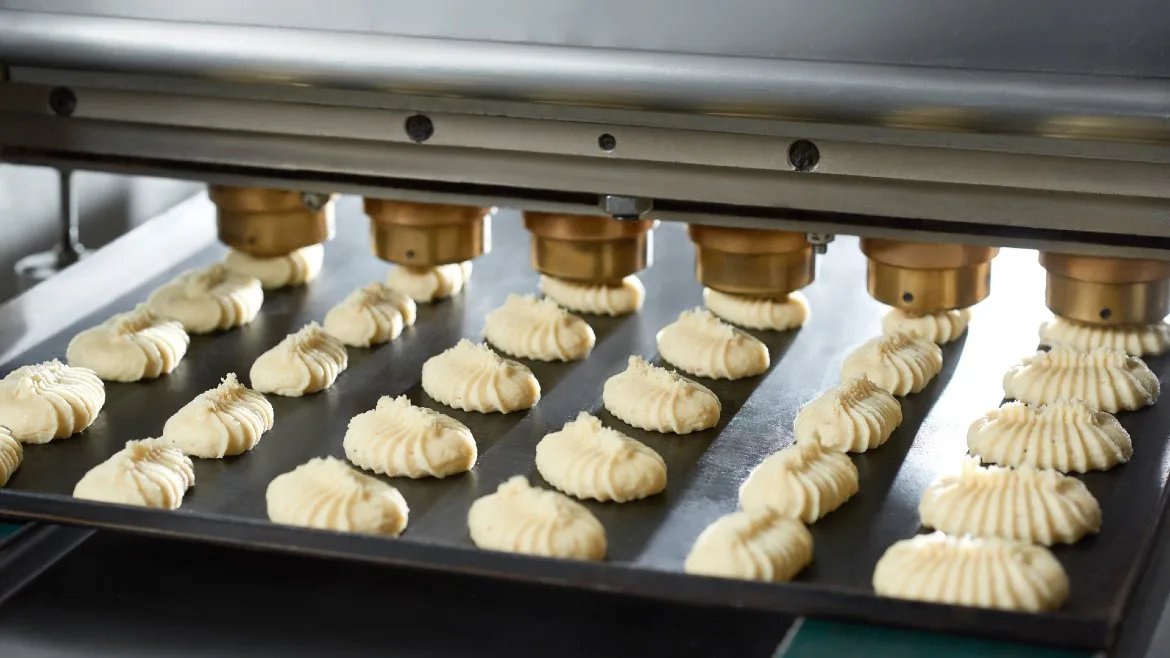
Bakery production provides a clear example. Dough pieces often vary in shape, weight and density, and they continue to change throughout handling due to fluctuations in temperature and moisture. At an industrial scale, these variations can make precise product handling more challenging, increasing the risk of product damage, process instability and reduced efficiency.
This is where automated feeding and singulation systems make a measurable difference. By separating and aligning individual food pieces at the very beginning of the line, variability is reduced before products proceed through the rest of the system. In some applications, these systems handle several hundred units per minute while still accommodating different formats and product types.
Reliable production depends on how well different stages are synchronized and how effectively variation is managed throughout the line. Once product flow has been stabilized through these automation systems, the rest of the process is likely to go smoothly.
Integration into Existing Systems
As product variety increases, manufacturers are finding that throughput alone is no longer the sole measure of performance.
A product line that is highly optimized and designed for only a single product may be efficient, but when demand shifts or frequent changeovers are required, those systems can fall short. Downtime, recalibration and manual adjustments quickly undermine the efficiency originally promised. This is why flexibility is now taking priority over speed to completion.
Rather than replacing existing production lines, manufacturers are focusing on targeted upgrades that extend the capabilities of what is already in place. In many facilities, this means identifying where variability enters the system and reinforcing those points rather than redesigning the entire line.
Examples include adding automation modules at specific stages, such as feeding or handling points, where product flow is more likely to be unstable. Optimization efforts may also involve introducing humanoid robotics that work alongside existing equipment and automate repetitive tasks or highly sensitive handling processes that are difficult to control consistently at scale.
The result is not necessarily a new production line, but a more capable version of the existing one, better equipped to handle greater variety without compromising performance.
Hygiene is Always the Standard
Hygiene is one of the most important aspects of food production and manufacturing. If something is not cleaned properly and consistently, the risk of contamination increases, leading to product recalls and unplanned downtime that can disrupt the entire production schedule.
Cleaning time, inspections and ease of disassembly all play a big part in how automation equipment is engineered. If cleaning is difficult or time-consuming, it limits how often production can switch between products and reduces overall flexibility.
This is why food-grade systems are engineered with hygiene in mind from the start. Stainless steel construction, smooth surfaces, sealed components and food-grade component designs help reduce residue buildup and simplify cleaning.
Just as important is how these automation systems behave during cleaning cycles. Equipment that can be quickly sanitized, inspected and reset reduces the time that would otherwise be spent cleaning if the equipment were not engineered for efficiency. While automation does not eliminate the need for human oversight and inspections, it reduces the amount of direct contact required in sensitive areas of production, helping with consistency and reducing the risk of contamination.
Why Should Consumers Care?
Modernizing processes and equipment, such as adding automated systems and humanoid robotics, directly influences the reliability of food once it reaches consumers.
When feeding, processing, and handling are better controlled, production becomes less sensitive to variation. The stability that comes with streamlining systems allows manufacturers to maintain consistent output even as products change, expand or shift rapidly or unexpectedly.
That consistency affects more than factory performance — it influences whether products remain available on shelves, deliver consistent quality between batches, and can be produced efficiently enough to support attractive pricing despite growing product variety and production complexity. It also ensures that food safety standards can be maintained across industrial-scale production.
Optimized and modernized production environments also help reduce waste, from damaged products and unstable processing conditions to avoidable production losses. In an industry where the smallest disruption can have widespread supply chain impacts, improving reliability at the production level directly affects what consumers ultimately experience.
While most of these systems remain invisible, the buyer will notice and appreciate the consistency. Consumers have come to expect that a product will look the same, taste the same, remain readily available and be offered at a competitive price. Much of that consistency is supported by automation operating behind the scenes at every stage of manufacturing.
Looking for a reprint of this article?
From high-res PDFs to custom plaques, order your copy today!