Food Engineering logo
search
cart
facebook twitter linkedin youtube
  • Sign In
  • Create Account
  • Sign Out
  • My Account
Food Engineering logo
  • NEWS
    • Latest Headlines
    • Manufacturing News
    • People & Industry News
    • Plant Openings
    • Recalls
    • Regulatory Watch
    • Supplier News
  • PRODUCTS
    • New Plant Products
    • New Retail Products
  • TOPICS
    • Alternative Protein
    • Automation
    • Cannabis
    • Cleaning | Sanitation
    • Cross-Functional Food Innovation
    • Fabulous Food Plants
    • Food Safety
    • Maintenance Strategies
    • OEE
    • Packaging
    • Sustainability
    • More
  • EXCLUSIVES
    • Plant Construction Survey
    • Plant of the Year
    • Sustainable Plant of the Year
    • State of Food Manufacturing
    • Top 100 Food & Beverage Companies
  • MEDIA
    • Podcasts
    • Videos
    • Webinars
    • White Papers
  • FOOD MASTER
  • EVENTS
    • Food Automation & Manufacturing Symposium and Expo
    • Industry Events
  • RESOURCES
    • Newsletter
    • Custom Content & Marketing Services
    • FE Store
    • Government Links
    • Industry Associations
    • Market Research
    • Sponsor Insights
    • Classified Ads
  • EMAGAZINE
    • eMagazine
    • Archive Issue
    • Advertise
  • SIGN UP!
AutomationPackaging

Printing/Marking

Starting the 2D Code Journey to Strengthen Food Safety
By Rachael Satchwell
2D Codes
Domino Printing Sciences
August 18, 2026

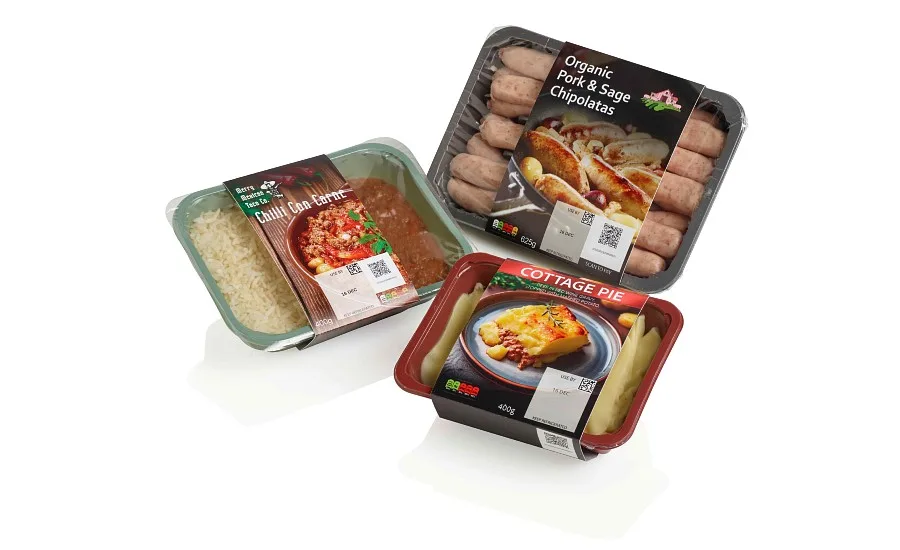
Retailers globally are accelerating adoption of 2D codes powered by GS1. Major brands increasingly view 2D codes as central to connected packaging, enhanced food traceability and stronger consumer trust. As food manufacturers approach a turning point in the application, verification and sharing of product data, a practical roadmap can support faster implementation, stronger compliance outcomes and measurable operational efficiencies.


Tangible 2D Code Value

While the momentum for 2D codes is unmistakable, a major barrier to early adoption remains limited operational awareness. This is not simply a retailer-driven requirement — 2D codes are an enabler of manufacturing efficiency, food safety and data-driven decision-making. 

EXPLORE MORE

Packaging Automation

The use of 2D codes in food supply chains enables the capture of batch- and item-level information, supporting stronger food traceability. Manufacturers can quickly pinpoint issues with greater accuracy, reducing the scope, cost and disruption of recalls, while reinforcing food safety compliance across the factory and beyond. Furthermore, when dynamic data is applied at the point of manufacture, visibility of shelf life is improved, supporting better stock rotation and reducing the risk of short dated or expired products progressing through the chain.

Connected packaging built on 2D codes can reinforce consumer brand confidence with greater transparency around allergens, ingredients, sourcing and sustainability. The availability of real-time product data also supports a more responsive food supply chain, allowing manufacturers and retailers to share insight, better coordinate production and replenishment, and reduce waste. Once these benefits are clearly articulated, they help align internal stakeholders and underpin a robust, evidence-based business case.


First Steps to Adopting 2D Codes

For many manufacturers, the starting point is not technology but understanding the implications for real production environments. Balancing legacy machinery, newer automation and stretched operational teams requires a migration plan that is achievable, low risk and firmly rooted in day-to-day factory reality. 

The goal is to enable manufacturers to adopt 2D codes with minimal operational disruption. This begins with the formation of a cross‑functional team to define the objectives of introducing 2D codes and determine data requirements. From there, existing packaging artwork must be assessed to understand space, placement and readability for 2D codes, while identifying any updates to meet GS1 standards and retailer expectations.

New artwork requirements will also inform us of the need to upgrade current coding and verification equipment. It is important to recognize that legacy machinery is not always a barrier to 2D code adoption. Often there is no need for major capital investment or lengthy downtime. Modern printers, scanners and vision systems are designed to be modular and can be retrofitted onto most existing lines with minimal engineering work. 

The introduction of 2D codes will create new data types and flows between printers, cameras, PLCs and IT systems. Mapping the way information moves across the line helps avoid bottlenecks and prevents downstream verification issues.


Automated Verification to Improve Safety and Efficiency

Robust verification is a fundamental aspect of improved food safety. Automated inline verification systems combine camera based vision technology with real time code grading, ensuring every 2D code is present, readable, correctly structured and applied to the right product. 

Automated verification reduces the need for manual checks, cuts waste associated with unreadable or incorrect codes and prevents product recalls linked to miscoding or non-compliance. It also provides reliable evidence of compliance with GS1 standards, strengthening food safety compliance and building trust across the supply chain. The final step is to audit substrate and ink/ribbon compatibility to ensure durable, high-quality codes across all materials and avoid print-related line stoppages. 

A controlled pilot phase then allows teams to fine-tune the entire setup before wider rollout. Start with one or two high impact SKUs, such as those with shorter shelf life or destined for markets already adopting connected packaging. Adjusting line speeds, lighting conditions, reject logic and equipment integration in a closely controlled product area can generate early value while limiting disruption. A successful pilot also strengthens the internal business case for wider rollout, moving the organization closer to future ready, fully connected operations.


The Road Ahead

The adoption of 2D codes reflects a much wider global shift towards more transparent and data driven food supply chains. It aligns closely with rising consumer expectations, evolving retailer requirements, and the wider push for digitalized, interoperable product data. 

There is no need for wholesale equipment replacement. Start by closing the current knowledge gap, focusing on achievable operational wins and integrating new capabilities with existing assets. Improving confidence and clarity will enable food manufacturers to evolve towards smarter and more connected food manufacturing. Manufacturers who take early, practical steps will be well placed to lead the next generation of connected, future-ready food manufacturing. 

KEYWORDS: barcode GS1 traceability

Share This Story

Looking for a reprint of this article?
From high-res PDFs to custom plaques, order your copy today!

Rachael satchwell domino

Rachael Satchwell is global food sector manager for Domino Printing Sciences.


Recommended Content

JOIN TODAY
to unlock your recommendations.

Already have an account? Sign In

  • CJ Schwan’s Salina facility.

    Recipe for Growth: How CJ Schwan’s Powers Pizza Production with People and Automation

    Blending advanced automation with purposeful design, this...
    Cross-Functional Food Innovation
    By: Alyse Thompson-Richards
  • Paris Baguette rendering

    FOOD ENGINEERING’s 49th Annual Plant Construction Survey

    Food and beverage manufacturers continue to invest in...
    Plant Openings
    By: Alyse Thompson-Richards
  • Bottling machine

    How Optical and X-Ray Inspection Supports Bottling Safety and Quality

    By transitioning from legacy single-technology systems to...
    Food Safety
    By: Dan McKee
Manage My Account
  • eMagazine
  • Newsletter
  • Online Registration
  • Manage My Preferences
  • Customer Service

More Videos

Sponsored Content

Sponsored Content is a special paid section where industry companies provide high quality, objective, non-commercial content around topics of interest to the Food Engineering audience. All Sponsored Content is supplied by the advertising company and any opinions expressed in this article are those of the author and not necessarily reflect the views of Food Engineering or its parent company, BNP Media. Interested in participating in our Sponsored Content section? Contact your local rep!

close
  • An old and tattered manual titled 'Revised 5/20/1971' on a desk along with a cellphone, sunglasses, Apple iWatch, laptop and keyboard, and a water bottle.
    Sponsored byEnSight Solutions

    Redefining Quality: Has the Industry Lost Sight of What Actually Matters?

  • Worker in protective food-processing attire uses a tablet beside stainless-steel conveyor equipment in a modern food manufacturing facility.
    Sponsored bySafetyChain

    Your Biggest Losses Are Hiding in Data You Already Have

  • Stainless steel conveyor system transferring cut food pieces—likely pasta or fries—through an enclosed industrial processing line using a flexible hose and screw conveyor in a manufacturing facility.
    Sponsored byHapman

    What’s Slowing Down Your Bulk Material Handling Process?

Popular Stories

Skittles Remix machine Mars

Mars to Move U.S. HQ to Chicago

Brown Shell Eggs

1.6M Dozens of Eggs Recalled Over Salmonella Risk

Iceberg lettuce

FDA: Test Connecting Taylor Farms to Cyclospora Outbreak Was False Positive

Promo for the 2026 Plant of the Year: CJ Shwan

Events

September 23, 2026

An In-Depth Look at 2026's Top 100 Food and Beverage Companies

Join Lynn Dornblaser, Client Advisor at Mintel, and Alyse Thompson-Richards, Editor-in-Chief of FOOD ENGINEERING, as they break down the 2026 Top 100 Food and Beverage Companies and discuss the factors affecting this year’s rankings.

January 1, 2030

Webinar Sponsorship Information

For webinar sponsorship information, visit www.bnpevents.com/webinars or email webinars@bnpmedia.com.

View All Submit An Event

Products

Recent Advances in Ready-to-Eat Food Technology

Recent Advances in Ready-to-Eat Food Technology

See More Products

September 23 FE Editorial Webinar


CHECK OUT OUR NEW ESSENTIAL TOPICS

Alternative ProteinAutomationCleaning/SanitationFabulous Food Plants

Food SafetyMaintenance StrategiesOEE

PackagingSustainability

Related Articles

  • FDA to strengthen food safety protections as consumers purchase more food online

    FDA to strengthen food safety protections as consumers purchase more food online

    See More
  • GAO recommends USDA strengthen food safety standards for Salmonella, Campylobacter contamination in poultry

    See More
  • US partners with Mexico to strengthen produce safety

    See More

Related Products

See More Products
  • 9780367351052.jpg

    Food Process Engineering: Safety Assurance and Complements

  • small-occ.jpg

    Occupational Health and Safety in the Food and Beverage Industry

  • food crime.jpg

    Food Crime: An Introduction to Deviance in the Food Industry

See More Products
×

Elevate your expertise in food engineering with unparalleled insights and connections.

Get the latest industry updates tailored your way.

JOIN TODAY!
  • RESOURCES
    • Advertise
    • Contact Us
    • Food Master
    • Store
    • Want More
  • SIGN UP TODAY
    • Create Account
    • eMagazine
    • Newsletter
    • Customer Service
    • Manage Preferences
  • SERVICES
    • Marketing Services
    • Reprints
    • Market Research
    • List Rental
    • Survey/Respondent Access
  • STAY CONNECTED
    • LinkedIn
    • Facebook
    • YouTube
    • X (Twitter)
  • PRIVACY
    • PRIVACY POLICY
    • TERMS & CONDITIONS
    • DO NOT SELL MY PERSONAL INFORMATION
    • PRIVACY REQUEST
    • ACCESSIBILITY

Copyright ©2026. All Rights Reserved BNP Media, Inc. and BNP Media II, LLC.

Design, CMS, Hosting & Web Development :: ePublishing