Food Engineering logo
search
cart
facebook twitter linkedin youtube
  • Sign In
  • Create Account
  • Sign Out
  • My Account
Food Engineering logo
  • NEWS
    • Latest Headlines
    • Manufacturing News
    • People & Industry News
    • Plant Openings
    • Recalls
    • Regulatory Watch
    • Supplier News
  • PRODUCTS
    • New Plant Products
    • New Retail Products
  • TOPICS
    • Alternative Protein
    • Automation
    • Cannabis
    • Cleaning | Sanitation
    • Fabulous Food Plants
    • Food Safety
    • Maintenance Strategies
    • OEE
    • Packaging
    • Sustainability
    • More
  • EXCLUSIVES
    • Plant Construction Survey
    • Plant of the Year
    • Sustainable Plant of the Year
    • State of Food Manufacturing
    • Top 100 Food & Beverage Companies
  • MEDIA
    • Podcasts
    • Videos
    • Webinars
    • White Papers
  • FOOD MASTER
  • EVENTS
    • Food Automation & Manufacturing Symposium and Expo
    • Industry Events
  • RESOURCES
    • Newsletter
    • Custom Content & Marketing Services
    • FE Store
    • Government Links
    • Industry Associations
    • Market Research
    • Classified Ads
  • EMAGAZINE
    • eMagazine
    • Archive Issue
    • Advertise
  • SIGN UP!

If you use metal detectors, don't go it alone

By Richard F. Stier
September 20, 2005
Understanding your equipment's capabilities up front keeps food safe and makes manufacturing easier.

Richard F. Stier
In the last few years, I've been in many plants and have seen staff fighting more than one battle with the facility's metal detectors. In each of these cases, the problems stemmed from the plant trying to commission and/or operate the metal detector on its own. But the time, effort and aggravation experienced by plant staff could have been alleviated with a single call to the equipment vendor.


Metal detection has become an integral part of most food processing operations. In fact, many companies mandate every ingredient they buy must be run through a metal detection system. This business practice can protect raw materials, finished goods and your brand.

But how do you choose the right metal detector? They may be used to detect metal in liquid systems, powders that flow, pieces of meat, fruit or vegetables and packaged products. To select the right tool for the right application, processors must understand not only their products but also the capabilities of metal detection technology.

The very nature of some products can cause a metal detector to reject them and interfere with the detector's sensitivity. Products that may cause this kind of reaction-known as a "product effect"-are those with high moisture content such as meat, cheese, warm bread, fresh produce and most liquids. The detector can be adjusted to minimize this effect, but its achievable sensitivity will be reduced.

Low-moisture products such as cookies, fried snacks, sugars and cereals have little product effect and can operate at greater sensitivities. Frozen foods also have little product effect since their moisture is bound up.
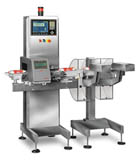


To select the right tool for the right application, processors must understand not only their products but also the capabilities of metal detection technology. Source: Thermo Electron.
Processors can come up against challenges when they try to install detectors on their own. For example, one company decided to run all of its finished products through a metal detector. This processor manufactured a wide range of products (300 SKUs) and decided to pass cased goods through the detector prior to palletizing. The processor's client had standards of 1.0 mm for ferrous and 1.5 mm for non-ferrous. The processor unsuccessfully tried to make the unit work for the standards. When the processor finally called the metal detector company, the service representative said the unit simply could not run at the desired sensitivities. The rep sent a letter describing the minimum operating parameters for the unit given the products the processor was running. The processor shared the letter with its client, who granted a waiver to operate at lower sensitivities for its products.

In another example, a processor decided to install a metal detector on a line handling sauces with particulates. The processor did the set-up on its own and adjusted the sensitivities to the lowest possible detection limit. This operation also had problems. With the supplier's help, the processor adjusted the sensitivity upward and made changes to the software, solving the problems.

With metal detection becoming mandatory, processors must do everything they can to get their systems working properly from the very beginning. This means understanding products and the basic principles of metal detection and taking advantage of the expertise offered by suppliers. Remember one of the primary corollaries to Murphy's Law: "There is never time to do it right, but there is always time to do it again."

Share This Story

Looking for a reprint of this article?
From high-res PDFs to custom plaques, order your copy today!
Richard Stier is a consulting food scientist who has helped food processors develop safety, quality and sanitation programs. He believes in emphasizing the importance of how these programs can help companies increase profits. Stier holds degrees in food science from Rutgers University and the University of California at Davis. He is a Contributing Editor for Food Engineering. Email: rickstier4@aol.com

Recommended Content

JOIN TODAY
to unlock your recommendations.

Already have an account? Sign In

  • 2025 Top 100 Food and Beverage Companies

    FOOD ENGINEERING’s 2025 Top 100 Food and Beverage Companies

    While sales were largely down under dynamic economic and...
    Top 100 Food & Beverage Companies
    By: Alyse Thompson-Richards
  • Bottling machine

    How Optical and X-Ray Inspection Supports Bottling Safety and Quality

    By transitioning from legacy single-technology systems to...
    Food Safety
    By: Dan McKee
  • Bread baking in oven

    The State of Food Manufacturing in 2025

    Food and beverage manufacturers are investing in...
    State of Food Manufacturing
    By: Alyse Thompson-Richards
Manage My Account
  • eMagazine
  • Newsletter
  • Online Registration
  • Manage My Preferences
  • Customer Service

More Videos

Popular Stories

The Campbell's Company logo

Campbell’s Terminates Exec Over Alleged Disparaging Comments

Frito-Lay logo

PepsiCo to Close Two Florida Facilities

alternative protein products

Alternative Protein in 2025: Key Trends and Technologies

State of Maufacturing 2025

Events

June 17, 2025

Refrigerated & Frozen Foods’ State of the Cold Chain

On Demand Kelley Rodriguez, Editor in Chief of Refrigerated & Frozen Foods, will be joined in this 60-minute webinar by industry experts to help unpack the latest research.

July 23, 2025

Decarbonizing Process Heat: What You Should Know and Next Steps

On Demand Driven by climate goals, business risk, client interest, and resilience considerations, food and beverage companies are increasingly turning their attention to decarbonizing their production processes.

View All Submit An Event

Products

Recent Advances in Ready-to-Eat Food Technology

Recent Advances in Ready-to-Eat Food Technology

See More Products

CHECK OUT OUR NEW ESSENTIAL TOPICS

Alternative ProteinAutomationCleaning/SanitationFabulous Food Plants

Food SafetyMaintenance StrategiesOEE

PackagingSustainability

Related Articles

  • If you don't measure it, you can't control it

    See More
  • Don't cruise under the radar

    See More
  • Are you doing all you can to keep glass out of your products?

    See More
×

Elevate your expertise in food engineering with unparalleled insights and connections.

Get the latest industry updates tailored your way.

JOIN TODAY!
  • RESOURCES
    • Advertise
    • Contact Us
    • Food Master
    • Store
    • Want More
  • SIGN UP TODAY
    • Create Account
    • eMagazine
    • Newsletter
    • Customer Service
    • Manage Preferences
  • SERVICES
    • Marketing Services
    • Reprints
    • Market Research
    • List Rental
    • Survey/Respondent Access
  • STAY CONNECTED
    • LinkedIn
    • Facebook
    • YouTube
    • X (Twitter)
  • PRIVACY
    • PRIVACY POLICY
    • TERMS & CONDITIONS
    • DO NOT SELL MY PERSONAL INFORMATION
    • PRIVACY REQUEST
    • ACCESSIBILITY

Copyright ©2025. All Rights Reserved BNP Media.

Design, CMS, Hosting & Web Development :: ePublishing