In a recent podcast, Bonna Cannon, president, owner and principal consultant of Bonnafide LLC, discusses how to prioritize true food safety over audit preparation, turning audit insights into operational improvements and building food safety into plant design.
Knowing how to find partners who can provide consistent, quality tubing that meets all regulatory requirements is essential for food manufacturing and supply chain professionals.
While Listeria remains a consistent threat in the ready-to-eat (RTE) space, experience and recall data indicate that upgraded drainage can reduce key risk vectors and provide better tools for staff and management to identify and control hazards.
The coordinator consultant will manage day-to-day project operations across all eight working groups — meeting facilitation, document tracking, scope management, ballot coordination and process documentation — reporting directly to the executive director.
Across the products tested, most samples had undetectable or very low levels of contaminants including lead, mercury, cadmium, arsenic, pesticides, PFAS and phthalates.
While at times the number of food safety recalls seems to be rising, in most cases, the recalls are smaller in lot size and don’t progress very far through the supply chain because the tools stop most major potential outbreaks.
The companies that treat UVC as a flexible, application-specific toolkit — rather than a single technology solution — will be best positioned to meet the microbial and operational challenges of the next decade.
To ensure standards that reflect manufacturing realities, facility operations and regulatory requirements equally, 3-A SSI is recruiting voting members from three industry perspectives.
The agencies say E. coli samples are genetically similar, and some people reporting illnesses have consumed Raw Farm cheese. However, the company declined to recall product over no positive E. coli tests.
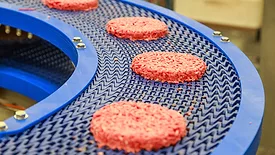
Carryback presents not only a sanitation concern — it also leads to product loss and maintenance challenges. Here are some strategies for recovering product and keeping conveyors running smoothly.
Conveyor carryback is a serious issue in food processing facilities that can disrupt operations if not managed. Many facilities lack effective strategies to handle carryback, risking unscheduled downtime. Operators should implement preventative maintenance measures to minimize its impact.