Designing Hygienic Drainage to Control Listeria in RTE Facilities
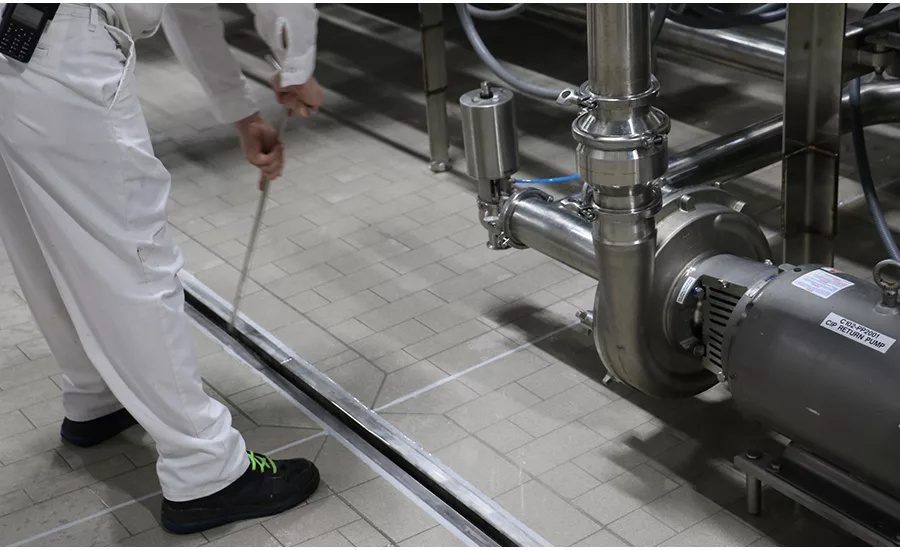
Dedicated drain cleaning is being done to a slot-drain and prevents cross-contamination of equipment. Image courtesy of FoodSafe Drains
Listeria monocytogenes remains a leading driver of high impact recalls in ready-to-eat (RTE) foods. Equipment and environmental reservoirs, especially drainage systems, can support multi-year persistence via biofilm formation and reseeding events.
This article synthesizes current industry guidance and literature and outlines design and operational practices that use hygienic drainage systems, including T304/T316 stainless steel drains and piping, as a key engineering control for Listeria risk reduction.
Why Drainage Systems Matter
Drains and connected drainage piping are nutrient-rich, moist, low-light habitats that enable biofilm growth and long-term Listeria persistence. Studies and industry guidance consistently identify drains as common environmental positives and emphasize hygienic component design. Poorly designed systems can become reservoirs that repeatedly reseed production areas.
Key spread mechanisms include aerosolization, flooding/backflow from pipes, and detachment of biofilms under shear or flow changes. These mechanisms transport cells from pipes into drains and across floors. From the floor and drain environment pathogens can easily be spread via employees or automated systems to production lines.
If Listeria is present in a facility, it is most likely to be found in the drains, which collect contaminated water and nutrients. Under this paradigm, drains become a system with clear contamination potential. As such, hygienic design of drains and associated piping is critical to cleanability and overall microbial status in the facility.
EXPLORE MORE


Recall Data
Recent U.S. Food and Drug Administration (FDA) recall summaries show that microbial contamination, including Listeria, remains a significant driver of recalls affecting food and beverage processors. When combined with the high probability of environmental positives originating from drains, this reinforces the need to update traditional approaches to drainage design. A focus on hygienic drainage creates systems that can easily be cleaned to the microbial level.
Stainless Steel & Hygienic Design
Listeria survives at refrigeration temperatures, tolerates salt and pH extremes, and forms biofilms that protect cells from sanitizers. To combat this pathogen, drainage systems should align with established hygienic design principles, such as those outlined by EHEDG, and relevant listings or certifications such as NSF/ANSI/3 A 14159 1.
Hygienic drains are typically constructed from T304/T316 stainless steel, a non-porous material that, when paired with no niche interiors and hygienic welds, reduces biofilm attachment and enables effective mechanical cleaning. Due to its thermal and chemical compatibility with hot water, caustics and acids, stainless steel supports validated sanitation cycles without material degradation.
Stainless steel maintains structural integrity at drain/pipe interfaces and is less prone to stress cracking or separation from surrounding concrete and floor coatings, particularly when paired with floor coating installation systems. This material integrity and thermal stability reduces the probability of under slab egress that leads to the creation of hidden harborage zones.
By contrast, porous polymer concretes/coatings and rough interior pipe surfaces can crack, craze or absorb soils and chemicals over time, creating persistent niches.
System Level Design for Risk Reduction
A whole-building drainage strategy is essential: Match risk zones, size for peak washdown flows, maintain slopes to eliminate standing water, remove dead legs and ensure sealed transitions from drains to piping. Hygienic linear and area drain systems compatible with stainless piping simplify sanitation and verification.
Area/Floor Drains
Ideal for smaller areas like localized processing zones or utility rooms where maintaining strict hygiene is essential. Available in round or square configurations, area drains effectively collect water, contributing to a safe and hygienic facility design in spaces under 400 sq. ft. For extensive high-risk areas, a grid layout of these drains can be implemented to ensure comprehensive water removal and support effective sanitation.
Slot Drains
Slot drains offer a self-cleaning, grate-free solution for effective liquid waste removal. Their narrow profile makes them ideal for washdown zones and critical areas with high foot traffic, ensuring superior hygiene and minimizing contamination risks.
Trench Drains
Ideal for large facilities such as food and beverage production floors or pharmaceutical packaging lines, where managing both liquid and solid waste is critical for sanitation. The open design allows for thorough cleaning and sanitation, supporting high flow rates and helping to reduce standing water, which is essential for maintaining a hygienic environment and preventing microbial growth.
Stainless Steel P-Traps
Stainless steel p-traps prevent sewer gas and pathogen backflow without the thermal or chemical degradation risks of PVC. They maintain the sanitary integrity of the whole facility drainage system against persistent environmental pathogens.
Stainless Steel Piping (T304/T316)
Stainless steel piping offers strong resistance to hot water, sanitizers and chemicals, supporting long term integrity where PVC may degrade. This material robustness provides a high return on investment (ROI) through reduced replacement costs and maintenance of hygienic status.
Catch Basin and Strainer Basket Systems
These promote easy solids separation and maintenance to prevent blockages. Straining of debris before it enters plumbing or piping can reduce flooding and backflow issues, thereby limiting an important vector of contamination.
Whole-Facility Drain Design
Planning for a whole facility drainage approach allows designers and engineers to create hygienic systems that support both production and maintenance best practices. Drainage placement should be optimized to collect runoff from processing zones while maintaining separation from human or autonomous workers. This reduces the risk of any Listeria present between maintenance cycles spreading from the drains.
Proper sloping of both drains and concrete should be considered to prevent standing water that can harbor pathogens. Floor sloping and drain locations must take into account equipment placement to reduce the need for post installation blocking or levelling of equipment that can lead to bacterial harborage zones.
The trend toward whole facility drainage design, coupled with programs to evaluate existing systems and create project plans for upgrades or replacements, can strengthen production resilience while simplifying management and maintenance.
Operational Controls that Complement Design
Facilities should pair hygienic whole facility design systems with custom SOPs designed to incorporate the cleaning of the drainage systems into regular maintenance or washdown procedures. Sanitation should be validated visually and through environmental swabbing (e.g., non-food contact surface swabs) to confirm effectiveness and address any persistent microbial contamination.
Dedicate color-coded tools for drains/pipes to avoid cross contamination. Staff must re-sanitize hands/gloves after drain work before contacting food-contact surfaces. During washdown procedures, a drain-first cleaning sequence can protect food contact surfaces. Cleaning tools should be equipped with splash control and avoid the formation of aerosols. After washdown procedures are complete, passive methods such as clean-in-place systems can be used to perform final drain sanitization procedures.
Periodic environmental monitoring that includes drains, floor–drain interfaces, wheels/boots and sampling at accessible clean-outs can help to identify hazardous control points. Persistent locations can be included in facility HACCP monitoring procedures to ensure compliance with industry best practices.
While Listeria remains a consistent threat in the RTE space, experience and recall data indicate that upgraded drainage can reduce key risk vectors and provide better tools for staff and management to identify and control hazards. The food and beverage industry has long been a leader in hygienic equipment design and manufacturing, but drainage systems have often remained an overlooked and dated category. Applying tested hygienic design principles to drains and piping, coupled with strategic facility layout and documented sanitation practices, can accelerate improvements in environmental control.
Whole-facility drainage design and hygienic upgrades should be considered not only for greenfield projects but also for targeted replacement in legacy plants, providing additional risk reduction in the face of centralized supply chains and tight production timelines. For facility teams, prioritizing hygienic drainage, validated cleaning and integrated environmental monitoring offers a practical, engineering-driven strategy to strengthen Listeria control programs.
Looking for a reprint of this article?
From high-res PDFs to custom plaques, order your copy today!