Sourcing Food-Safe Tubing Systems for Food and Beverage Operations
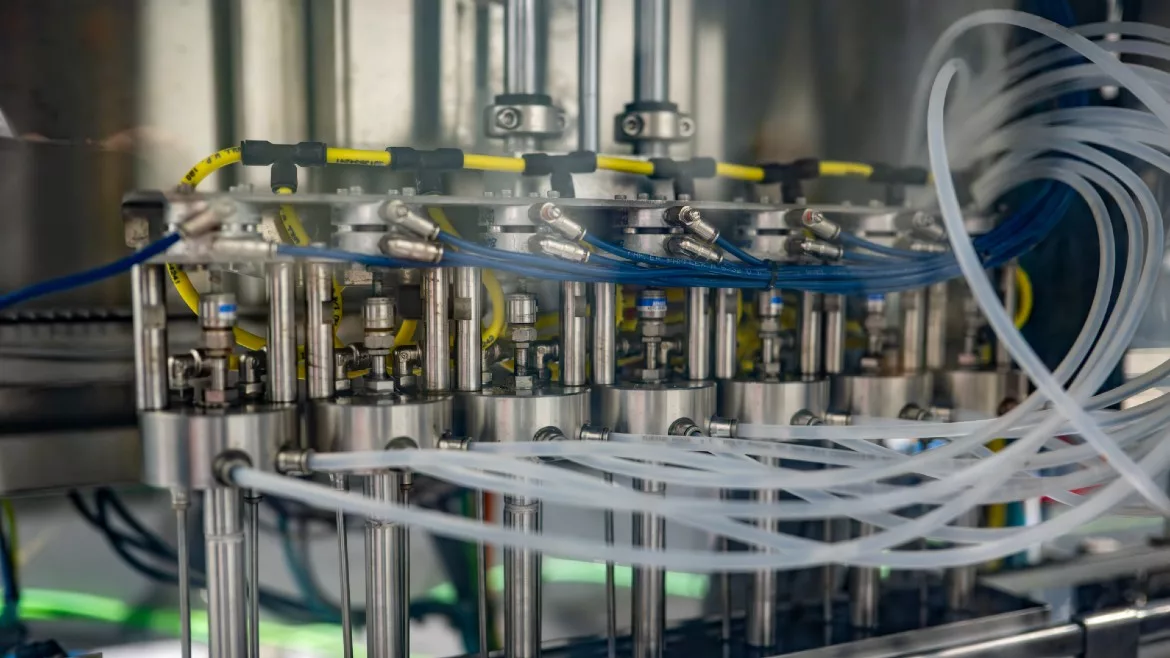
From dairy processing and beverage filling to condiment packaging and prepared foods production, tubing plays a critical role throughout the food and beverage manufacturing environment.
While often overlooked compared to pumps, valves and filling systems, tubing is a vital component in maintaining product integrity, supporting hygienic design and helping manufacturers meet increasingly stringent food safety requirements. One element contributing to sanitation is the performance and cleanliness of components — like tubing — that help process, deliver or dispense food products.
Let’s take a closer look at important considerations for manufacturers that contribute to keeping the food and beverages we consume every day safer.
What’s in a Tube?
Elastomeric tubing is integral to some food and beverage processing and delivery operations, with handling and transport responsibilities ranging from discreet ingredients to dairy, soups, condiments and much more. Food-grade tubing must meet an increasingly complex web of federal and industry-specific regulations, pushing equipment manufacturers, food producers and vendors to seek out increasingly high-performance products.
In sourcing tubing for use in commercial food and beverage packaging products, manufacturers must understand the key performance characteristics of various types of tubing, as well as the regulatory standards that govern these components.
Governing Standards and Required Performance
The U.S. Food and Drug Administration (FDA) is the primary regulator for food-grade tubing. Many of these standards are a part of the FDA’s Food Safety Modernization Act (FSMA), signed into law in 2011 and aimed at preventing foodborne illness instead of responding to it.
For food and beverage manufacturers, ensuring tubing suppliers meet the relevant regulatory standards for a specific application is essential, as guidelines can differ from situation to situation. For example, tubing that handles dairy products may have different requirements from tubing that handles hot products. Further, tubing should be made of a material that appears on the FDA’s list of approved materials for food contact.
Food Safety
One of the FDA’s most important performance criteria for food and beverage packaging and dispensing components is minimizing or eliminating leaching and extraction. A tube responsible for dispensing or transporting hot liquids, for example, must not leach any part of itself into the product. Minimizing leaching is more challenging in applications involving hot foods or drinks, as well as fatty foods or liquids, as these have a greater tendency to pull materials or additives out of the tube.
While general FDA standards are baseline expectations for food-grade components, other standards that are either voluntary or application specific may dictate performance and associated compliance. For example, the FDA’s Interstate Milk Shippers (IMS) list sets even more stringent requirements for materials and components that handle milk and milk products. Grade A milk has higher contamination potential because these milk products generally are not cooked or reheated — a process that can kill potential contaminants in other food and beverage applications. As a result, any component used to handle these dairy products is subject to IMS’s more stringent performance requirements.
In addition, the Safe Quality Food (SQF) Program is a rigorous food safety and quality program designed to meet industry, customer and regulatory requirements for all sectors of the food supply chain. SQF certification is voluntary and is generally a mark of a highly reliable partner with a demonstrated commitment to meeting and exceeding industry regulations for quality and safety. Make sure your tubing supplier meets the requirements of any applicable programs.
End-Use Performance and Material Selection
Selecting the proper material for a food-grade tube is key to manufacturability, as well as achieving regulatory approval and associated performance results. While material chemistry may seem straightforward on the surface, food processing components must often withstand significant challenges in the production environment as well as in the real world. In short, tubing must be able to reliably accommodate its intended use and functionality throughout its service life.
For example, most tubing components in the food and beverage industry are made from thermoplastic elastomer (TPE). But not all TPE materials are created equal, nor are they suitable for all food and beverage applications. Consider again leachable and extractable performance — certain grades of TPE are not suitable for the entire product manufacturing cycle, which depending on the application, may include several steps that can strain a lower-quality material.
Specifically, sudden temperature changes can have an impact on TPE materials; in a food manufacturing environment, this may happen when a very hot or very cold product comes into contact with a room temperature TPE component. Frequent temperature changes can also cause degradation or leaching over time.
Tubing material must maintain its integrity throughout this life cycle, so working with the tubing supplier for guidance on the proper grade of TPE for specific manufacturing applications can be beneficial. A supply partner with material expertise can offer peace of mind for product performance.
With a reliable tubing supply partner on hand, food manufacturers can concentrate fully on managing their own operations efficiently and effectively. Also consider that tubing suppliers offering high-volume manufacturing and fast turnaround times can help food and beverage processors remain nimble throughout the production process.
Looking for a reprint of this article?
From high-res PDFs to custom plaques, order your copy today!