UVC Disinfection Best Practices for Food, Packaging and Logistics Applications
Just a few years ago, the food industry dialogue around UVC disinfection centered on a single narrative: the rapid rise and anticipated dominance of UVC LEDs.
Their promise of compact form factors, mercury free operation and seamless integration into industrial equipment led many to expect a swift transition away from legacy UVC sources. Early analyses, including Jason Dubose’s 2023 commentary in FOOD ENGINEERING, reflected this optimism and outlined a roadmap in which LEDs would eventually displace traditional lamps across food processing, packaging and logistics.
Three years later, the landscape looks very different. The most significant shifts have been both technological and strategic. Industries now recognize that UVC disinfection is not defined by one technology but by a broad, diversified portfolio of tools — each suited to specific microbial challenges and operating environments. Today’s UVC ecosystem is a multi technology environment in which LEDs play an important role, but no longer the dominant one. Pulsed UVC xenon (PUV) systems and 222 nm excimer lamps have surged in adoption, while medium- and low-pressure mercury lamps continue to serve legacy and cost sensitive installations.
This expanded landscape reflects a deeper reality: there is no single “best” UVC technology — only the best technology for a given application.
What follows is an update on the state of UVC disinfection technologies, their performance characteristics and their evolving roles across critical sectors.
Pulsed Xenon (PUV): High Intensity Disinfection for High Throughput Environments
Among all UVC platforms, PUV systems have experienced the most dramatic growth since 2023. Once considered niche due to size and cost, PUV has become indispensable in environments requiring speed, intensity and broad spectrum germicidal action. Modern systems are modular, compact, and available with cartridge style lamp cassettes that simplify maintenance. IP69 enclosures and quartz breakage sensors support safe operation in washdown environments, making PUV a strong fit for food and packaging lines.
PUV’s surge is driven by its unique performance profile. These systems deliver millisecond bursts of broadband UV with peak intensities far exceeding continuous wave sources. Many achieve 4–6 log reductions in seconds, enabling processors to meet rising throughput demands without sacrificing microbial control.
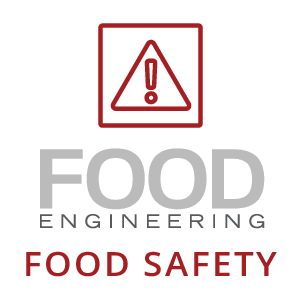
PUV is effective for complex packaging geometries — bottle caps, yogurt cups, lids, molded plastics and other shapes that are difficult to treat with chemicals or heat. PUV’s ability to uniformly disinfect irregular surfaces without deformation is a key advantage as packaging materials become lighter and more intricate.
The biggest shift is that PUV is no longer limited to batch systems. Compact, shielded modules can now be mounted directly over conveyors, enabling real time, in line microbial control at line speeds up to 500 m² per hour. This integration has transformed PUV from a specialty tool into a mainstream industrial solution.
Excimer Lamps (222 nm Far UVC): Precision Disinfection with Safety Advantages
Where PUV may represent brute force, excimer lamps embody tight precision.
The rapid rise of 222 nm krypton chloride (KrCl) excimer lamps has been one of the most notable developments in UVC technology. These lamps emit a narrow band of far UVC light with strong germicidal efficacy but limited penetration into human skin and eyes. While safety research continues, the technology has gained traction for continuous, occupied space disinfection, airborne pathogen control and personnel hygiene systems.
Excimer sources are available as stand alone lamps, multi unit cassettes and pre configured modules. Their narrow emission spectrum, instant on behavior and compatibility with open configurations make them ideal for conveyor adjacent surface treatment, environmental disinfection and hand/footwear sanitation. Their growing adoption reflects a broader industry shift toward cleaner, safer and more sustainable UVC technologies.
Medium- and Low-Pressure Mercury Lamps: The Legacy Workhorses
Although their market share is declining, medium and low pressure mercury lamps remain relevant in industrial UVC disinfection. Their combination of high efficiency, long life and low cost keeps them competitive in large scale applications where LEDs and excimers still struggle to match output per dollar.
Medium pressure (MP) mercury lamps still occupy a meaningful niche in food and packaging disinfection, especially where speed, intensity and broad-spectrum UV are required. Low pressure (LP) mercury lamps excel in applications that require high germicidal efficiency, low energy consumption and stable 254 nm UV C output.
However, regulatory pressure continues to grow due to the Minamata Convention’s global mercury phase down. While industrial exemptions remain, the long term trend favors mercury free alternatives. Improved recycling and containment systems have mitigated some environmental concerns, but the shift toward excimer, PUV and LED technologies is accelerating.
UVC LEDs: Still Advancing, Still Specialized
UVC LEDs continue to improve in wall plug efficiency, cost and reliability. Yet the early optimism surrounding their rapid takeover has evolved into a more realistic understanding of their strengths and limitations. LEDs excel in compact, point of use systems, integrated equipment designs and applications requiring precise control or miniaturization. They are ideal for small scale, on demand disinfection in tight geometries.
However, LEDs are not yet well suited for high power industrial disinfection or large area, high throughput applications. Their role is important but specialized. As efficiencies rise and costs fall, LEDs will increasingly fill niche applications where size and control matter more than raw power.
Cross Industry Adoption: Food, Pharma, Packaging and Logistics
The most important recent shifts have been both technological and increasingly strategic. End-users understand that UVC is not a single technology but a broad portfolio of versatile tools, each particularly well-suited to a different microbial challenge.
One major trend is the engineering of UVC optimized packaging materials. Films, caps and containers are increasingly designed to transmit or withstand higher UVC doses without degradation. Advances in polymer formulations, surface treatments and optical clarity enable faster cycle times, more reliable microbial reduction and longer material life. As PUV, excimer and LED systems gain traction, UVC compatible materials have become a strategic differentiator for producers seeking higher throughput and improved sustainability.
Industries that once deployed UVC as a one size fits all solution now apply it with surgical precision.
2026 and Beyond: A Mature, Multi Technology UVC Ecosystem
The UVC landscape in 2026 is defined by diversity, specialization and strategic deployment. LEDs remain important, but they no longer dominate the debate. PUV and excimer lamps have emerged as powerful alternatives, each with unique advantages. Medium and low pressure mercury lamps continue to anchor large scale systems, even as their long term future narrows.
This multi technology ecosystem is more capable, adaptable, and resilient than the LED centric vision of a few years ago. It supports the increasingly complex demands of food safety, packaging hygiene and global logistics.
Looking ahead, regulatory shifts, sustainability goals and rising throughput demands will continue to shape adoption patterns. The companies that treat UVC as a flexible, application-specific toolkit — rather than a single technology solution — will be best positioned to meet the microbial and operational challenges of the next decade.
References
Chenwei Dai, Yong Xu, Kai Liu, Yiyan Yu, Qinghua Xu, Yu Bai (2025). Operational integration of pulsed xenon UV disinfection systems in high-throughput logistics networks. AIP Advances 15, 075331
Koutchma, T., Popović, V., Ros Polski, V., & Popielarz, A. (2023). Pulsed light technology for microbial inactivation in food processing. Comprehensive Reviews in Food Science and Food Safety, 22(1), 120–145.
Welch, D., Buonanno, M., et al (2022). Far UVC (222 nm) efficiently inactivates an airborne pathogen in a room sized chamber. Nature Scientific Reports, 12(1), 4373.
Looking for a reprint of this article?
From high-res PDFs to custom plaques, order your copy today!