Glyphosate: Just How Dangerous? The Debate Continues
There seems to be little dispute that glyphosate has harmed agricultural workers, but the jury is out when it comes to consumers’ dietary exposure.
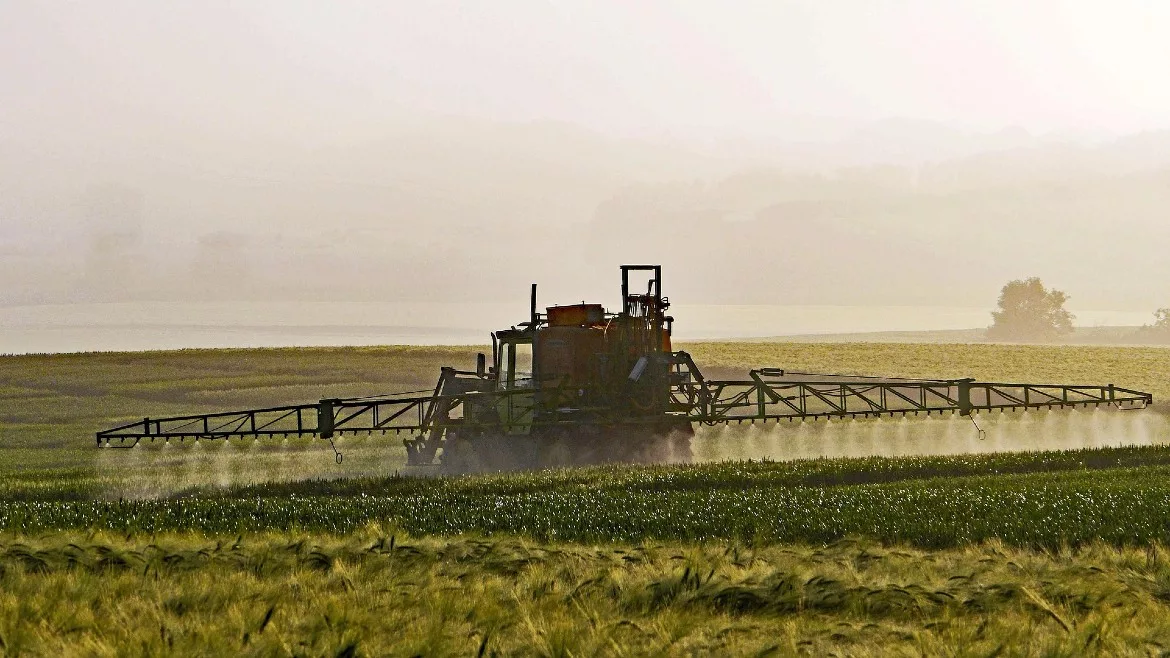
Farmers operate glyphosate spraying equipment from sealed tractor-cabs to prevent undue exposure to misted herbicide.
Potentially hazardous chemicals in our food and beverages — including drinking water — have been a target for United States Secretary of Health and Human Services Robert F. Kennedy, Jr. as he seeks to remove them from our food and environment. With petroleum-based color dyes on their way out in the U.S., other chemicals such as PFAS and glyphosate have been called into question by researchers. The PFAS family of chemicals are “forever” and accumulate in human tissue over time; however, glyphosate (introduced by Monsanto in 1974 as a key ingredient in Roundup) tends not to remain in the body as it is excreted primarily by the kidneys and intestinal track, but the chemical is found almost everywhere in our environment.
Nevertheless, glyphosate has been called into question as a carcinogen by several researchers and the International Agency for Research on Cancer (IARC). The IARC stated in 2015 that glyphosate “is classified as a probable carcinogen, group 2A.” However, EPA and FDA say it’s not likely to cause cancer in humans as a background environmental chemical in our food and water. Over the years, this debate has sparked more than a hundred research papers and studies on the subject, including a recent June 10th lab research report, which disagrees with EPA findings.
Interestingly, the European Food Safety Authority (EFSA) and the Joint Food and Agriculture Organization (FAO)/World Health Organization (WHO) Meeting on Pesticide Residues (JMPR) concurred with EPA and FDA, determining that glyphosate is unlikely to be a carcinogen.
But for agricultural workers, the story is very different. Hardly a day goes by when you don’t hear about a chemical damage lawsuit filed against Bayer (now owner of Monsanto) by professionals who applied Roundup to crops and lawns. According to a recent article titled “Monsanto Roundup Lawsuit Update” by Ronald V. Miller, Jr. (found on the Lawsuit Information Center (Miller & Zois, LLC)), 67,000 active Roundup legal cases are still remaining. As of May 2025, Bayer/Monsanto has reached settlement agreements in nearly 100,000 Roundup lawsuits, paying approximately $11 billion. Roundup has been tagged as being responsible for several cancers, especially non-Hodgkin lymphoma, as several workers have been continuously exposed to glyphosate after several years of usage. Recent jury verdicts have awarded amounts of $175 million, $332 million, $2.25 billion and $2.1 billion.

EPA sets Exposure Standards for Glyphosate
The EPA has established tolerances for glyphosate residues contained in a range of human and animal food crops, including corn, soybean, oil seeds, other grains and some fruits and vegetables, ranging from 0.1 to 400 parts per million (ppm), which FDA has adopted the same data. According to the EPA, glyphosate has a low toxicity for people.
To verify that foods are safe at these levels, FDA developed a new sampling method to identify both glyphosate and glufosinate residues in food — the SRM or “selective residue method.” Results for both FY 2016 and FY 2017 assignment samples for glyphosate and glufosinate testing showed no pesticide residue violations for glyphosate in all four commodities tested (corn, soybeans, milk, and eggs). Of 879 corn, soybean, milk and egg assignment samples tested for glyphosate and glufosinate, approximately 59% of the corn and soy samples tested positive for residues of glyphosate and/or glufosinate, but all were below the tolerance levels set by the U.S. EPA. No residues were found in any of the milk or egg samples. For more information, see “Questions and Answers on Glyphosate,” FDA’s website.

However, the Environmental Working Group (EWG) — a nonprofit research and advocacy group for environmental public health — considers 160 parts per billion (ppb) of glyphosate in food to be the safe limit for human consumption, a threshold lower than most EPA guidelines.
Yet a June 10 study from scientists in the U.S. and Europe suggests that even low levels of residual glyphosate in foods where acceptable daily intakes (ADIs) are considered safe by governing bodies may be problematic. No matter the ADI, it seems the chemical is everywhere in our environment, but pinning down safe versus unsafe levels has been a challenge.
Acceptable Daily Intake” (ADI) Comparison Table
|
Agency/Country
|
Glyphosate in Food (ADI limit)
|
Drinking water limit
|
|---|---|---|
| EPA (U.S.) | 1.75 mg/kg/day |
700 µg/L (current) 1
|
| FDA (U.S.) | 1.75 mg/kg/day (EPA) |
—
|
| USDA (U.S.) | 1.75 mg/kg/day (EPA) |
—
|
| Health Canada (PMRA) | 0.3 mg/kg/day |
280 µg/L
|
| CFIA (Canada) | 0.3 mg/kg/day (uses PMRA) | 280 µg/L |
| APVMA (Australia) | 0.3 mg/kg/day | 1,000 µg/L |
| EFSA (EU) | 0.5 and 0.1 mg/kg/day 2 | 0.1 µg/L 3 |
| UK FSA (post-Brexit) | 0.5 and 0.1 mg/kg/day 2 (Uses EFSA) | 0.1 µg/L |
This table pulls data from related government documents (2025)
1 0.004 µg/L (proposed in 2024)
2 0.5 mg/kg/day (consumers), 0.1 mg/kg/day (operators)
3 Generic pesticide limits

The General Population has Glyphosate in its Urine — But What Level is Unsafe?
An article titled “The evidence of human exposure to glyphosate: a review,” published in 2019 by Environmental Health, noted that eight studies reported urinary levels in 423 occupational and para-occupational (“take-home”) subjects; and 14 studies reported glyphosate levels in various biofluids of 3,298 subjects from the general population. Average urinary levels in occupationally exposed subjects varied from 0.26 to 73.5 μg/L (or ppb); for those with environmental exposure, urinary levels ranged from 0.16 to 7.6 μg/L. Only two studies measured temporal trends in exposure, both of which show increasing proportions of individuals with detectable levels of glyphosate in their urine over time. [1]
The above article suggested that at its time of publication, there was little data on glyphosate levels among those exposed occupationally, para-occupationally or environmentally to the herbicide, making it a challenge to determine the extent of exposure overall and in vulnerable populations such as children.
Glyphosate Levels in Humans — All Over the Map
Glyphosate and its by-product aminomethylphosphoic acid (AMPA) have been detected in soil, food, water and human urine. Because physicians and labs don’t routinely test patients for glyphosate exposure (urine level) as they would for cholesterol and other key health indicators, finding meaningful data is difficult and sporadic — usually related to research papers and studies. A Google search found some scattered data.
In the U.S., the 2013-2014 NHANES report found detectable levels of glyphosate in 81.2% of the general population aged 6 and older, with a weighted detection frequency of 81.2%; the highest level recorded was 8.13 µg/L. A study in Washington and Idaho on lactating women found glyphosate in 37 out of 40 urine samples with a mean of 0.28 µg/L. In central Indiana, pregnant women had detectable levels in 93% of urine samples, with a mean of 3.40 µg/L.
A study in France involving 6795 participants detected glyphosate in 99.8% of urine samples with a mean of 1.19 µg/L
A study using the German Environmental Specimen Bank showed glyphosate above the limit of quantification (0.1 µg/L) in 31.8% of samples, with the highest percentages in 2012 and 2013
In Denmark, children and their mothers in rural and urban communities had a mean of 1.96 µg/L in children and 1.28 µg/L in mothers.
In Ireland, 20% of samples had detectable levels of glyphosate in a pilot study of Irish adults, with a median of 0.87 µg/L for samples above the LOD (limit of detection).
In Sweden, 20% of urine samples from young adults had detectable levels of glyphosate, with a median below the LOD and a maximum concentration of 3.39 µg/L.
In Mexico, the mean glyphosate levels in urban fishermen, serving as a control group, were 0.16 µg/L.
In Columbia, individuals living in areas treated with aerial spraying had a mean of 7.6 µg/L.
Occupationally exposed individuals (farmers)had levels varying from 0.26 to 73.5 µg/L.
Notes on data:
- Variability: There is significant variability in the reported levels due to differing laboratory methods, limits of detection (LOD), sample sizes, and populations studied.
- Studies suggest an increasing proportion of individuals with detectable levels of glyphosate over time.
- Exposure Routes: Possible sources of exposure include diet, water, and occupational contact.
- Health Implications: The long-term health effects and potential risks associated with glyphosate exposure are still under debate and require further research.

Are EPA Dietary Levels for Glyphosate Ingestion in the U.S. Safe?
According to a U.S. EPA fact sheet (“R.E.D. Facts; Glyphosate”) published in September 1993, glyphosate is “of relatively low oral and dermal acute toxicity. It has been placed in Toxicity Category III for these effects (Toxicity Category I indicates the highest degree of acute toxicity, and Category IV the lowest).” EPA waived an acute inhalation study because the substance itself is non-volatile, and inhalation studies with end-use products exist showing low toxicity.
While EPA found some issues with rats and other animal studies, this research was usually done with relatively high doses of glyphosate — which humans wouldn’t normally encounter, unless working with the chemical on a daily basis without adequate PPE. Several chronic toxicity/carcinogenicity studies using rats, mice and beagle dogs resulted in no effects based on the parameters examined — or resulted in findings that glyphosate was not carcinogenic. Therefore, EPA classified glyphosate as a Group E oncogene — one that shows evidence of non-carcinogenicity for humans — based on the lack of convincing evidence of carcinogenicity in adequate studies.
What about dietary exposure? EPA conducted a worst-case risk scenario for humans and concluded that chronic dietary risk posed by glyphosate contained in all food categories is minimal. According to FDA, “a reference dose (RfD) — or estimate of daily exposure that would not cause adverse effects throughout a lifetime — of 2 mg/kg (body weight)/day has been proposed for glyphosate.” Based on an average adult body weight of 70 kg (154 lbs.), the RfD would be about 140 mg daily.
The rest of the world (not the EPA) has since used the term “Acceptable Daily Intake” (ADI), which describes “safe” levels of intake over a lifetime. ADI is primarily used for substances in food and drinking water and was initially used by international organizations like the Food and Agriculture Organization/World Health Organization (FAO/WHO).
While EPA used the level of 2 mg/kg/day as a safe RfD where there was no observed adverse effect level (NOAEL), a derived ADI was set at 1.75 mg/kg/day by U.S. agencies, but it varies in different countries and jurisdictions. See the “ADI Comparison Table.”
What the EPA says About Glyphosate and Human Health
In a June 17, 2022 decision, the U.S. Court of Appeals for the Ninth Circuit vacated the human health portion of the glyphosate ID and remanded it to EPA for further analysis and explanation. EPA’s underlying scientific findings regarding human health are summarized below, pending reconsideration as described above, in accordance with the court’s decision.
EPA scientists performed an independent evaluation of available data for glyphosate and found:
- No risks of concern to human health from current uses of glyphosate. Glyphosate products used according to label directions do not result in risks to children or adults.
- No indication that children are more sensitive to glyphosate. After evaluating numerous studies from a variety of sources, the Agency found no indication that children are more sensitive to glyphosate from in utero or post-natal exposure.
- No evidence that glyphosate causes cancer in humans. The Agency concluded that glyphosate is not likely to be carcinogenic to humans. EPA considered a significantly more extensive and relevant dataset than the International Agency on the Research for Cancer (IARC).
- No indication that glyphosate is an endocrine disruptor. Glyphosate has undergone Tier I screening under EPA’s Endocrine Disruptor Screening Program. Based on all available information, EPA concluded, using a weight-of-evidence approach, that the existing data do not indicate that glyphosate has the potential to interact with the estrogen, androgen or thyroid signaling pathways.
— from “Glyphosate,” EPA
Newer Studies Take Issue with Glyphosate
A May 2024 NIH/NLM article quoted a study by Siriporn Thongprakaisang and colleagues, which demonstrated that glyphosate, at a concentration of parts per trillion (ppt), induces the proliferation of human breast cancer cells. According to the same authors, the work demonstrated that glyphosate is “less toxic than other pesticides,” [but] this condition does not weaken the “potential adverse health effects for humans,” as it is also related to endocrine changes. Other studies corroborate evidence on levels of human exposure to glyphosate, including the general population and occupationally exposed workers, that there is an evident correlation between exposure to glyphosate and the increasing threat of non-Hodgkin’s lymphoma. The IARC reinforces these findings and concludes “that there is ‘strong evidence’ that exposure to glyphosate is genotoxic through at least two devices considered to be correlated with human carcinogens, which are DNA damage and oxidative stress.” [2]
Even earlier studies showed that glyphosate-based herbicide residues — besides being toxic —are also endocrine disruptors in human cells. Cytotoxic effects started at 10 ppm with the Alamar Blue assay (the most sensitive) and DNA damages at 5 ppm. A real cell impact of glyphosate-based herbicides residues in food, feed or in the environment has thus to be considered — and their classifications as carcinogens/mutagens/reprotoxics. [3]
A June 2025 glyphosate study, involving scientists from Europe and the U.S., has found that low doses of glyphosate cause multiple types of cancer in rats. In this long-term study, glyphosate alone and two commercial glyphosate-based formulations, Roundup BioFlow (MON 52276) used in the EU and Ranger Pro (EPA 524-517) used in the U.S., were administered to rats via drinking water beginning in prenatal life, at doses of 0.5, 5, and 50 mg/kg body weight/day for 2 years. These doses are currently considered safe by regulatory agencies and correspond to the EU ADI and the EU’s No Observed Adverse Effect Level (NOAEL) for glyphosate. [4]

In all three treatment groups, increased incidences of benign and malignant tumors at multiple anatomic sites were observed compared to controls. These tumors arose in haemolymphoreticular tissues (leukemia), skin, liver, thyroid, nervous system, ovary, mammary gland, adrenal glands, kidney, urinary bladder, bone, endocrine pancreas, uterus and spleen (hemangiosarcoma). Increased incidences occurred in both sexes. Most of these involved tumors that are rare in Sprague Dawley rats (background incidence < 1%) with 40% of leukemias deaths in the treated groups occurring in early life, and increased early deaths were also observed for other solid tumors.
“We observed early onset and early mortality for a number of rare malignant cancers, including leukemia, liver, ovary and nervous system tumors. Notably, approximately half of the deaths from leukemia seen in the glyphosate and GBHs (glyphosate-based herbicides) treatment groups occurred at less than one year of age, comparable to less than 35-40 years of age in humans. By contrast, no case of leukemia was observed in the first year of age in more than 1,600 Sprague Dawley historical controls in carcinogenicity studies conducted by the Ramazzini Institute and the National Toxicology Program (NTP),” says Dr. Daniele Mandrioli, director of the Cesare Maltoni Cancer Research Center of the Ramazzini Institute and principal investigator of the study.
“Our findings reinforce IARC’s classification of glyphosate as a probable human carcinogen and are consistent with experimental animal studies as well as human correlational and weight-of-evidence evaluations that have reported associations between glyphosate exposure and certain cancers, particularly hematological malignancies,” says Dr. Melissa Perry, study co-author and environmental epidemiologist at George Mason University College of Public Health.
Quantifying Levels of Glyphosate in Humans
While the June 10 study reported various health issues in all treatment groups according to amount of glyphosate, generally higher doses of chemical produced more lethal results, though other issues at low glyphosate doses still caused oxidative stress in the liver in different rat strains.
Several studies over the years have measured urine levels of glyphosate in humans, and they had varied from limits of detection or quantization (usually using chromatographic equipment such as LC-MS/MS. The results of some of these studies can be found in “Glyphosate as a Food Contaminant…” [2] Typical numbers ranged from limits of detection of 0.05 µg/L to highs of 153 µg/L for some farmers in Australia. Not counting farmers, levels typically ranged from around 0.1 to 4 or 5 max µg/L with most under 1 µg/L, depending on age, study group and country (See the box, “Glyphosate Levels in Humans—All Over the Map). Unfortunately, no studies have linked specific glyphosate urine levels with any disease, but it would probably be safe to assume that the less the exposure to herbicide, fewer medical problems will show up over a lifetime.
On Losing Glyphosate as a Crop Protection Tool (Another View)
Last November, The Directions Group, formerly Aimpoint Research, announced the release of a new report, “Farm Bill Programs and the Role of Crop Protection Tools,” which identifies significant impacts on the farm bill and federal agricultural policy if U.S. farmers lost access to glyphosate, the most commonly used herbicide.
The last full Farm Bill was passed in 2018, officially known as the Agriculture Improvement Act of 2018. It was originally set to expire in 2023, but Congress passed a one-year extension in December 2024, keeping it in effect through September 30, 2025.
Using open-source research and economic modeling, the Report’s analysis shows that disruptions to glyphosate availability would have costly consequences for farmers, consumers and the environment.
“Conflicting state and federal pesticide labeling requirements could create a challenging regulatory landscape for crop protection products,” says Mark Purdy, executive vice president of Agri-Food at The Directions Group. “That’s why this research is critical. It shows that losing access to glyphosate could create far-reaching consequences for the farm bill.”
“The increase in production costs would ripple through the economy, creating substantial challenges for both farmers and policymakers,” says Dave Juday, executive advisor to The Directions Group and lead economist for the report. “It could undermine the farm bill and put pressure on policymakers to slash budgets for key programs in response to rising costs.”
Key takeaways from the report include that upon losing the use of glyphosate:
- Food inflation could surge by 2.4 times based on 2025 forecasts.
- Farmers could lose $2.89 billion in annual net farm income.
- Nutrition program outlays for programs like the Supplemental Nutrition Assistance Program (SNAP) could increase by $7.1 billion over the life of a 2025-2029 Farm Bill.
- Crop insurance costs may increase by $2.946 billion over the life of a 2025-2029 Farm Bill.
- CO2 emissions would likely rise by 33.72 million additional tons every year.
- The 2018 Farm Bill’s $632 million investment in cover cropping would be undermined, reversing two decades of conservation gains in carbon capture, sediment loss, and nutrient runoff reduction.
Download the report here.
Looking for a reprint of this article?
From high-res PDFs to custom plaques, order your copy today!