Backed Into a Corner, Alternative Protein Gets Creative
State legislative bans are targeting ingredients, dyes and cultivated products in 2025. Therefore, the market is forcing OEMs and alternative protein suppliers to get creative in manufacturing, lowering ingredient costs, and even going to market.

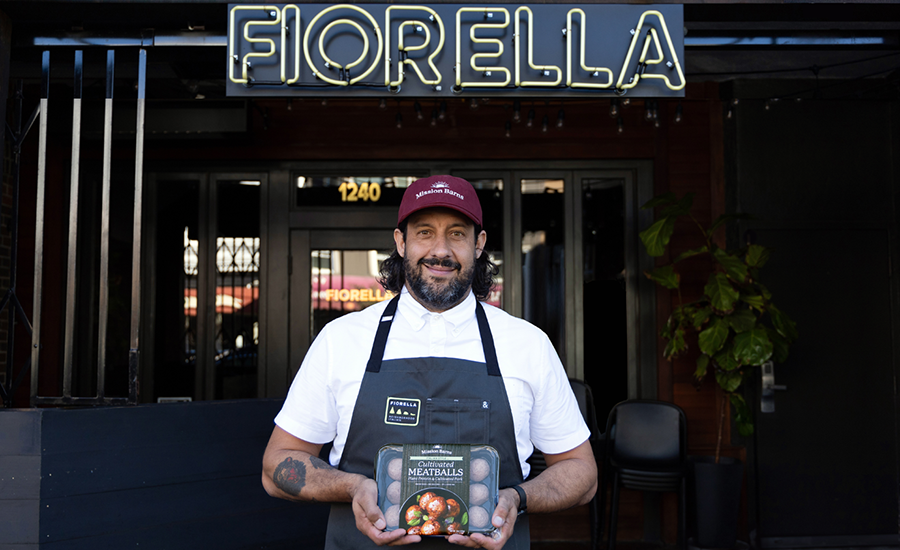
Mission Barns’ aims to scale high-quality cultivated fat with commercial efficiency.
The food industry has been turned on its head. In recent months, state bans have attempted to usurp science-based federal regulations by the U.S. Food and Drug Administration (FDA) and drastically alter the system.
“I would encourage everyone to look at all the state laws,” said Martin J. Hahn, partner at Hogan Lovells U.S., at the recent IFT 2025 show in Chicago. “Do we have consistency? No. [The new laws] are subject to [court] challenges, but they are [banning] the ingredients du jour that Make American Healthy Again (MAHA) has decided they don’t like. You can anticipate more regulations. These are very challenging times, stay tuned.”
While Hahn is referring to bans primarily targeting synthetic dyes and additives, West Virginia made news in 2024 by imposing labeling restrictions on plant-based and cultivated meat products. Hahn believes that a concerted multi-state effort to scale labeling restrictions by MAHA is happening.
To push back against these developments, alternative protein and fat cultivation suppliers are getting creative.
“We will be licensing our proprietary bioreactor and fat cultivation technology to help scale impact faster,” says Cecilia Chang, chief business officer at Mission Barns. “By sharing not just our technology, but also our regulatory and U.S. market know-how, we’re enabling other companies to bring cultivated pork products to market more efficiently and affordably. This is how we accelerate adoption — not alone, but together.”
The regulatory component involves the U.S. Department of Agriculture (USDA) and FDA. In late July, Mission Barns secured approval from the U.S. Department of Agriculture (USDA) for its cultivated fat, allowing its products to enter the U.S. market. Details of the approval include a grant of USDA inspection for its pilot facility and label sign-off of its cultivated fat ingredient, which received FDA approval earlier this year.
“The distinction of having both USDA and FDA matters,” Chang says. “Other regulator jurisdictions look to the U.S. as a benchmark for novel food safety, so our dual-agency approval significantly reduces regulatory uncertainty in other markets as well.”
The company’s mission includes a creative go-to-market approach, scaling production and encouraging food manufacturers and original equipment manufacturers (OEMs) to use its bioreactor technology now.
“Equipment manufacturers and food producers each play a distinct role in scaling this category,” Chang says. “OEMs are critical in helping replicate and manufacture our bioreactor systems at scale, especially if they can co-develop or customize equipment for cultivated meat applications.”
The company also wants large food producers to manufacture its cultivated fat and incorporate it into their existing products or launch new lines.
“We believe the strongest partnerships will be cross-disciplinary, combining the technical expertise of equipment manufacturers with the market reach and formulation capabilities of food producers,” Chang says.
New business strategies are afoot across the industry. At the 2025 Future Food Tech conference in San Francisco, Thomas Creswell, chief business officer at Swedish-based Melt&Marble, addressed the alternative protein market.
“The food industry is at a turning point, and precision fermentation is taking center stage,” Creswell says. “As the industry seeks cost-effective, high-impact solutions, precision fermentation stands out for its strong scalability potential, making it a key focus for the future of food innovation.”
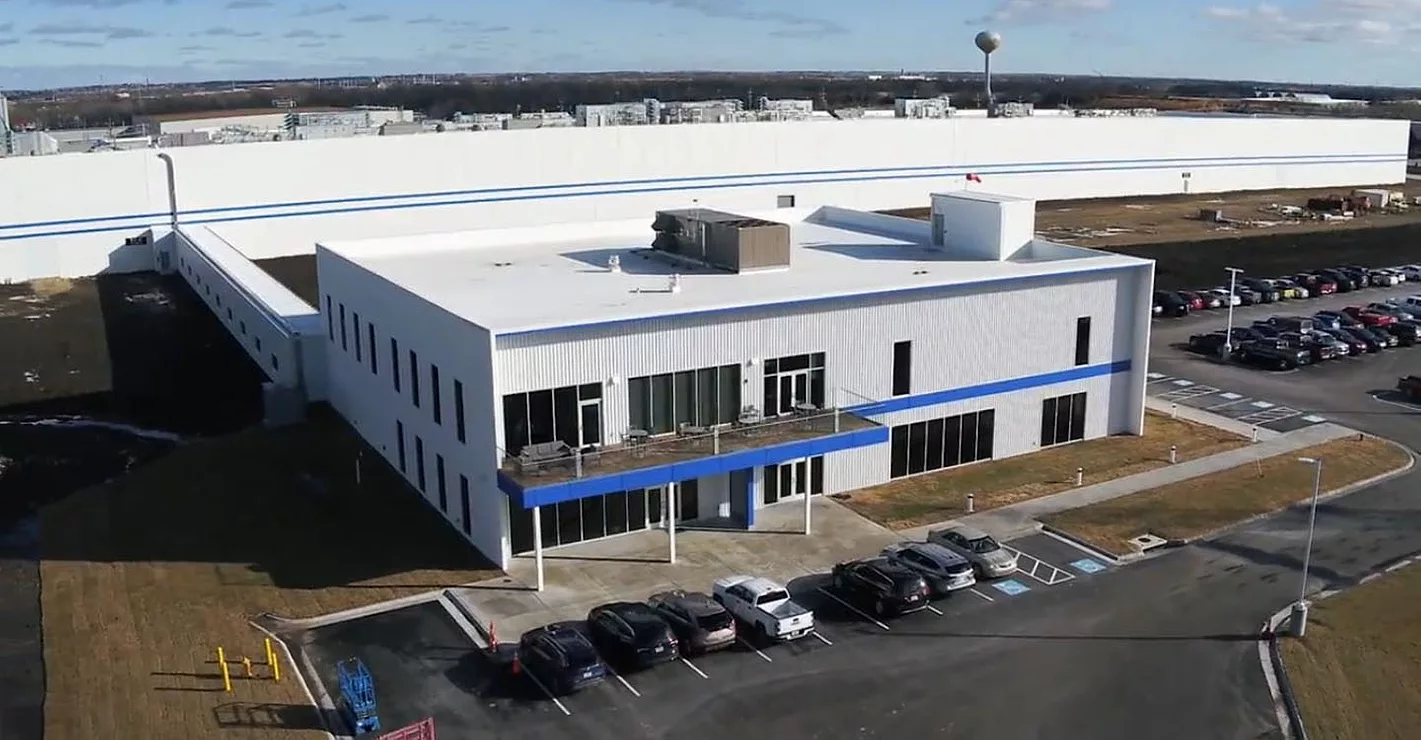
The urgency for scalability is palpable across the industry. In July, GEA Group opened its $20 million Food Application and Technology Center in Janesville, Wisconsin. “The food industry is at a crossroads. To feed future generations sustainably, we must turn vision into a scalable reality,” says Stefan Klebert, CEO of GEA Group.
The innovation center’s focus is on high-volume production, lowering costs and demonstrating pilot-scale bioreactors to prospective customers. The facility provides pilot-scale bioreactors for precision fermentation and cell cultivation, simulating industrial conditions to enable companies to validate and optimize production processes early.

“With this investment, we are helping our customers scale up the production of novel foods such as precision-fermented egg white and cultivated seafood,” Klebert says. “At the same time, we are strengthening our North American footprint, where our 1,600 employees at 16 locations support manufacturing, sales, service, training and testing.”
Other applications at the center include thermal processing, aseptic filling, membrane filtration, spray drying and centrifugation support for downstream separation and formulation — critical steps to achieving product quality, texture and cost-efficiency.
During the ribbon-cutting, GEA highlighted the convergence of traditional agriculture, advanced biotechnology and sustainable manufacturing as a perfect fit for the Janesville location. “Our new center in Janesville is a key milestone on our shared journey — both for our customers and for us as a company,” Klebert adds.
Ramping Potato Protein Production for the U.S. Snack Industry
Israel-based PoLoPo has developed a bio-engineered potato with up to three times the protein content of conventional potatoes. The technology can be integrated into any potato variety and supports clean-label food applications, the company says.
“We elevate the protein content in the tuber, the part we actually eat,” says Dr. Maya Sapir-Mir, CEO of PoLoPo, in a recent interview with the BBC. “We are commercializing our protein to snack chip brands in the U.S.”
According to the company, food manufacturers will be able to use existing slicing and production equipment to create chip products. “This is not another highly processed protein snack with a long ingredients list,” Sapir-Mir says. “We make the best potatoes in the world, allowing snack makers a faster, cleaner way to meet rising demand for high-protein products.”
The company is expected to have USDA clearance by the end of 2025.
Turning Food Processing on its Head
While innovative, plant-based products are making inroads in specific segments, a step change in manufacturing for alternative proteins is underway. In 2024, FOOD ENGINEERING reported that plant-based chicken manufacturer Rebellyous Foods had combined multiple batch steps into a continuous system using the Mock 2 system, which features a chilled dough substrate processing application. The Mock 2 produces a range of plant-based meat products at volumes of 2,500-5,000 lbs. per hour on a single processing line.
“Rebellyous' Mock 2 is the culmination of years of research to convert batch processing of plant-based meat ingredients into a continuous process and address the temperature control and specific processing steps that aren't typically done in a continuous process,” said Christie Lagally, founder and CEO of Rebellyous Foods, in October 2024.
Based in the Netherlands, Dutch Structuring Technology (DST) is currently employing manufacturing innovations and moving away from traditional processing of plant proteins using older, heat-intensive extrusion technologies.
Traditional extrusion processing has many drawbacks with alternative proteins:
- Quality fluctuations due to machine and parameter variations
- High-energy consumption that adds to the end-product’s costs
- Degradation of ingredients due to high pressure and temperature
- And, in some cases, polysaccharides and antioxidants are added to address any flavor changes.
To address these challenges, DST created the SHEARTEX process, co-developed withSobatech, which reduces energy costs by three times compared to High-Moisture Extrusion Cooking (HMEC).“SHEARTEX can create products with fibers that exhibit particular lengths and strengths, so they can more closely match the specific animal meat products they are replacing,“ explains Julian Lekner, co-founder of DST.
Moreover, like Rebellyous Foods’ Mock 2, Sheartex is a continuous process application, and the OEM opted for Allen‑Bradley Kinetix servo-driven motors and variable speed drives (VSDs). This combination reduces energy costs while providing precise control of the micro-dosing in the application.
“The micro-dosing of the ingredients in the continuous process can only be achieved with servo motors, as it is crucial to keep the tare weight of the dosing hopper as low as possible,” says Clint op den Buijsch, sales engineer at Routeco Netherlands. “The servo-controlled dosing hoppers must achieve a dosing accuracy of within one percent when dispensing what can be expensive and strong-flavored micro-powders.”
Looking for a reprint of this article?
From high-res PDFs to custom plaques, order your copy today!