Optimizing OEE: Building High-Performance Food Production Lines
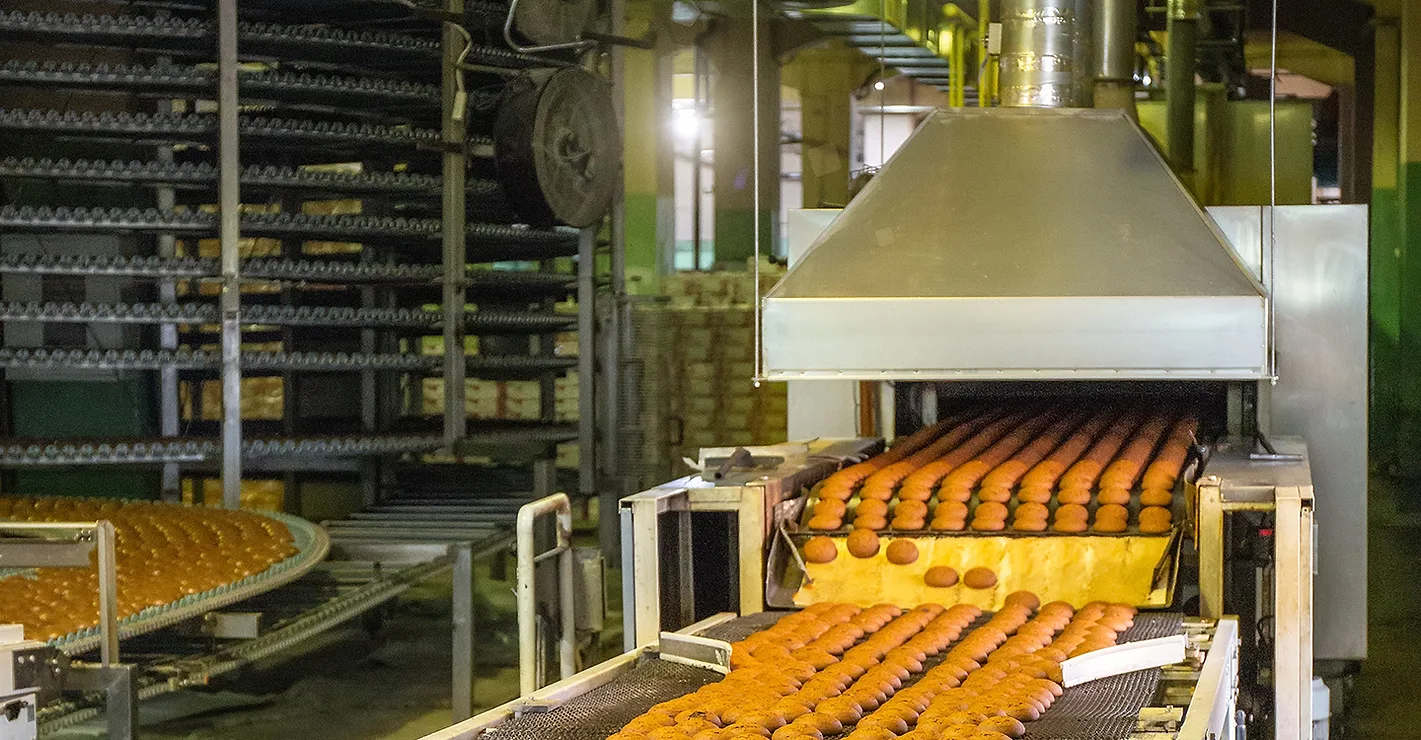
Image courtesy of Getty Images / IP Galanternik D U
In today’s hyper-competitive manufacturing environment, every minute of uptime counts. Production lines must operate at peak performance to keep pace with demand, protect margins and justify capital investments. Overall equipment effectiveness (OEE) remains the go-to benchmark for gauging performance, but raising OEE requires more than tracking metrics. It calls for a strategic, holistic approach to operational readiness that combines robust planning, skilled people and seamless digital integration.
Insights from the 2025 Performance Optimization: Insights for Packaging Line Readiness white paper from PMMI, The Association for Packaging and Processing Technologies, underscore that boosting OEE hinges on excelling across three interdependent phases: vertical startups, operator training and IT-OT integration. Treating these phases as a continuous loop — rather than isolated tasks — can unlock measurable efficiency gains, reduce downtime, and accelerate return on investment.
Phase 1: Vertical Startups — Avoiding the Dip
Achieving a true vertical startup — rapidly transitioning from equipment installation to full production — has long been an aspirational goal. In practice, many lines experience a post-startup performance “dip” marked by slow ramp-ups, operational inefficiencies and unplanned downtime. These setbacks erode OEE and delay return on investment (ROI).
PMMI’s research shows the dip is avoidable when companies take a proactive, collaborative approach. That starts with engaging operators, maintenance technicians, engineers and OEM partners from the earliest planning stages. Defining clear success metrics for factory acceptance tests (FATs) and site acceptance tests (SATs) upfront helps align expectations and creates accountability.
End users can prepare by ensuring spare parts and wear parts are on-site before startup, clarifying roles and responsibilities, and providing hands-on involvement for the people running the equipment. For OEMs, intuitive human-machine interfaces (HMIs) with clear fault descriptions and corrective guidance are critical. Simplifying equipment usability not only accelerates troubleshooting but also reduces training time and error rates.
Ultimately, vertical startups succeed when OEMs and end users share ownership of outcomes. As PMMI’s white paper notes, companies must stop “expecting the dip” and instead build systems that prevent it through communication, preparation and a shared definition of success.
Phase 2: Operator Training — Empowering the Workforce
Even the most advanced equipment will underperform without skilled operators. Phase 2 focuses on people, emphasizing that effective training is not a one-off event but a continuous, embedded process. Training should account for real-world workforce dynamics: language barriers, skill variability and high turnover rates.
PMMI’s report highlights the pitfalls of machine-centric training and the benefits of a people-centric approach. Operators learn best through hands-on, bite-sized modules reinforced over time. Embedding training tools directly into HMIs, using QR codes to link to troubleshooting guides, and leveraging augmented reality for on-demand support can significantly boost retention.
Crucially, operators must demonstrate proficiency — not just attend training. Progressive assessments, coupled with followup sessions every three to six months, help lock in knowledge and prevent the formation of bad habits. Participants in PMMI’s research stressed that training should be viewed as an ongoing investment, not a cost center.
Collaboration between OEMs and end users is essential. OEM engineers may know the machines, but they are not always the best trainers. Selecting trainers for communication skills and technical know-how ensures knowledge is transferred effectively. When training is continuous, personalized and accessible, operators become confident problem-solvers.
Phase 3: IT-OT Integration — Turning Data into Action
While Phases 1 and 2 build human and operational readiness, Phase 3 integrates the digital backbone that sustains long-term efficiency. IT-OT integration connects the operational technology (OT) on the plant floor with information technology (IT) systems, enabling real-time, data-driven decision-making.
According to PMMI’s report, this integration can be challenging. Legacy equipment, siloed teams and cybersecurity risks often stand in the way. Overcoming these barriers requires early, cross-functional collaboration between IT, OT, engineering and OEMs. Companies should begin with a feasibility assessment to ensure infrastructure can support connected equipment, then standardize data communication protocols, HMIs and machine interfaces to prevent compatibility issues.
Cybersecurity must be prioritized from the outset. Unlike IT systems, OT environments often lack built-in defenses, making them vulnerable to ransomware and other threats. Establishing clear policies on remote access, network security and software updates safeguards production without compromising uptime.
The payoff is significant. When IT and OT converge, operators gain access to real-time performance dashboards and predictive analytics. Instead of reacting to downtime, they can prevent it. As one participant described, effective integration lets companies operate by “looking out the windshield” rather than the “rear-view mirror” — transforming OEE from a lagging indicator into a forward-looking tool.
A Holistic Path to Peak Performance
Across all three phases, several themes emerge. Early stakeholder involvement, from machine operators to IT teams, prevents misalignment and costly rework. Standardization in checklists, training materials and data tags streamlines processes and reduces errors. Continuous training and intuitive design minimize human error, while connected systems turn data into actionable insights.
This holistic approach creates a culture of operational readiness where people, processes and technology reinforce one another. Companies that align these elements consistently outperform those that treat them as separate silos. Maximizing OEE is no longer just about squeezing more machine output; it’s about orchestrating the entire production ecosystem for sustained excellence.
For manufacturers aiming to elevate their OEE, there is no better place to explore breakthrough solutions than PACK EXPO East 2026. From Feb. 17-19 at the Pennsylvania Convention Center in Philadelphia, the show, produced by PMMI, will unite 8,000 packaging and processing professionals from 40-plus vertical markets. With 500 exhibitors across 125,000 net sq. ft. of exhibit space, attendees can see automation, sustainability and efficiency-enhancing technologies in action.
Looking for a reprint of this article?
From high-res PDFs to custom plaques, order your copy today!