AI, Sustainability and Health: Top Food Industry Trends in 2026
Last year was an eventful year for the food manufacturing industry, and FOOD ENGINEERING expects many of the major themes to carry over into 2026.
For the food manufacturing industry, 2025 brought tariff pressures, major acquisitions and consumers’ increasing concerns over health and wellness.
FOOD ENGINEERING expects to see those themes return in 2026, in addition to advances in artificial intelligence and sustainability. We outline our reasoning below.
Tariffs
At the start of 2025, anxiety around the form and impact of new tariffs abounded throughout the manufacturing industry. Now, eight months after the introduction of President Trump’s reciprocal tariffs — and the subsequent tariff rollback on certain agricultural products — uncertainty around these tariffs should lessen, CoBank says.
The firm notes “effective across-the-board tariff rate is now about 17% but based on tax collections, the actual average import tax paid is only about 10%.” CoBank’s Brian Cavey writes the tariffs “have likely not yet had their most significant effect on the economy,” but some sectors are experiencing larger impacts than others. As a result, organizations are altering purchasing patterns to ease the blow.
“Supreme Court action could stimulate legislative need,” Cavey adds. “A court decision limiting the president’s use of emergency authority could create some chaos around disposing of the tariffs already collected. And that result would also drive the administration to pursue other remaining legal avenues to reimpose tariffs. This issue will take a disproportionate amount of oxygen in the policy arena through next year, especially as Congress works to renegotiate trade agreements such as the United States Mexico Canada Agreement during that same period.”

M&A Continues
Last year brought several high-profile acquisitions in the food industry, capped in December by Mars’ $36 billion purchase of Kellanova, the snacking spinoff of Kellogg Company.
Merger and acquisition (M&A) activity is expected to continue this year, driven by renewed focus on better-for-you products, says Capstone Partners.
“Food mergers are expected to rebound moving into 2026 as businesses in the sector cycle through the first impacts of widespread tariffs on key import countries,” the financial advisory firm notes. “Regulatory pressure from the HHS and FDA have already created voluntary change in processed food formulations, with many brands committing to full elimination of synthetic dyes in the coming years. These shifts will likely make best-in-class BFY food brands highly attractive acquisition targets, particularly brands that have effectively balanced consumer demand for both tasty and healthy meals and snacks.”

Artificial Intelligence
Artificial intelligence (AI) solutions and capabilities seemed to exponentially expand in 2025, and that’s likely to continue in 2026. Manufacturers will pursue incorporating AI into their operations, whether that involves vision and inspection, preventative maintenance or other applications.
Agentic AI — AI that can autonomously reason, plan and take action — is projected to slowly infiltrate manufacturing activities. Gartner Group suggests that 33% of enterprise software applications will include agentic AI by 2028, up from 1% in 2024.
In a recent FOOD ENGINEERING feature, AI experts, including Christopher Selden, senior director, product, at Crisp, agree that’s a realistic estimate.
“The key question is effective, durable use across teams, which is achievable within that time frame, provided some important requirements are met,” Selden recently told FE. “Agentic AI develops best in structured, repetitive, data-rich workflows where it can continuously learn and become more flexible and responsive to data inputs.”
Neil Smith, CPG president for Schneider Electric, believes agentic AI could become a vital part of manufacturing even sooner.
“These systems, trained on sector-specific data, will proactively recommend actions such as cleaning-cycle optimization to plant operators,” Smith says. “They will test and correct code, helping engineers improve control, safety and batch logic during design and maintenance. Agentic AI will drive predictive maintenance, reducing downtime and improving efficiency. It has already started optimizing production environments by regulating temperature and humidity, to name just a few, to support facility managers and ensure consistent product quality.”

Sustainability
Pursuing sustainability initiatives will remain important to food manufacturers in 2026, but not just for altruistic reasons. Waste reduction and efficient water and energy use also allow manufacturers to cut costs in a difficult economic environment.
“When it comes to sustainability, manufacturers making real headway aren't chasing dramatic net zero declarations,” says Kim Lovan, associate vice president, food, beverage and agribusiness at Black & Veatch. “They're building capability by installing infrastructure that enables sustainability later without paying the full cost today. The sustainability initiatives that will succeed are the ones that enhance operational efficiency while reducing emissions. Customer demand for eco-friendly policies and products are also driving sustainability measures.”
Schneider Electric’s Smith points to industrial electrification strategies as a pathway to reach sustainability and efficiency targets.
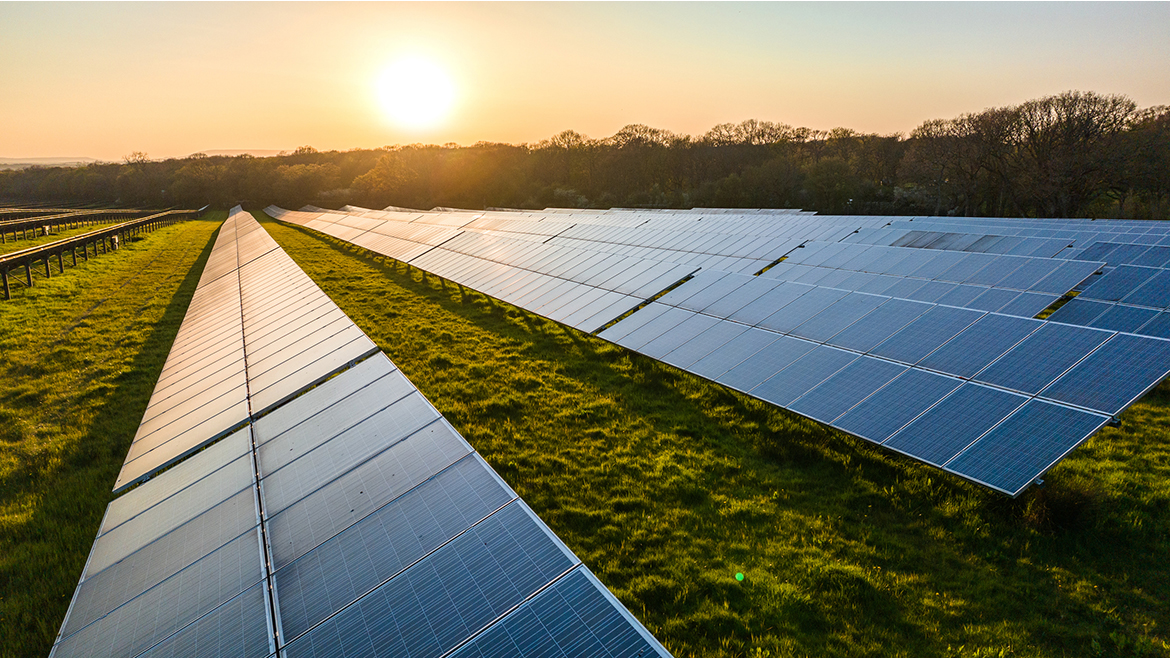
“With growing adoption of on-site renewable power generation and microgrids managed by intelligent systems, industrial players will be able to schedule production based on expected consumer demand patterns as well as forecasted energy price, availability or carbon mix,” Smith says. “As energy volatility persists, companies will adopt phased and strategically planned electrification roadmaps. Those that allow them to ramp up production when low-carbon electricity is abundant, pause or export surplus energy when energy prices spike, turning energy agility into industrial resilience and margin protection.”
Ray Wodar, global director of business consulting for the CPG and retail industry at Dassault Systèmes, notes consumers will seek transparency in carbon footprint, water use and recyclability data.
“Sustainability is no longer a marketing claim, it’s a measurable, verifiable data requirement,” Wodar says. “Regulatory shifts, such as the EU’s Digital Product Passport initiative, combined with consumer activism and plastic bans, are driving companies to adopt circular packaging and low-carbon product design. Consumers will increasingly rely on clear, accessible information to make choices, making transparency a key differentiator in the marketplace. Brands will design for zero waste from day one, not retrofit sustainability later.”
Wodar also suggests a rise in localized manufacturing, not only to reduce transportation carbon emissions, but to provide businesses with more flexibility.
“In addition to cutting costs, localized manufacturing will help brands build resilient, transparent supply chains to better face volatilities such as geopolitical shocks, raw material shortages and climate disruptions,” Wodar says.
EXPLORE MORE


Product Development
A new year also brings a slate of predictions on popular flavors and formats, but in 2026, product development will likely be driven by health and wellness.
Specifically, GLP-1 adoption — for weight loss and diabetes management — will remain strong, continuing to impact how consumers eat and shop. In fact, Circana reports roughly one-quarter (23%) of U.S. households have someone using these medications. These households are also expected to represent 35% of all food and beverage units sold by 2030.
“The rise of GLP-1 medications is a huge moment for the CPG industry,” says Sally Lyons Wyatt, global executive vice president and chief advisor for Circana. “Our research shows shopper priorities are evolving quickly and dramatically. It’s vital for retailers and manufacturers to pay close attention to these trends. The key to future success will be adapting product selections and marketing to line up with the new health-focused mindset of this growing group of shoppers.”
Protein dominated new product introductions in 2025, with high levels of the nutrient appearing in yogurt, cereal, snack foods and even water. But next year, Mintel and Datassential expect focus to also return to fiber as part of an increased interest in health and wellness.
“Mintel predicts fiber represents an opportunity,” Joel Gregoire, Mintel associate director for food and drink - Canada, said in its 2026 trends webinar. “Fiber has typically been regarded for older individuals, but we believe that narrative will change as consumers aim to improve their dietary diversity.”
Ongoing efforts to transition to natural colors, prompted by the U.S. FDA’s move to phase out synthetic petroleum-based food dyes, will also impact new product introductions. As an example, PepsiCo introduced Simply NKD, colorless Doritos and Cheetos made without artificial flavors or dyes.
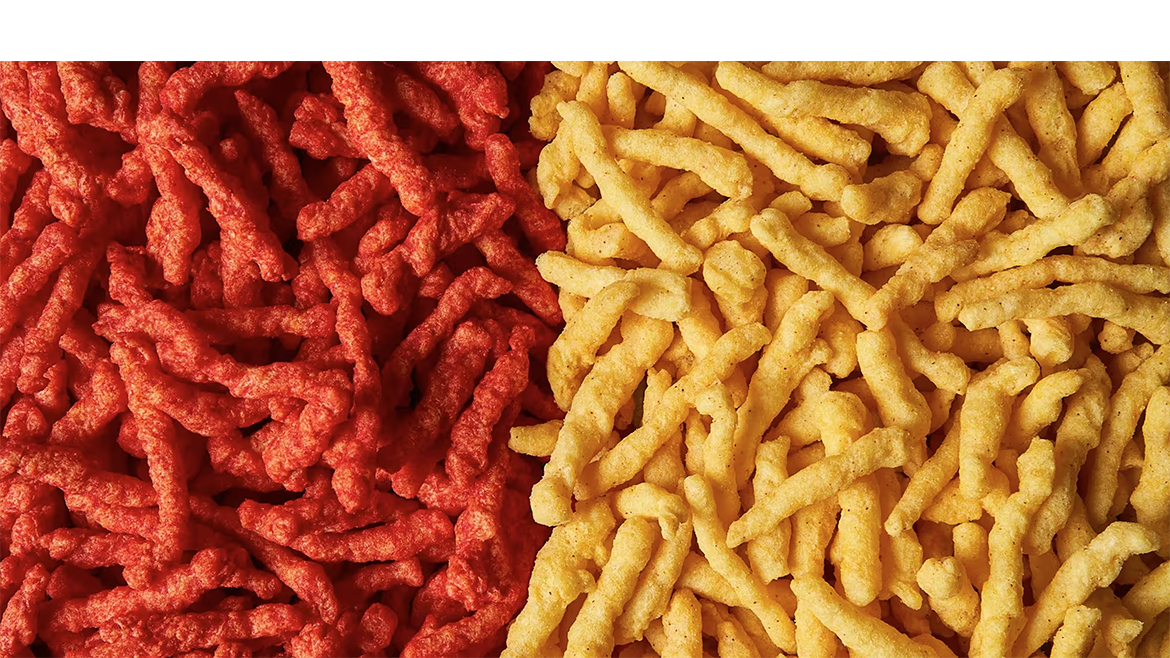
"Rest assured, our iconic Cheetos and Doritos remain unchanged. NKD is an additive option, not a replacement, introduced to meet consumer demand," says Rachel Ferdinando, CEO of PepsiCo Foods U.S. "This move underscores our commitment to flavor leadership, demonstrating that our taste remains strong even without visual cues. As part of our broader transformation, we are expanding choices while still protecting our iconic brands. More choices, same flavor, same brand power."
Looking for a reprint of this article?
From high-res PDFs to custom plaques, order your copy today!