Track and Trace Product Temperature on the Road
Once it leaves your frozen warehouse, do you know your product’s condition at any given time?
While we may think of track-and-trace to be a single function or capability in a software system, it actually comprises two: the trace part is used to find the source that created bad food — tainted ingredient, allergen, foreign object, undercooking, improper ingredient/product storage conditions, etc. — and the track part can be used to locate product once in the supply chain.
For example, a railcar’s or truck’s time and location data (telematics) can be combined with temperature monitoring to ensure your product is traveling under the same safe conditions that existed in your refrigerated warehouse. But who is responsible for tracking temperature en route?
Once good product leaves your warehouse you no longer have control over it; instead, you place it in the hands of shipping companies (unless you have your own trucks). What happens en route can turn good product into bad before it arrives — or doesn’t — at its destination. In 2024, a trailer load of fresh-frozen shrimp valued at $305,000 was stolen in New Jersey, but it just as well could have been damaged by a failure of the truck’s freezer’s compressor, resulting in over-temperature spoilage.
The onus is on producers and processors to make sure shipping companies carry out food safety requisites and fulfill track-and-trace requirements.
Temperature Tracking is a Contractual Agreement
As of June 2016, the FDA’s Sanitary Transportation of Human and Animal Food removed the prescriptive requirements for temperature monitoring devices and continuous monitoring of temperature during transport and replaced these provisions with a more flexible approach, which allows the shipper and carrier to agree to a temperature monitoring mechanism for shipments of food that require temperature control for food safety.
FDA also removed the provision requiring the carrier to demonstrate temperature control to the receiver for every shipment requiring temperature control. In this final rule, the demonstration must only be made if the shipper or receiver requests it, which is consistent with industry best practices and would likely only be done in situations in which it is suspected that there has been a material failure of temperature control.
So, it’s up to the food processor (and/or its supply chain partners) and trucking companies to establish a written agreement/contract describing the requirements for food-safe transport based on humidity, temperature and temperature excursions; whether or not “real-time” data is required; and coordination of temperature data with location data and time on the road —whatever details are needed for record-keeping.
Even though newer FSMA 204 rules push for capturing key data elements (KDEs) and critical tracking events at each step in a process plant and the supply chain, real-time data from trucks showing geolocation and temperature of loads may not enter food safety and quality management (FSQM) systems on a timely basis — and critical data can get lost in handoffs between carriers.
Tools and Experts Help with Effective Temperature Tracking
Supply chain track-and-trace tools (including temperature monitoring) are readily available and include:
- Wireless temperature sensors
- Entire cold-chain monitoring services
- Food safety and quality management (FSQM) systems that interface with the collected wireless data and connect to ERP and WMS
- System integration services to help connect complete systems together.
For example, the Swift Sensors wireless monitoring system tracks the temperature and humidity inside the refrigerated cabins of trucks transporting food, says Ray Almgren, CEO. It supplies real-time data and alerts when the temperature or humidity exceeds thresholds. The system protects against food spoilage and losses and provides critical information for compliance reporting.
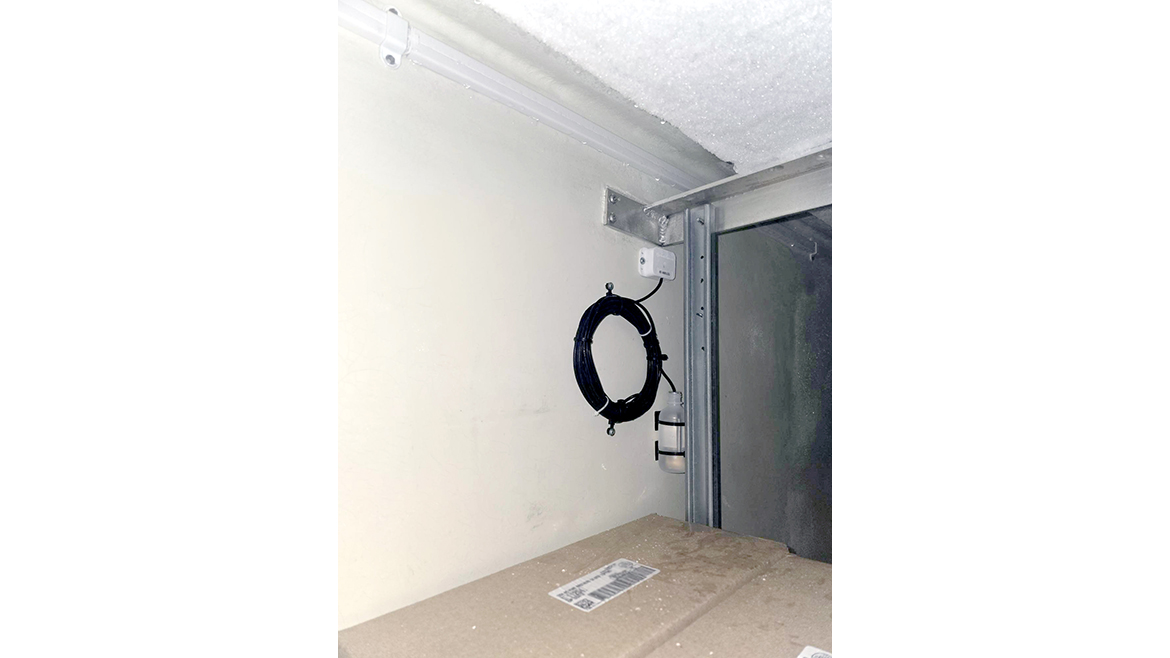
A Swift Sensors Wireless Temperature Sensor with Probe is mounted to the sidewall of a reefer trailer and inserted into glycol solution. Photo courtesy of Swift Sensor
Copeland is a global cold chain monitoring provider, annually tracking more than 3 million shipments of produce and protein, food processors, imports, exports and retailers with trackers and loggers to ensure shipment quality and food safety, says Gerd Uitdewilligen, director of international sales. Along with the real-time trackers and loggers, Copeland’s updated Oversight360 cloud-based platform allows processors to address non-conformance in real time. The Oversight360 platform is available in 15 languages, supporting global access to real-time data 24/7.
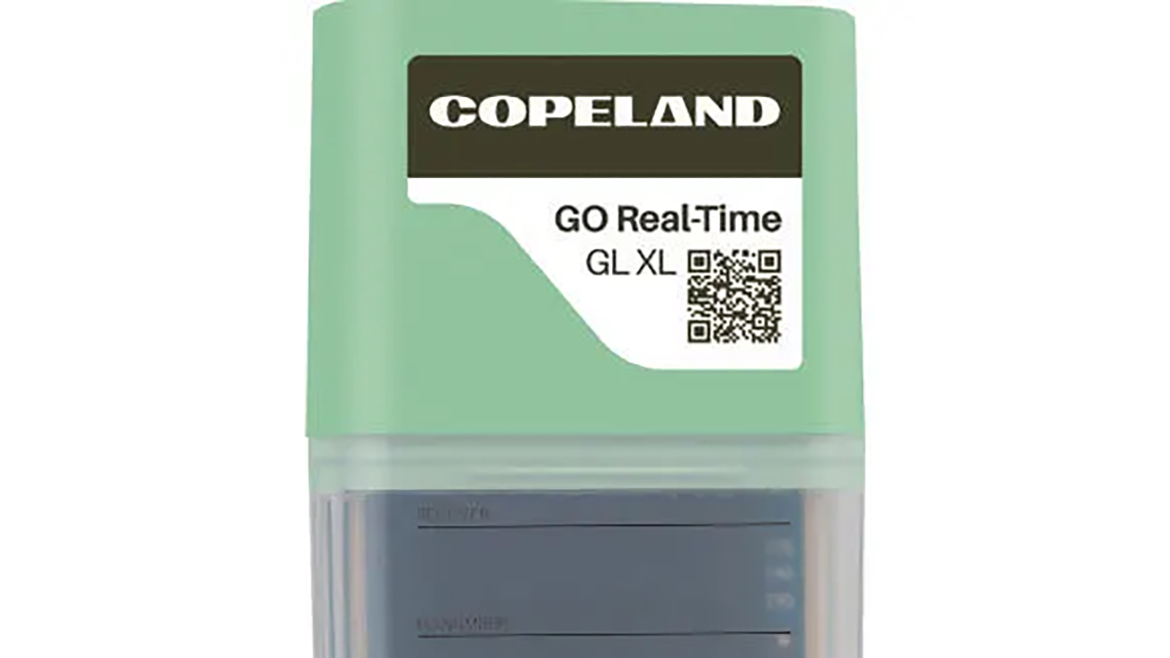
Built for long-haul cold chain shipments, Copeland’s GO Real-Time GL XL provides extended visibility and reliability across global supply routes. With real-time temperature, location, humidity and environmental monitoring—powered by advanced cellular technology and Wi-Fi detection—it delivers continuous insight throughout complex, cross-border journeys. Photo courtesy of Copeland
“With nearly 18 years in the food industry, my focus has been on improving how food manufacturers capture, connect and act on operational data to protect product quality and ensure compliance,” says Tiffany Donica, director of industry consultants. “At SafetyChain, our role is centered on providing a unified plant management platform that digitizes and contextualizes data across plant operations, including the critical handoff from production to outbound logistics.”
“While we do not directly provide temperature monitoring hardware for in-transit tracking, we play an important role in ensuring that all relevant data collected before and during shipment is captured, verified and actionable within a structured system,” Donica adds. Within a yard management context, this includes:
- Digitizing pre-shipment inspections, including trailer condition, cleanliness and pre-cooling verification
- Capturing dock activity and load events tied to specific lots, orders and carriers
- Recording departure conditions, including product temperature checks at time of loading
- Monitoring refrigerated/frozen trailers that are preloaded and staged in the yard, including reefer unit status and documented product condition checks prior to pickup
- Integration into external systems like an in-transit temperature monitoring system
This structured data capture creates a reliable point-in-time record of product condition and handling prior to departure, which is essential when investigating in-transit issues or validating compliance with regulations, Donica adds.
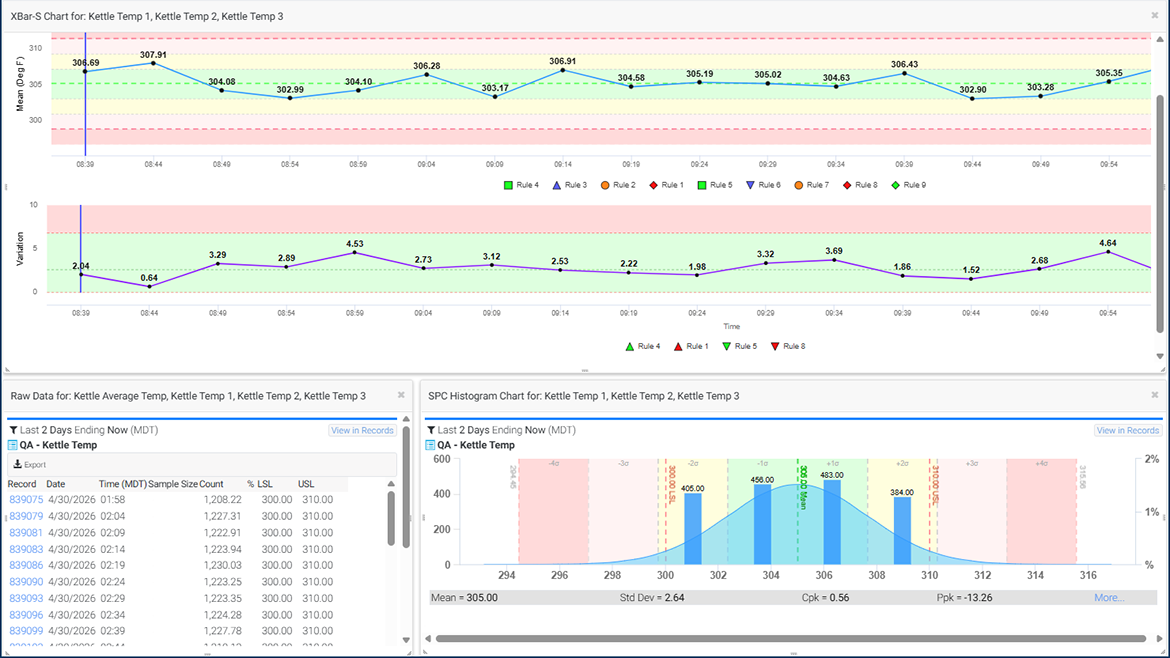
The SafetyChain digital plant management platform monitors processes in house and features track-and-trace capabilities to monitor for problems with incoming ingredients, as well as track where product is in the supply chain once it has left the processor’s loading dock. Photo courtesy of SafetyChain
For those who need help in putting these systems together, Wipfli, a Control System Integrators Association Partner Member stands ready to help. “We primarily support food processors on the systems and business process side rather than providing sensors or telematics hardware,” says Anthony Shibata, partner in technology consulting. “Our role is to implement and integrate core operational platforms — such as ERP, production, accounting and warehouse management systems (WMS) — and help clients define how in-transit data is incorporated into day-to-day operations.”
Where processors use temperature sensors or third-party monitoring tools, Wipfli helps integrate that information into the broader technology stack. This includes connecting sensor data to ERP and WMS platforms; enabling reporting and supply chain visibility; and aligning shipment, container and lot data so it can be tied back to production, compliance and quality workflows. The value lies not just in collecting data, but in making it usable within existing systems.
How to Get Tracking Data Back Home
First, according to Almgren, wireless sensors need to be factory calibrated, and in most cases, will also have NIST-traceable calibration. A simple operation will connect the sensor data via a wireless protocol to a gateway powered by the DC supply in the truck cabin. A cellular modem connected to the gateway transmits the data to the cloud.
For larger geographies and routes, Copeland’s solutions provide continuous monitoring of products throughout their cold chain journeys, even as they change transportation modes, cross borders and experience inconsistencies from temperature changes or possible delays. Through these changing conditions, processors maintain continuous visibility of their products, Uitdewilligen says.
A major advantage is direct access to reliable data without being solely dependent on third‑party systems during transit, Uitdewilligen adds. This ensures greater visibility and control over products in-transit, which is especially important for perishable goods. Processors own their data and control how it’s used, while still having the ability to securely share it with other supply chain stakeholders like logistics providers and receivers to ensure full data compliance. Shared visibility supports collaboration, particularly about reporting and addressing and preventing any issues experienced during shipping.
SafetyChain’s Donica points out three critical considerations in setting up a monitoring/tracking system: accuracy, connectivity and ownership.
- First, calibrated sensors are non-negotiable. Processors should ensure probes meet NIST-traceable calibration standards and are validated for the specific temperature ranges of their products.
- Second, connectivity is largely dependent on cellular networks. Wi-Fi is rarely viable in transit, so devices must support reliable cellular transmission with data buffering capabilities in case of signal loss. The ability to store and forward data ensures continuity even in low-coverage areas.
- Third, and often overlooked, is data ownership and independence. While many carriers provide geolocation data through their telematics systems, that data is not always accessible in real time or in a format that integrates easily with other platforms. Relying solely on carrier data can create blind spots.
“A best practice we see emerging is the use of independent, shipment-level devices that combine both temperature and geolocation tracking,” Donica adds. This ensures the shipper retains control of the data and can integrate it directly into their system without dependency on third-party systems or delays.
Picking up on the lack of Wi-Fi, Wipfli’s Shibata notes that once shipments leave fixed facilities, cellular connectivity is typically required, introducing ongoing costs and technical overhead. For wholly owned fleets, those costs can often be included in landed costs and allocated at the SKU level. For third party carriers, especially smaller operators, the cost benefit calculation is more complex.
Ultimately, Shibata advises, processors need to consider what mitigation actions are realistically possible if a temperature excursion is detected. In many cases, intervention options are limited once a shipment is underway. The cost of monitoring and response must be weighed against the likelihood and financial impact of spoilage, making this more of a strategic “should we” decision than a technical “can we” decision.
Moving Time/Temperature Track and Trace Data to FSQM Systems
Copeland’s Oversight360 platform supports both real‑time, trip‑level monitoring and broader performance analysis across lanes, commodities, locations and shipping and receiving operations, Uitdewilligen says. Individual shipments can be monitored with automated alerts delivered via email or mobile app, enabling fast, issue‑specific response capabilities.
For deeper analysis, Copeland’s platform can be accessed on a PC, where the portal provides information on multiple trips that can be aggregated to support lane assessments, vendor management and performance scoring. This enables stakeholders to move beyond reactive actions and conduct proactive, detailed, data‑driven evaluations that are often not available within traditional FSQM systems.
The platform supports multi‑stakeholder visibility, ensuring shared access to the same validated data, so quality and food safety decisions are visible and aligned across shippers, receivers and
logistics partners. It also supports data integration, allowing customers to combine data with other existing FSQM systems for compliance documentation while leveraging Oversight360 software for advanced analytics and operational insights.
Data from the sensing system can be shared with an FSQM or ERP system via APIs and webhooks, says Swift’s Almgren. Some shippers want the actual temperature data for compliance reporting while others only want the alerts noting when the temperature exceeded a threshold.
Modern FSQM platforms are designed to ingest IoT data streams through APIs or direct integrations, says SafetyChain’s Donica. Data flows from the device via cellular connection into a cloud environment, where it is immediately contextualized and linked to specific shipments, lots and orders.
From there, systems enable:
- Real-time alerts for temperature excursions
- Automated workflows such as hold or release decisions and notifications
- Dashboard visibility across shipments
While not all legacy FSQM systems are equipped to handle high-frequency data, modern platforms are increasingly built for this level of integration.
Importantly, this data should not live in isolation. Integration with ERP and warehouse management systems is essential to ensure alignment between logistics, inventory and quality teams. This creates a closed-loop system where decisions made in FSQM can directly impact downstream operations, Donica says.
Data Fragmentation in Track-and-Trace/Temperature Monitoring Systems
When an out-of-bounds temperature excursion is found during a custody transfer three days after it happened, which has totally damaged, say, a trailer load of frozen lobster, it’s usually not due to a lack of digital monitoring/tracking tools. Rather, it’s similar to the “islands of automation” issue on the plant floor — fragmented and unconnected, untimely data that never reaches the right person.
Data fragmentation is a problem today, says Copeland’s Uitdewilligen. Effective cold chain monitoring starts with determining who needs access to data, when they need it and how it will be used to drive operational change. Without clear visibility, defined goals and aligned stakeholders, shipment data often becomes fragmented, creating silos that prohibit corrective action and continuous improvement.
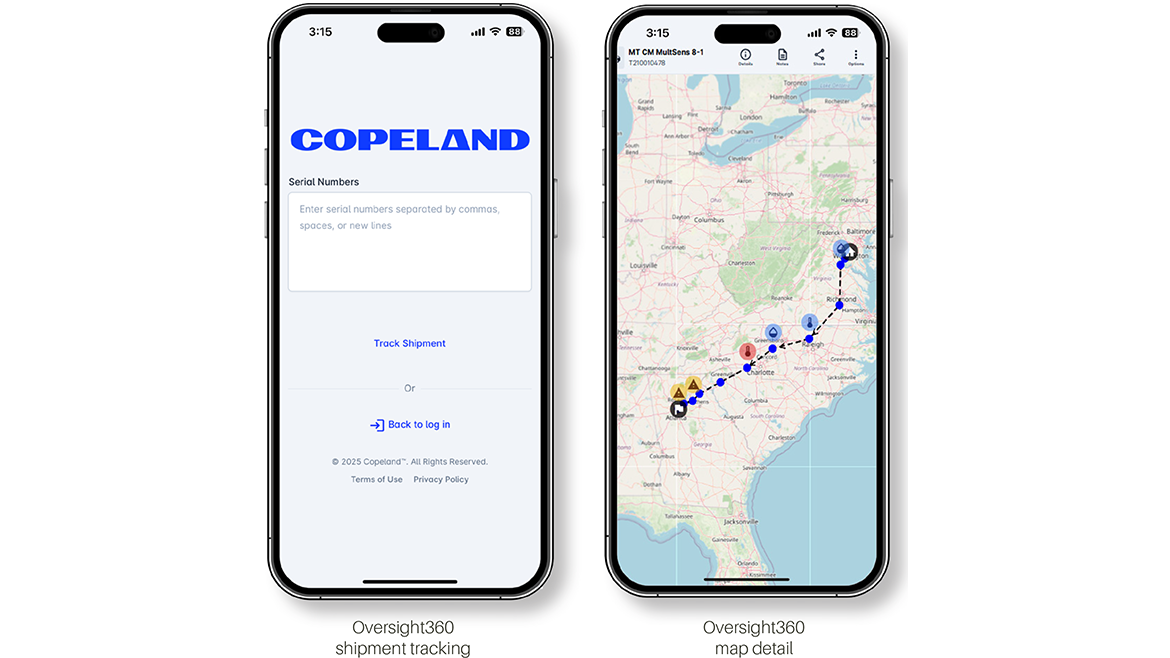
Copeland’s Oversight360 runs on smartphones and can track products’ location and temperature as they travel enroute to their destination. Image courtesy of Copeland
Although real-time air monitoring inside trailers, reefers or railcars can provide useful indicators, it can also introduce fragmentation when transportation modes change, Uitdewilligen adds. By measuring the product temperature directly, stakeholders maintain consistent, uninterrupted
visibility regardless of transport method or carrier control, ensuring continuity of data — even in complex multimodal supply chains This supports accurate quality, food safety and compliance decisions based on product condition rather than the limitations of the transport environment.
Data fragmentation remains one of the biggest barriers to effective in-transit tracking and monitoring, says SafetyChain’s Donica.
Temperature, location and shipment data often exist in separate systems, including:
- Carrier telematics
- Sensor provider platforms
- Internal ERP or warehouse systems
This fragmentation delays decision-making and often results in reactive rather than proactive responses. Real-time monitoring within trailers significantly reduces this fragmentation, but only if the data is centralized. The real value comes from aggregating all relevant data streams into a single platform where they can be analyzed together. Without that unification, even real-time data can become just another silo, Donica says.
Compounding the problem, real-time data isn’t necessarily real time. Wipfli’s Shibata explains: In most cases, in-transit data is not truly real time. Data is typically uploaded on a scheduled basis — hourly or daily with cellular connectivity — or in batches upon delivery. Because shipments are rarely rerouted once underway, this information is primarily used during receiving and quality assurance checks rather than for mid-transit intervention.
When live data is available, it requires monitoring software capable of issuing alerts and predefined mitigation protocols to be effective. Many FSQM systems can be configured to store this data or link it to QA records, but real-time alerting usually operates outside the FSQM system.
FSQM systems typically retain compliance data. WMS platforms manage quarantine or rejected inventory, and ERP systems handle financial impacts such as credits or write-offs. Only in limited scenarios — such as treating a truck as a mobile warehouse — would in-transit status be managed directly within WMS workflows, Shibata says.
Moral of the Story:
Monitoring temperature and location of high-value, critical loads is ultimately, according to FDA, the shipper’s responsibility. Having fully legal and binding contracts with trucking companies defining load temperatures, monitoring them and explaining who’s responsible for what measurements will be of utmost importance. In addition to your legal team, your insurance underwriter/agent will no doubt be helpful in proposing the right monitoring schemes and helping with contracts.
Looking for a reprint of this article?
From high-res PDFs to custom plaques, order your copy today!