Is Your Manufacturing Facility Prepared for Future Food Safety Risks?
Food manufacturers spend considerable time preparing for known risks. We design facilities around established food safety principles, build controls for recognized pathogens and create sanitation programs based on our understanding of our products and processes.
But there is a more difficult question every food manufacturer should be asking: Are we designing facilities to manage only the risks we recognize today, or are we building operations capable of responding to risks we have not yet encountered?
Recent outbreaks, including the emergence of Cyclospora in produce and Cronobacter in baby food, remind us why that distinction matters. Pathogens and contamination events do not always appear where the industry expects them. Consumer expectations evolve, resulting in new and improved products and matching changes in processing, warehousing and distribution. Facilities expand to meet demand and to accommodate new products. And microorganisms are exceptionally good at finding opportunities we did not anticipate.
My advice to manufacturers is simple: never underestimate microorganisms. They have survived for millions of years, and they are remarkably good at getting into places where we do not want them. That makes vigilance, hygienic design, sanitation and continuous training fundamental to food safety, not just during startup, but throughout a facility's life.
Yesterday's Facility Is Producing Tomorrow's Food
A new plant is typically designed around current standards and today's understanding of risk, considering a family of products that will be made in such facility. As the facility ages, standards change and suddenly the design is outdated, ceilings are too low, footprints are tight, paths become very narrow and automation becomes difficult. More importantly, few facilities remain exactly as they were originally designed.
A plant might be designed to manufacture products A, B and C. Years later, new lines have been added, production volumes have increased and entirely different products are moving through the building. Each change can have consequences that are easy to overlook.
New products can introduce new ingredients, including allergenic materials. New process lines stress the footprint and can create personnel and material flow paths that need to be evaluated for contamination risks. Airflow can change when equipment or walls are added and thus carry contaminants to different places. Drains might need to carry loads they were never designed to accommodate. More employees may move between areas, and new traffic patterns can create additional contamination pathways.
Individually, these changes may seem manageable. Collectively, they can alter the risk profile of the facility.
That is why food safety cannot be treated as something established when a plant opens and then maintained indefinitely. Every significant change in production should trigger another look at the facility's assumptions and update the food safety plan hazard analysis.
New Products Can Create New Risks in Old Equipment
One of the greatest pressures on facilities today comes from the changing nature of food itself.
Consumers increasingly want products that are minimally processed while still expecting safety, quality and long shelf life. At the same time, manufacturers have introduced an enormous variety of new formulations, ingredients and product categories.
Those trends can push existing equipment toward the limits of what it was designed to do.
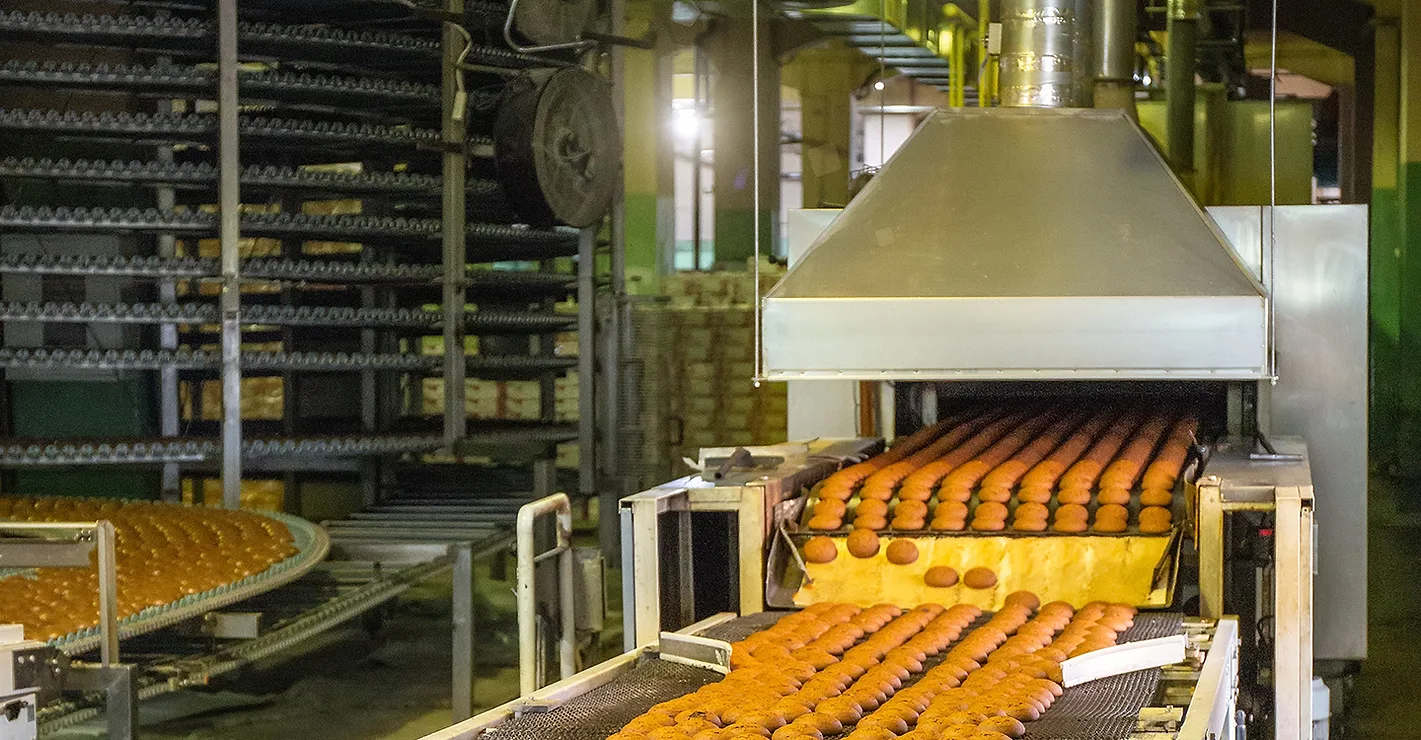
Consider the growth of plant-based beverages. Equipment and processes originally designed around dairy products have sometimes been adapted to oat, almond and other plant-based formulations. Yet those products do not necessarily behave like milk. Their physical properties and cleaning requirements can differ, which means a process that worked well for one product may not provide the same performance for another.
The lesson applies far beyond plant-based beverages: A new product running successfully through existing equipment does not necessarily mean it is running safely. Validation of process and cleaning must be carried out.
Before introducing a new product or process, manufacturers should evaluate what will change, not only ingredients-wise but as a holistic approach. Can the equipment still be cleaned effectively? Does the existing sanitation procedure remain appropriate? Are new ingredients introducing different microbial, allergen or cross-contamination risks? Has the required kill step changed? Do new pieces of equipment create bottle necks or hard to clean areas?
Flexibility is valuable, but only when a facility understands its constraints.
Future-Proofing Starts with Hygienic Design
We cannot predict every organism or food safety challenge that will emerge. We can, however, make facilities less hospitable to contamination in the first place.
Hygienic design is one of the most powerful ways to do that.
Equipment should be designed to be accessible, cleanable and sanitizable. Facilities should minimize opportunities for cross-contamination and provide appropriate separation between areas with different risk profiles.
I prefer physical segregation where possible: walls and doors provide clear boundaries and make movement between areas deliberate. Air handling should reinforce those boundaries. Cleaner spaces should be maintained so that air moves toward less-clean areas rather than allowing contamination to travel in the opposite direction.
Air itself should be treated almost like an ingredient. It touches equipment, packaging, and in some operations, exposed product. Manufacturers need to consider filtration, humidity, temperature and airflow direction as part of their food safety strategy.
These principles are not new. The problem occurs when a facility changes without reevaluating them.
Adding a line requires the addition of new equipment, and the potential for relocating some of the existing pieces which can change the flow of materials, personnel and air. Increasing production can affect sanitation demands, removal of moisture, dust handling, etc. Changing traffic patterns can undermine segregation and promote cross-contamination. A plant that was appropriately designed 15 years ago is not necessarily appropriately configured for what it produces today.
At this point, it is important to have constant dialogue to prevent the view that food safety and quality operate in opposition to production. Quality and safety teams are there to support operations, not prevent them from succeeding, and management should reinforce this view often and help build a strong food safety culture at all levels.
Sanitation Has to Evolve with Production
Cleaning and sanitation are always mentioned in every food safety article, yet they are frequently underestimated.
It is not enough to have a sanitation program. Manufacturers need to validate that cleaning procedures work and routinely verify that they continue to work as products and processes change.
Automation offers an opportunity to make sanitation more adaptable.
Imagine a facility that produces several products requiring different cleaning protocols. When the production system switches to a particular recipe, that recipe must also include information for the sanitation system informing it which cleaning procedure is required. Instead of treating production and sanitation as separate activities, automation allows them to become parts of the same validated operation.
Technology can also help reduce another persistent vulnerability: human error. High employee turnover makes continuous training increasingly important. I have returned to facilities only a few months after providing training and found that much of the workforce had changed. That means training cannot be a one-time exercise.
Automation can reduce reliance on manual tasks, improve record keeping and potentially provide additional verification that procedures are performed correctly. AI may eventually play a larger role in areas such as monitoring sanitation activities, although widespread use remains relatively early.
Monitor for What You Cannot See
Environmental monitoring presents another challenge. In some operations, particularly where products are exposed to the surrounding environment, it can provide an essential indication of potential contamination.
But monitoring has inherent limitations. In a large facility, detecting a small microbial presence can be like searching for a needle in a haystack. Traditional testing can also take days to return results, during which substantial amounts of product may have already been manufactured.
Advances in rapid testing can help shorten that window. More fundamentally, however, environmental monitoring needs to be designed around the actual process and its risks rather than treated as a generic compliance exercise.
The goal should not simply be to collect samples. It should be to generate information capable of identifying small changes in the environment of the plant to prevent problems early enough to act.
Four Principles for the Facility of the Future
If I were designing a food manufacturing facility today with tomorrow's risks in mind, I would prioritize four things from the beginning: segregation, air handling, drains and automation, together with a strong regime of continuous employee training.
But future readiness is not limited to new construction.
Existing facilities can apply the same thinking. When adding equipment, launching a product or increasing capacity, ask how the change affects airflow, personnel movement, sanitation, drainage and environmental monitoring. Reassess whether existing kill steps and cleaning procedures remain appropriate. And make sure the people responsible for operating the facility understand why those controls matter.
This becomes especially important as more companies turn to contract manufacturing. Outsourcing production can reduce the capital and staffing burden of owning a facility, but it does not outsource responsibility for understanding risk. Contract facilities may manufacture numerous products using shared equipment and infrastructure, making process compatibility, cleaning and cross-contamination controls critical considerations.
Whatever the manufacturing model, the fundamental principle remains the same: food safety cannot be designed solely around yesterday's problems.
We cannot know which pathogen, product category or process will create the industry's next major challenge. What we can do is build facilities and operating systems that are adaptable enough to respond.
The facilities best prepared for the next pathogen will not necessarily be those that predicted exactly what was coming. They will be the ones designed to recognize change, reassess risk and adapt before that risk becomes a recall.
The best way to accomplish that is not to wait until the next threat has a name.
Looking for a reprint of this article?
From high-res PDFs to custom plaques, order your copy today!