Is the Package Label Becoming the Product Lifecycle Record?
The technology being deployed to replace the 1D UPC in 2027 may create a new physical-to-digital connection that looks remarkably like one of the fundamental objectives of PLM.
Need to Know
- GS1 Digital Link connects GS1 identifiers to multiple online sources, including traceability information, recall status, product information and APIs.
- GS1 advocates for widespread adoption of 2D barcodes by the end of 2027.
- QR codes are expected to play a bigger role in logging a product from its beginning to its point of purchase.
Product lifecycle management (PLM) software rarely operates in a vacuum. It is often connected to ERP, MES, LIMS, FSQM, track and trace and other systems, sharing data back and forth within the enterprise and its supply chain partners.
For food, a product lifecycle might look like this: farm → ingredient sourcing → formulation → processing → packaging → distribution → retail → consumer → recall/disposal. Sharing this data is getting a little easier with new GS1 technology to begin operating next year.
While not technically a PLM system, GS1 Digital Link provides a standardized way to keep pointing back to the identified product while different information systems contribute data along that journey. GS1 describes Digital Link as a way of connecting GS1 identifiers to multiple online sources, including traceability information, recall status, product information and APIs. Even though that is a PLM concept, GS1 doesn’t call it PLM.
But what if the product label itself were the link between all those otherwise often disconnected information systems? That’s highly relevant to food manufacturing because the "product" isn’t just a SKU sitting in a PLM database.
A packaged product may have a Global Trade Item Number (GTIN) identifying the product, lot/batch info, expiration date, production info, ingredient and allergen info, traceability info, recall status, certification info, sustainability data and consumer-facing info.
And potentially different audiences can get different information from the same code. GS1 specifically envisions the same 2D barcode serving retail checkout while also providing access to digital product data, traceability information and other sources.
The actual GS1 objective is widespread adoption of 2D barcodes by the end of 2027. GS1 says the transition is gradual, that existing linear barcodes won’t disappear immediately, and that retailers and manufacturers are already testing the technology. Question is: could the GS1 2D barcode become something much more significant than a replacement for the UPC?
I asked Ned Mears, senior director of global standards, GS1 and Gautam Garg, CEO and founder, Trycon Technologies (provider of SCANOVA, which provides GS1-compliant QR Codes adhering to the GS1 Digital Link standards) to comment on my thesis.
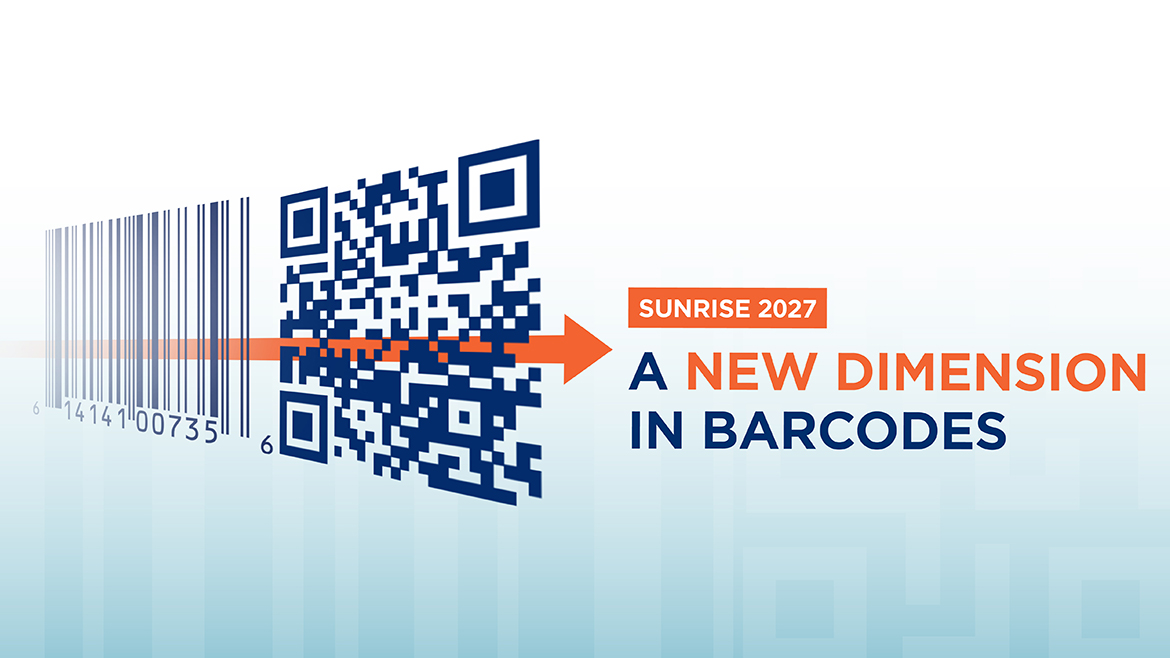
Coming in 2027 is the new two-dimensional code, which will be capable of providing access to much of the same information contained in a PLM system. Image courtesy of GS1
FE: Ned, what does "product lifecycle" mean in the context of GS1 Digital Link?

Ned Mears, senior director of global standards, GS1 Image courtesy of GS1
Ned Mears: When people hear "product lifecycle," they often think about a single system that manages information from product design through manufacturing and eventually to end of life. GS1 Digital Link approaches the challenge differently. Rather than creating another system of record, GS1 Digital Link provides a common standards-based identity that can connect the many systems involved in a product’s journey.
In that sense, the package is becoming more than a label. It is becoming a trusted digital entry point into information that may exist across sourcing, manufacturing, logistics, retail, consumer engagement, traceability, sustainability and recall systems. The value is not that all lifecycle information lives in one place, but that a product’s identity can consistently connect people and systems to the right information at the right time.
FE: What information can actually be associated with a GTIN/lot/serial number?
Mears: Historically, a barcode primarily identified a product at checkout. Increasingly, companies want that same product identity to unlock far more value.
Today, a GTIN combined with additional attributes such as lot, batch, serial number or expiration date can serve as a gateway to information ranging from traceability and recall status to regulatory disclosures, ingredient information, sustainability credentials and consumer experiences. The identifier itself remains consistent, while the information connected to it can evolve throughout the product’s lifecycle.
What is particularly exciting for food manufacturers is that the same product identity can support both operational use cases and consumer-facing experiences without requiring separate identifiers for each audience.
FE: How much of the lifecycle information resides in the barcode versus external systems?
Mears: A useful analogy is to think of the barcode as a key rather than a filing cabinet.
The barcode contains structured identification information and may include attributes such as lot number, serial number or expiration date. The rich business information continues to reside in enterprise applications, cloud platforms and data repositories where organizations already manage product data.
GS1 Digital Link allows the physical package to serve as a bridge between the product and those digital systems. Rather than putting the lifecycle record into the barcode, the barcode creates a standardized path back to the lifecycle information maintained throughout the supply chain.
FE: What are resolvers and where do they fit?
Mears: Resolvers are one of the most important yet least visible parts of the Digital Link ecosystem.
If the product identifier is the key, the resolver acts as the intelligent routing layer. It helps determine where users should be directed and what information should be delivered based on business rules and context.
That means a consumer might be taken to product information, recipes or sustainability content, while a regulator, retailer or supply chain partner could access entirely different information sources. The package remains the same, but the digital experience can be tailored to the audience and purpose.
Importantly, organizations can update those destinations over time without changing the barcode printed on millions of packages.
FE: How does this interact with ERP, MES, PLM, WMS and traceability systems?
Mears: One of the largest misconceptions about emerging 2D barcode technology is that it replaces existing enterprise systems. In reality, its greatest strength may be its ability to connect them.
ERP systems manage transactions. MES platforms manage production. PLM systems manage product development. WMS systems manage inventory and distribution. Traceability platforms capture movement and event information. Each serves a different purpose and remains a system of record for its respective domain.
GS1 Digital Link provides a common language through which those systems can connect to a product’s identity. Rather than consolidating all information into one application, it enables interoperability across many applications.
FE: Could the same identifier connect information from ingredient suppliers through manufacturing and distribution?
Mears: That possibility sits at the heart of why so many organizations are interested in GS1 Digital Link.
Food supply chains generate enormous amounts of information as products move from farms and ingredient suppliers through processing facilities, distribution networks and retail stores. Historically, much of that information has remained fragmented across organizations and systems.
A common standards-based identifier creates the opportunity to maintain a consistent digital thread across that journey. Different parties continue managing their own information, but the product identity provides a common reference point that helps connect the various pieces together.
That concept of a persistent digital identity from farm to fork is one of the most compelling opportunities emerging from the transition to 2D barcodes.
FE: What is GS1’s vision beyond the 2027 retail transition?
Mears: The industry’s immediate objective is straightforward: enable retail point-of-sale systems to read and process next-generation 2D barcodes. The larger opportunity is creating a foundation for richer product transparency, stronger traceability, more effective recalls, improved consumer engagement and future digital commerce experiences.
The future is not just a better barcode. The future is a persistent digital identity that connects products to information and services throughout their lifecycle. Sunrise 2027 represents an important milestone on that journey, not the destination itself.
FE: Any other important points?
Mears: The most important thing to understand is that GS1 is not trying to turn packaging into a database.
What the industry is building is a standards-based bridge between physical products and digital information. That distinction matters because information will continue to originate from many trusted sources across the supply chain.
The package is not becoming the product lifecycle management system. But it is increasingly becoming the universal key that unlocks lifecycle information. For food and beverage companies, that means a future where a single scan can connect consumers, retailers, regulators and supply chain partners to the information they need while maintaining a common product identity across the entire journey from farm to fork.
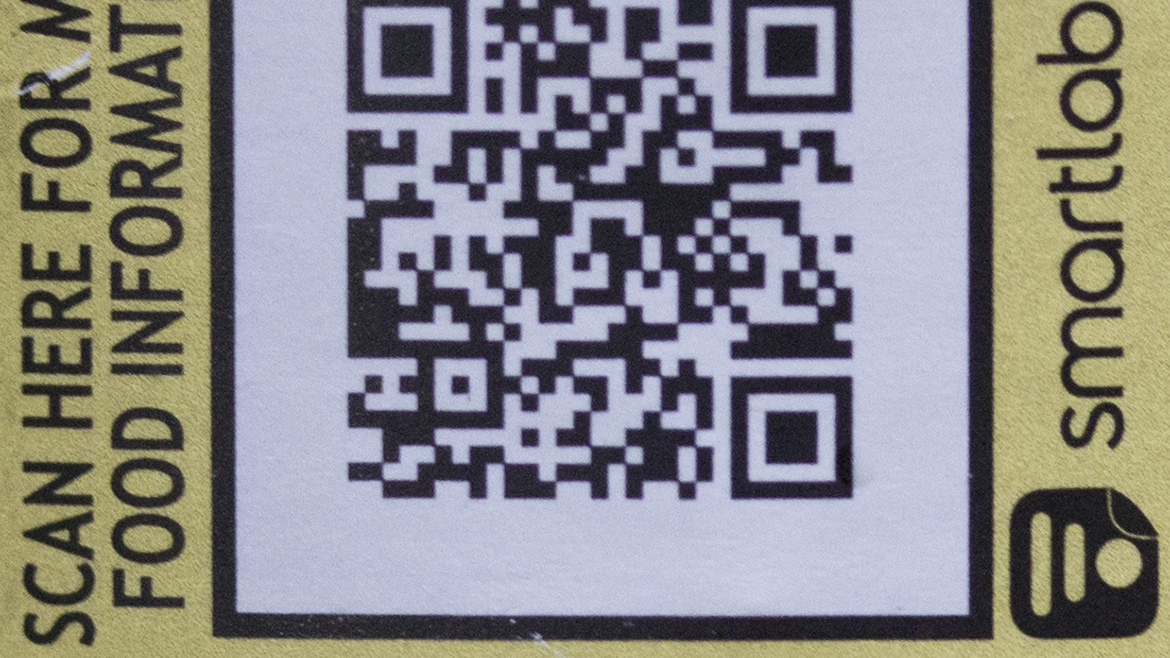
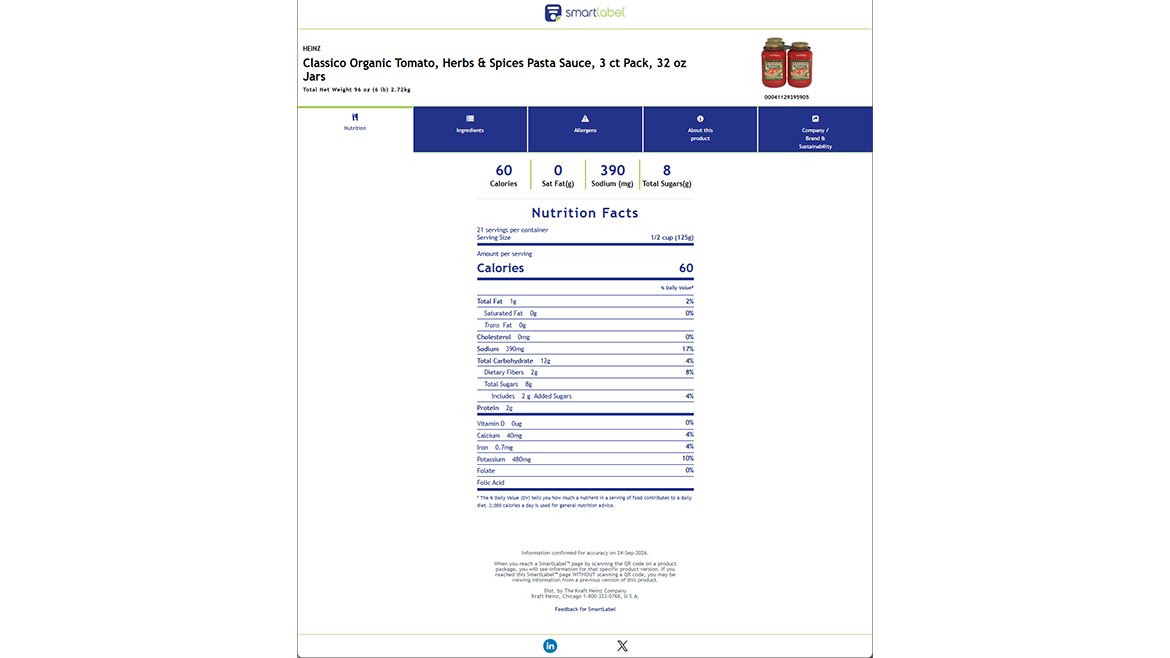
Classico’s organic tomato sauce by Kraft Heinz features a “SmartLabel” QR code (left) that, when scanned, takes the shopper directly to a landing page, featuring all a consumer would ever want to know about a product, rather than just taking them to a general webpage that would require the user to do the searching for the product and its page. The Nutrition Facts pops up immediately with tabs for ingredients, allergens, “About this product” and “Company/Brand & Sustainability.” Image shows the three-count, 32-oz. jars as purchased from Costco. Images courtesy of Wayne Labs (Click on each image to expand.)
QR Codes and Their Role in a Product’s Lifecycle
As 2027 approaches, QR codes are expected to play a bigger role in logging a product from its beginning to its point of purchase. I asked SCANOVA’s Gautam Garg, CEO and founder, Trycon Technologies, to explain QR codes and their relationship to GS1 codes.
FE: How are food companies actually using QR codes today?

Gautam Garg, CEO and founder, Trycon Technologies Image courtesy of Trycon Technologies
Gautam Garg: Less strategically than the industry conversation suggests, and with far more variation between categories than anyone expects going in.
Nearly everything on a food pack today is what we call a dynamic QR code. The printed symbol carries a short, fixed link, and the content it leads to sits in a database record that can be changed at any time from a dashboard without touching the artwork. That single property is what makes a code usable as long-term packaging infrastructure rather than a campaign device, and it is worth understanding before anything else, because most of what follows depends on it.
Across our food and beverage accounts, which between them have generated scan volumes in the eight figures, there isn’t one deployment model. There are two, and they barely resemble each other. One group builds large estates: a separate code for every variant, every market, every production run, sometimes thousands of codes under a single brand. That suits products where the label is fixed for years and shelf life is long, and long-shelf-life drinks categories are where we see it most. The other group does almost the opposite. A handful of companies in fast-moving drinks run a few hundred codes in total and pull roughly five times the scans per code that the dataset averages. One code, on one high-turnover SKU, has passed a million scans by itself.
My view is that the second model is the better teacher, and most manufacturers get talked out of it. There is an instinct to solve the whole portfolio at once, which turns a learning exercise into a procurement exercise. Small deployments on packaging that moves quickly generate usable behavioral data in weeks. Estates built across slow-moving SKUs can take a year to tell you anything.
Almost none of what we see today is GS1 Digital Link. These are conventional dynamic codes doing marketing and product-information work, and Digital Link barely registers against that volume yet. That is not a criticism of the standard. A GTIN, the Global Trade Item Number that already sits underneath today’s UPC barcode, has to be issued by GS1 itself, which is a registration step outside any QR platform. Packaging redesign cycles in food also run long enough that brands sensibly wait for the next planned refresh rather than retrofitting mid-cycle. Sunrise 2027, GS1’s target date for retail checkout systems to read 2D codes, is what has turned this from a someday conversation into a live artwork decision, and the companies moving now are mostly the ones whose packaging cycle happens to land in the right window.
FE: What are companies putting behind QR codes?
Garg: Most often, a brand or product webpage. Just over nine in ten scans in our food data resolve that way, and I would not read that as a lack of ambition. A webpage is the one destination a brand already owns, already maintains and already has legally approved copy sitting on. It is the rational first move, it carries real marketing value, and it will stay the backbone of most deployments for years.
What interests me is the minority doing something else, because the performance gap between them and the default is wide.
A small number of manufacturers use what we’d call a document QR code. Instead of sending the shopper to a website to go looking, the file itself is hosted and served the instant the code is scanned: a nutrition panel, an allergen declaration, a specification sheet. Inside packaged and processed food, those codes average more than 15 times the scans of a typical code in the same segment. Same shelf, same shopper, same moment of attention. The difference is that one answers a question the shopper is actually asking and the other opens a homepage and leaves them to navigate.
I find that number more persuasive than any survey on consumer demand for transparency. People will read allergen and nutritional content off a pack when someone puts it one scan away. Much of the industry still treats that as an unproven hypothesis. It isn’t.
A second pattern surprised us: app store codes, which detect the scanning device and route it to the correct store automatically, are the highest-yielding content type in food by a wide margin, close to 10 times a standard webpage. Packaging turns out to be an efficient app acquisition channel, and most of the brands that discovered this discovered it by accident.
The technical ceiling is far above any of this. A Digital Link code can carry the GTIN, batch and lot number, expiry date, ingredient origin, allergen data and recall status behind a single symbol. Very little of that is being used on food packs today. The distance between what these codes can hold and what they currently hold is, I think, the biggest unclaimed opportunity on a food pack right now.
FE: How is dynamic information maintained? How does this differ from PLM?
Garg: The mechanism is simple. The printed code carries a fixed short link; the destination behind that link is a database record, editable from a dashboard. Changing where a code sends people requires no change to the pack. We call that repointing, and nobody in this industry disputes how it works.
What the industry has not absorbed is how heavily it already relies on it. Roughly four in five scans in our food dataset land on codes that have been repointed at least once since they were created. That is not a marginal practice. It is the dominant one.
The timing should give a PLM audience pause. In packaged and processed food, close to three-quarters of all destination changes happen more than a year after the code was created, and the average gap between creation and change in that segment runs to about two and a half years. The longest we have recorded is a little under six years, which means artwork printed before the pandemic resolving to content written this year. One manufacturer in our data has repointed every code it has ever created.
So, the content behind a food QR code is not a campaign asset with an end date. It is product data with a lifecycle, and it routinely outlives the team that commissioned it. Yet in most organizations we work with it has no named owner, no change approval process and no system of record. Somebody in marketing has dashboard access, and that is the entire governance model.
That is survivable when the worst case is a broken promotion. It stops being survivable the moment the same mechanism carries allergen data or a recall notice, which is exactly what Digital Link is designed to enable. My honest read is that this governance gap, not the technology, is what will decide how well the transition goes.
FE: What do food companies need to do differently when they move from an ordinary marketing QR code to a GS1 Digital Link QR code?
Garg: Stop thinking of it as a printing project. That is the mistake I would expect to see most often, and it is expensive to correct late.
The technical requirements are the easy part: a real GTIN issued by GS1, a decision on which resolver service will answer the scans, and data structured using GS1’s Application Identifiers. Those identifiers are standardized data keys that label each piece of information, so any scanner reading the code knows a given string is a batch number rather than an expiry date. It is a defined syntax rather than the freeform URL a marketing code uses. Any competent team can satisfy all of that. The difficult changes sit underneath.
The first is that codes have to be organized around GTINs rather than artwork. The large estates we see are built around label designs and campaign calendars, one code per variant. Digital Link requires every code to be bound to the product’s identifier and reconciled against the item master, the authoritative product record the business runs on. For a manufacturer already running thousands of codes, that is a data mapping exercise long before it is a printing exercise, and it is usually the step nobody budgeted for.
The second is that the content model has to exist before anything is printed. A marketing code resolves to one destination and the content behind it can be decided later, which is exactly what our repointing data shows happening across most food scan volume. Digital Link resolves by link type, and those types and the content behind each have to be defined up front. Teams used to changing their minds after the fact will feel that constraint immediately.
The third is ownership, and it is the one most often underestimated. Destination changes today are made almost entirely by brand and marketing teams. Under Digital Link, resolution is tied to product identity, so quality, regulatory and product data functions acquire a stake in something they have never controlled. The companies that get through this cleanly will be the ones that bring those teams in before the technical work starts rather than after a mismatch surfaces at launch.
The fourth is that the code has to work at the checkout, not just in the hand. Sunrise 2027 commits retail point-of-sale systems to reading 2D codes that carry a GTIN. A code designed purely for consumer engagement does not satisfy that. Anyone planning artwork changes in the next two cycles should be asking whether the code they are about to print can do both jobs, because reprinting to fix it afterwards is the path that costs real money.
Digital Link Not a Replacement for PLM
Digital Link does not replace PLM, and GS1 would not claim it does, Garg says. "What it does is put a slice of what a PLM system already holds onto the package itself, readable by a shopper, a retailer or a regulator from one symbol, without changing which system generates the data. That is genuinely new, and it is why the question of who owns that data once it is externally visible stops being internal housekeeping."
About the data
Figures are drawn from Scanova’s production database as of September 2026 and cover paid, active food and beverage manufacturing accounts. Scope covers companies whose products carry food or drink packaging; personal care, cosmetic and hygiene brands are excluded. A code is counted as having been repointed where its destination record was changed at least one day after creation. Group averages are unweighted across accounts within each group. No individual customer is identified.
Looking for a reprint of this article?
From high-res PDFs to custom plaques, order your copy today!