Food Engineering logo
search
cart
facebook twitter linkedin youtube
  • Sign In
  • Join Today
  • Sign Out
  • My Account
Food Engineering logo
  • NEWS
    • Latest Headlines
    • Manufacturing News
    • People & Industry News
    • Plant Openings
    • Recalls
    • Regulatory Watch
    • Supplier News
  • PRODUCTS
    • New Plant Products
    • New Retail Products
  • TOPICS
    • Alternative Protein
    • Automation
    • Cannabis
    • Cleaning | Sanitation
    • Cross-Functional Food Innovation
    • Fabulous Food Plants
    • Food Safety
    • Maintenance Strategies
    • OEE
    • Packaging
    • Sustainability
    • More
  • EXCLUSIVES
    • Plant Construction Survey
    • Plant of the Year
    • Sustainable Plant of the Year
    • State of Food Manufacturing
    • Top 100 Food & Beverage Companies
  • MEDIA
    • Podcasts
    • Videos
    • Webinars
    • White Papers
  • FOOD MASTER
  • EVENTS
    • Food Innovation & Manufacturing
    • Industry Events
  • RESOURCES
    • Newsletters
    • Custom Content & Marketing Services
    • FE Store
    • Government Links
    • Industry Associations
    • Market Research
    • Sponsor Insights
    • Classified Ads
  • EMAGAZINE
    • eMagazine
    • Archive Issue
    • Advertise
  • JOIN
Automation

Your Freight Data Isn’t Ready for AI. Here’s How to Fix That.
By Kevin Hunt
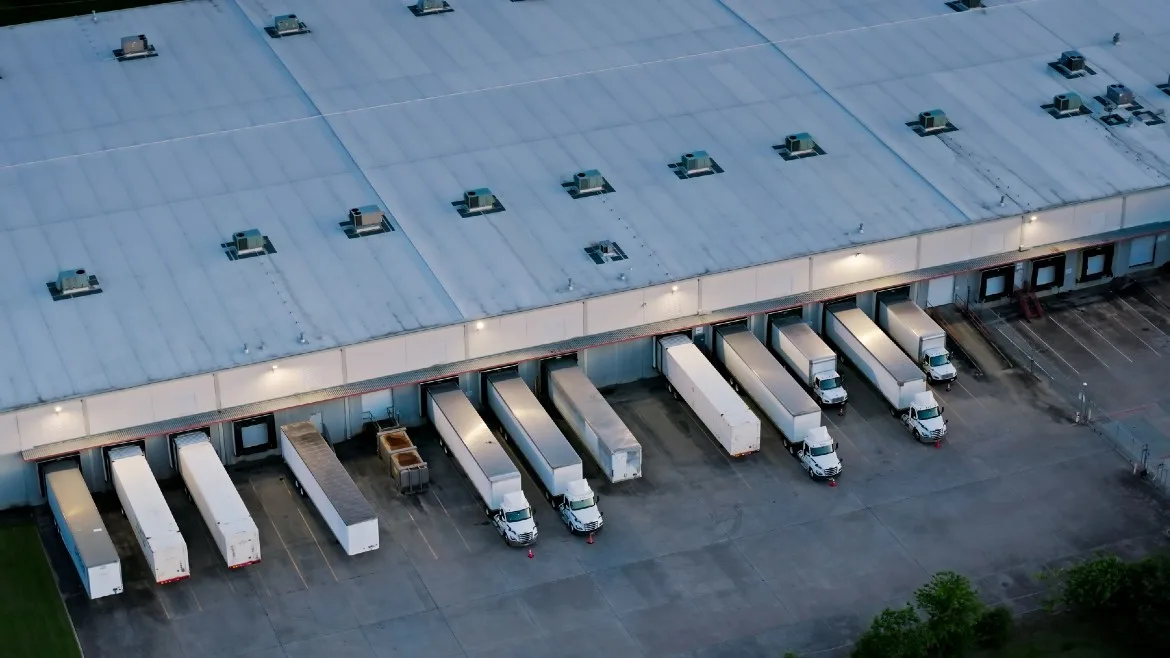
Trucks at a warehouse
halbergman/Getty Images
November 6, 2026

If you can’t explain why you paid what you paid on a load, your freight data isn’t ready to support an AI recommendation about cost. That’s the first test a food manufacturer using AI to control freight expense should consider.

The invoice may be in one system, the shipment in another, and the rate or detention approval in someone’s email. Without that context, even a straightforward review can reach the wrong conclusion. Use those same records to project next year’s budget, and AI can give you a confident answer built on incomplete information.

For food manufacturers managing delivery appointments, seasonal demand and thin margins, getting that foundation right matters.


Begin with What You Can Explain

Consider accessorials, the charges beyond basic linehaul and fuel. Our analysis of millions of domestic less-than-truckload (LTL) and truckload bills from the past year found that about 32% carried at least one accessorial. On those bills, accessorials averaged nearly 20% of the carrier’s charge.

If detention, unloading and reconsignment all land in one freight account, it’s difficult to explain what’s driving the expense or who can address it. Rates cause similar trouble. If the current agreement was never loaded, a correctly billed invoice can look wrong, and disputing it only creates more work.

Automation

Explore More Automation

In LTL, the root cause of recurring reweigh and reclass charges shows up when you compare the billed weight and class with the original bill of lading. That only works if both documents are captured where the analysis happens.

A practical first step is reviewing 12 months of bill-level data. How many bills match a shipment or purchase order? How many have an applicable contract rate? Can you tie accessorial dollars to a facility and a reason? Check for duplicate PRO numbers and payments, allowing for legitimate rebills and balance-due invoices.

From there, compare each invoice (what the carrier says happened) with the shipment documents (what you expected) and the governing agreement. That gives the team something to investigate and correct.


Give AI a Specific Job

AI can read bills of lading and delivery receipts to fill missing fields, suggesting values with a confidence level so someone can verify the critical ones. Unusual charges, detention patterns and less obvious outliers are fair game too, and the more history it has, the better it gets at spotting them.

Budgeting is another fit. When a carrier announces an increase, a model can lay out the impact down to the location, the lane, even the individual shipment. It can also test mode choices: what a group of LTL shipments would cost consolidated into truckload, or whether a long-haul lane could move intermodal within the delivery window. That only holds up when each mode’s bills tie back to their own agreements. Truckload rates often live in spot quotes and email rather than a loaded contract, so a gap in one mode’s data can look like savings in another.

The real test is what a planner can do with the output on Monday morning. The details should show the affected shipments, the contract terms behind each number and enough context for a conversation with operations. Start where you already suspect an opportunity and expand once the results earn it. That first rollout builds the trust people need to accept a model in their workflow. Change management matters as much as the math.


Leave Room for Operational Judgment

A lower rate is only part of a food freight decision. A refrigerated load still needs to meet its delivery window, arrive with enough remaining shelf life and get unloaded when the receiver can take it.

Holding an order for consolidation might reduce freight expense but put the customer appointment at risk. Retailer on-time, in-full penalties can erase those savings. The same goes for a mode shift: intermodal may win on paper and still miss a produce window. A planner must weigh both before accepting the recommendation.

Use AI to pull the evidence together. Keep someone involved who understands the operation when that evidence doesn’t settle the decision.


Ask Vendors to Show Their Work

Most AI tools for freight audit and transportation look good in a sales demo built on tidy sample data. Before you buy, ask the vendor to show you what the tool does with incomplete records — not just clean ones — and answer these questions:

  • What happens when a shipment, rate or required field is missing?
  • How often does a flagged charge turn out to be a real billing error?
  • Does each recommendation connect the invoice, agreement and supporting documents?
  • Who approves an action before it changes a payment or starts a dispute?
  • How does the tool integrate with our transportation and enterprise systems?
  • What audit trails and access controls do the tool provide?


Make Accountability Part of the Process

A flag is a reason to review a charge, it isn’t proof of an error. In our audit work, roughly one in four flagged bills was cleared without any correction.

Base approval rules on dollars and risk. A small variance might qualify for automatic approval when the shipment and contract match. Paying a disputed charge or changing a contract rate should require sign-off.

Capture the reason for every override and review those reasons monthly. If overrides increase, investigate whether the data, terms or model need attention. Sample automatically approved items, too. Looking only at exceptions won’t tell you what the system missed.

Before you rely on AI to guide freight decisions, connect the underlying records, identify the gaps, and assign responsibility for fixing them. Then test whether the recommendations hold up against actual shipments and charges. Confidence in the result comes from that work, not from the model.

KEYWORDS: artificial intelligence (AI) distribution logistics supply chain management

Share This Story

Looking for a reprint of this article?
From high-res PDFs to custom plaques, order your copy today!

Kevin hunt %28002%29

Kevin Hunt is VP of freight audit and data at Transportation Insight, a multi-billion-dollar third-party logistics provider. With more than 25 years in transportation and supply chain, Hunt oversees data services, freight audit and financial settlement across LTL, truckload and other modes.

Recommended Content

JOIN TODAY
to unlock your recommendations.

Already have an account? Sign In

  • Bread going through conveyor belt in manufacturing plant.

    The State of Food Manufacturing in 2026

    Food and beverage manufacturers encounter significant...
    Sustainability
    By: Alyse Thompson-Richards
  • FE Top100 Food & Beverage Companies hero, gold lettering with black background.

    FOOD ENGINEERING’s 2026 Top 100 Food and Beverage Companies

    See where the world’s leading food and beverage companies...
    People & Industry News
    By: Alyse Thompson-Richards
  • CJ Schwan’s Salina facility.

    Recipe for Growth: How CJ Schwan’s Powers Pizza Production with People and Automation

    Blending advanced automation with purposeful design, this...
    Cross-Functional Food Innovation
    By: Alyse Thompson-Richards
Manage My Account
  • Join Food Engineering
  • Manage My Preferences
  • Customer Service

More Videos

Sponsored Content

Sponsored Content is a special paid section where industry companies provide high quality, objective, non-commercial content around topics of interest to the Food Engineering audience. All Sponsored Content is supplied by the advertising company and any opinions expressed in this article are those of the author and not necessarily reflect the views of Food Engineering or its parent company, BNP Media. Interested in participating in our Sponsored Content section? Contact your local rep!

close
  • Illustration of businessman standing in the middle of a large scale, balancing between two green dollar signs at each end, one larger than the other. Blue background with very small white clouds.
    Sponsored by3-A Sanitary Standards, Inc.

    6 Questions: Before You Buy Food Processing Equipment

  • Construction crews use aerial lifts to install insulated wall panels inside an industrial facility.
    Sponsored byBurns & McDonnell

    Food Manufacturing’s Growth Calls for Integrated Project Delivery

  • Close-up of a group of freshly baked stuffed empanadas being transferred onto a conveyor belt.
    Sponsored byDorner

    Smarter Line Design Improves Food Manufacturing Efficiency and Throughput

Popular Stories

Bread going through conveyor belt in manufacturing plant.

The State of Food Manufacturing in 2026

Niagara Bottling Facility

Niagara Bottling Opens $141M Facility in Kentucky

An event host is presenting to a group of PACK EXPO event attendees.

Product Preview: PACK EXPO International Returns to Chicago

An image of baked bread on a conveyor belt with text promoting the 2026 State of Food Manufacturing report.

Events

January 1, 2030

Webinar Sponsorship Information

For webinar sponsorship information, visit www.bnpevents.com/webinars or email webinars@bnpmedia.com.

View All Submit An Event

Products

Food Process Engineering and Technology, 3E

Food Process Engineering and Technology, 3E

Combining scientific depth with practical usefulness, this book serves as a tool for graduate students as well as practicing food engineers, technologists and researchers looking for the latest information on transformation and preservation processes as well as process control and plant hygiene topics.

See More Products
Promo for the 2027 Plant of the Year Award


CHECK OUT OUR NEW ESSENTIAL TOPICS

Alternative Protein Automation Cleaning/Sanitation Fabulous Food Plants

Food Safety Maintenance Strategies OEE

Packaging Sustainability

Related Articles

  • AI chip on a dark circuit board with glowing blue lines and orange bokeh.

    Tips for Getting a Food Plant Ready for AI

    See More
  • Krones' Botec F1 runs on Windows 10

    Are you and your control systems ready for Windows 10?

    See More

Related Products

See More Products
  • download.jpg

    Recent Advances in Ready-to-Eat Food Technology

See More Products
×

Elevate your expertise in food engineering with unparalleled insights and connections.

Get the latest industry updates tailored your way.

JOIN TODAY!
  • RESOURCES
    • Advertise
    • Contact Us
    • Food Master
    • Store
  • JOIN TODAY
    • Create Account
    • eMagazine
    • Newsletter
    • Customer Service
    • Manage Preferences
  • SERVICES
    • Marketing Services
    • Reprints
    • Market Research
    • List Rental
    • Survey/Respondent Access
  • STAY CONNECTED
    • LinkedIn
    • Facebook
    • YouTube
    • X (Twitter)
  • PRIVACY
    • PRIVACY POLICY
    • TERMS & CONDITIONS
    • DO NOT SELL MY PERSONAL INFORMATION
    • PRIVACY REQUEST
    • ACCESSIBILITY

Copyright ©2026. All Rights Reserved BNP Media, Inc. and BNP Media II, LLC.

Design, CMS, Hosting & Web Development :: ePublishing