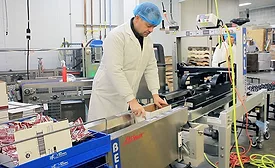
For the past almost 20 years, Pace Processing, a commercial bakery located in British Columbia, Canada has experienced consistent growth. That growth has led the company to adopt an automation strategy, but that presents its own challenges.
We have been monitoring the evolving situation around COVID-19/Coronavirus, which, as you know, is changing rapidly. The health and safety of everyone at the Food Automation & Manufacturing Conference and Expo is important to us, and we have decided that this event will be postponed and take place September 13-16, 2020 in Miami, Florida.
The Global Food Safety Initiative (GFSI), facilitated by The Consumer Goods Forum (CGF), has announced the results of its annual board election. The change in leadership structure marks a new era for GFSI, in keeping with recent developments in the organization’s governance and strategy.
According to a press release issued by the FDA, the agency is postponing most foreign inspections through April, effective immediately, in response to the COVID-19 outbreak. Inspections outside the U.S. deemed mission-critical will still be considered on a case-by-case basis.
The Natural Products Expo West 2020, produced by New Hope Network, has announced that the event, which was to run from March 3-7, officially has been postponed. A new date should be announced in April.
Sara Lee Frozen Bakery has signed a definitive agreement to acquire Spokane, Washington-based pie maker Cyrus O’Leary’s Pies. The transaction is the latest in a series of initiatives at Sara Lee Frozen Bakery aimed at growing its presence in the in-store bakery (I.S.B.) category, which began last August with the acquisition of Superior Cake Products, Inc.
Nutraceuticals can encompass a wide variety of health-related products including vitamins, supplements, mineral blends, and even various foods like energy bars. Many of these formulations involve the fine blending of as many as 40-50 components, including powders and trace elements.
 RSS
RSS