Wayne Labs has more than 30 years of editorial experience in industrial automation. He served as senior technical editor for I&CS/Control Solutions magazine for 18 years where he covered software, control system hardware and sensors/transmitters. Labs ran his own consulting business and contributed feature articles to Electronic Design, Control, Control Design, Industrial Networking and Food Engineering magazines. Before joining Food Engineering, he served as a senior technical editor for Omega Engineering Inc. Labs also worked in wireless systems and served as a field engineer for GE’s Mobile Communications Division and as a systems engineer for Bucks County Emergency Services. In addition to writing technical feature articles, Wayne covers FE’s Engineering R&D section.
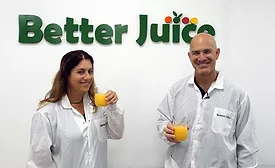
Better Juice, Ltd., the sugar-reduction food-tech start-up, has announced a collaboration with GEA Group AG, Germany in a push to scale up and expand Better Juice's global footprint. This move comes as part of the company's commitment to transform the global juice industry through advancing its technology for reducing all sugars in orange and other juices.
Whether you obtain your incoming water from your local municipality, the nearby river or a natural mountain spring—or a mix of these sources—consistent taste and quality of water is your most important ingredient as a brewer or bottle packer.
Since the recent passing of CEO Tom Giacomini, JBT Corporation had asked Brian Deck to fill in as interim president and CEO. On December 14th, JBT made it official. Deck has been appointed president and chief executive officer. He has also been elected to the Board of Directors. Deck has served as interim president and CEO of JBT since June 2020 and previously served as the Company’s chief financial officer since 2014.
The problem with an ergot infestation in a seed/grass crop is that it looks like grain-except for the color, which is much darker. If grain farming is your way of life, you’re extremely familiar with ergot and the aflatoxins it produces, which can make animals or humans sick if they consume too much of it.
Informa Markets, show organizer of Fi Europe CONNECT, announced the winners of this year’s Innovation Awards and the Startup Innovation Challenge for their groundbreaking offerings during virtual award ceremonies held on December first and second.
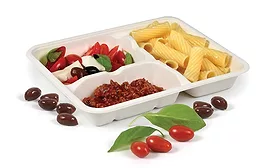
With a new process invention, a startup named W-Cycle has not only created a patented replacement for plastic, but a material that is totally compostable—from the earth and back to the earth.