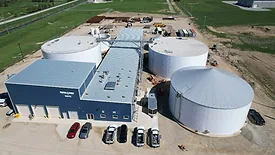
This facility converts wastewater and high-strength organic food waste residuals piped directly from Danone USA's largest U.S. yogurt manufacturing facility, and from other regional food and beverage producers, into renewable biogas, water treated to municipal discharge standards and nutrient-rich soil amendments.
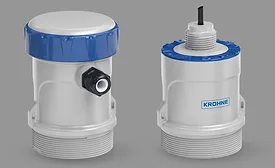
With a 4° beam angle, the OPTIWAVE 1530 and OPTIWAVE 1560 achieve accuracy in tight spaces and in vessels with internal obstructions by avoiding interference from walls or fixtures.
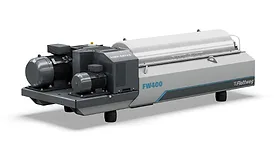
The decanter can help processors achieve higher throughput, improved product quality and lower operating costs while providing the adaptability needed for changing production requirements.
Companies need to establish that their water system is adequately designed, controlled, maintained and monitored to ensure that it is consistently producing water for its intended use.
A flood of warning letters from the FDA on water system suitability could pull the plug on the production of food, beverage, cosmetic, nutraceutical and over-the-counter (OTC) or pharmaceutical products if companies are not conducting total organic carbon (TOC) water testing analysis on a regular basis.
Kraft Heinz and Nestlé Waters North America sustainability leaders say protection of the lifeblood resource will require looking outside the factory walls
With water stress a growing concern, food and beverage companies invest to cut usage, increasingly looking outside their factory walls to conserve a lifeblood resource for the industry.
A combination of funding cuts, aging infrastructure, and new pollutants has pushed the responsibility for water treatment back upstream to the facilities that produce the wastewater. This means food and beverage processors and other manufacturers that generate copious amounts of wastewater.