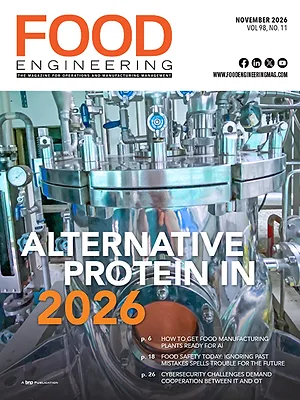
ON THE COVER: ►Alternative Protein in 2026: Key Trends and Industry Updates
FEATURES: ► How to get food manufacturing plants ready for AI
► Food safety today: Ignoring past mistakes spells trouble for the future
► Cybersecurity challenges demand cooperation between IT and OT
We have modern diagnostic tools, track-and-trace systems and practiced recall protocols, but when everything seems to be going well, we ignore what history has taught us and let our guard down.
Repeat recalls by the same company for the same foodborne illness seem to imply that they haven’t learned from their past mistakes. It’s a tough way to maintain a brand’s reputation. Nevertheless, the right tools applied correctly can help alleviate the repeated recalls.
Food plants keep adding more devices to OT networks as managers rely on analytics for asset management and demand high-quality data for middleware applications. However, AI-based ransomware and black-hat groups are finding these devices and greater collaboration is needed from IT and OT leaders.
In 2025, 46% of manufacturers faced cyber incidents as connected devices rose to 41.2 billion. Stronger IT and OT collaboration is needed to combat AI-enabled hackers, and CFOs now see cybersecurity investments as vital for operational reliability.
For food and beverage manufacturers, AI readiness begins with gaining visibility into the plant that exists today, identifying the risks and constraints that matter most, and establishing a practical roadmap for modernization.
Product can be left behind in containers, lost during transfers, damaged in handling or discarded due to inventory expiration or poor stock rotation. Over time, these incremental losses add up, especially when working with viscous or high-value liquid ingredients.
Fresh-cut produce can be particularly susceptible to contamination, which can be introduced in the environment where it’s grown, during transport, during manufacturing or at retail.
The FDA's final guidance offers crucial insights to help fresh-cut produce manufacturers comply with the FSMA PCHF rule and minimize contamination risks at every stage—from farm to consumer. Key recommendations safeguard ready-to-eat fruits and vegetables.
Manufacturers aren’t the only subset to benefit from AI. Consumers are increasingly turning to AI agents to compare and purchase products, meaning product descriptions must be optimized for AI.