Food Engineering logo
search
cart
facebook twitter linkedin youtube
  • Sign In
  • Create Account
  • Sign Out
  • My Account
Food Engineering logo
  • NEWS
    • Latest Headlines
    • Manufacturing News
    • People & Industry News
    • Plant Openings
    • Recalls
    • Regulatory Watch
    • Supplier News
  • PRODUCTS
    • New Plant Products
    • New Retail Products
  • TOPICS
    • Alternative Protein
    • Automation
    • Cannabis
    • Cleaning | Sanitation
    • Fabulous Food Plants
    • Food Safety
    • Maintenance Strategies
    • OEE
    • Packaging
    • Sustainability
    • More
  • EXCLUSIVES
    • Plant Construction Survey
    • Plant of the Year
    • Sustainable Plant of the Year
    • State of Food Manufacturing
    • Top 100 Food & Beverage Companies
  • MEDIA
    • Podcasts
    • Videos
    • Webinars
    • White Papers
  • FOOD MASTER
  • EVENTS
    • Food Automation & Manufacturing Symposium and Expo
    • Industry Events
  • RESOURCES
    • Newsletter
    • Custom Content & Marketing Services
    • FE Store
    • Government Links
    • Industry Associations
    • Market Research
    • Classified Ads
  • EMAGAZINE
    • eMagazine
    • Archive Issue
    • Advertise
  • SIGN UP!
Manufacturing News

Plant Safety

Solutions for Minimizing Noise and Boosting Food Manufacturing Productivity
By Rick Farrell
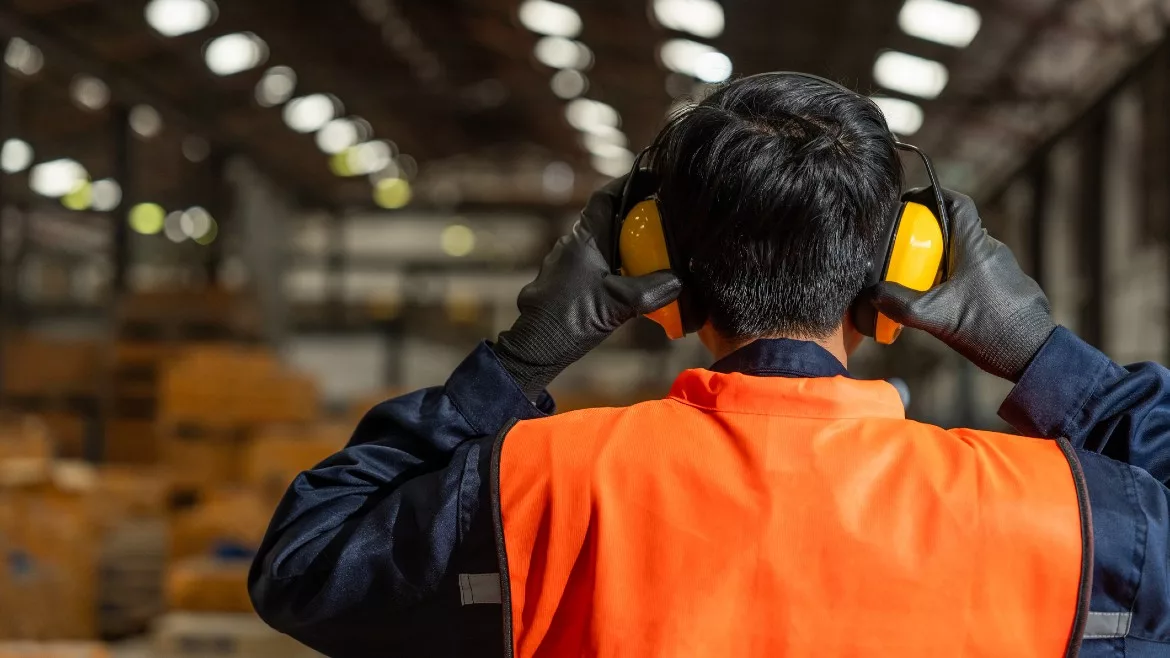
Worker holding ear protection
Getty Images

Photo by chanakon laorob / Getty Images

September 30, 2025

It’s critical that food processing facilities function as efficiently as possible without sacrificing food quality or employee well-being. To maximize productivity, employers must prioritize controlling noise exposure and improving on-line communication.

Noise can erode throughput, but practical technology can cut decibel (dB) levels, improve communication and lift line performance.


How Noise Impacts Productivity

Food processing facilities are — and until now always have been — very loud places. These high levels of noise exposure could contribute to diminished productivity in several ways:

  • Increased stress: Research shows that intermittent loud noises can contribute to increased stress hormone levels and elevated blood pressure.
  • Increased fatigue: Employees have to work harder (partly due to the stress they experience) when exposed to loud noises, which can cause them to become fatigued sooner. Increased fatigue can slow down production and increase the risk of mistakes.
  • Increased injury risk: If employees are stressed and tired on the job, their risk of injury increases. Injuries interfere with production times, and in many cases, take valuable employees off the floor, leading to unplanned downtime.  

While some noise is unavoidable, it’s vital that leaders in the food processing industry take steps to minimize it whenever possible, especially if increased productivity is a top priority.


Noise-Reduction Strategies That Improve Productivity

One way employers can cut noise and boost productivity is by adopting practical strategies. Advanced headsets, acoustic panels and effective ear protection keep workers safe while communicating clearly. Some of the most impactful solutions facilities are starting to use include:

Food Processing Headsets

The latest noise-reducing industrial headsets and earplugs are designed with high-noise communication technology, which elevates speech levels while suppressing background noise. This combination allows workers to hear what their colleagues are saying while remaining protected from the effects of loud machinery and tools.

Acoustical Systems

Acoustical systems feature a series of panels that block unwanted noise. They can lower sound levels significantly in food processing plants — up to 20 decibels in some cases, which makes the facility much safer for employees. 

The latest acoustical systems are easy to clean and feature modular designs, which allow for better hygiene and reduced risk of contamination.

Quieter Machinery and Retrofits

Food manufacturers should specify low-noise motors, helical gears and damped guards when buying. They can retrofit legacy assets with lined hoods, fan silencers and belt-drive conversions. Lower source noise reduces the PPE burden and improves on-floor communication.

Vibration Isolation and Predictive Maintenance

Imbalanced fans, worn bearings and misaligned drives are noisy and inefficient. Isolation mounts and routine balancing cut both vibration and dB. Add condition monitoring (accelerometers, ultrasound) to catch issues early — preventing noisy breakdowns and unplanned outages.

Compressed-Air Noise Reduction

Swap open blow-offs for engineered air nozzles and fit mufflers on exhausts. This often delivers double wins: less noise and lower air consumption, which frees compressor capacity and stabilizes line performance.


Regulatory Guidelines for Noise and Food Safety

Several rules and regulations exist regarding noise protection and food safety in food processing facilities. Without a proper understanding of these guidelines, employers and employees may be putting their well-being and productivity at risk.

Noise Guidelines

The Occupational Safety and Health Administration says that the permissible noise exposure level is an average of 90 decibels over an eight-hour day. Employers must also protect employees who are exposed to average noise levels of over 85 decibels during an eight-hour day.

A strong hearing conservation program includes:

  • Regular noise surveys and personal dosimetry
  • Engineering controls first (treat sources and paths)
  • Appropriate hearing protection and fit-testing
  • Annual audiometry and training

Because the regulations are so strict, it’s critical for plant owners and managers to work with professionals who have experience in noise protection. Otherwise, they may end up compromising productivity.


Minimize Noise, Maximize Productivity

The right mix of engineering controls and smarter communication reduces fatigue, errors and unplanned stops — lifting throughput without sacrificing safety. Start by mapping your loudest tasks, fix sources first and measure results with dosimetry and OEE. 

KEYWORDS: plant safety PPE worker safety

Share This Story

Looking for a reprint of this article?
From high-res PDFs to custom plaques, order your copy today!

Rick farrell planttours

Farrell is an expert in improving manufacturing group communication, education, training and group hospitality processes. He has over 40 years of group hospitality experience, most recently serving as president of PlantTours for the last 21 years.  He has provided consulting services with the majority of Fortune 500 industrial corporations improving group communication dynamics of all types in manufacturing environments.

Recommended Content

JOIN TODAY
to unlock your recommendations.

Already have an account? Sign In

  • 2025 Top 100 Food and Beverage Companies

    FOOD ENGINEERING’s 2025 Top 100 Food and Beverage Companies

    While sales were largely down under dynamic economic and...
    Top 100 Food & Beverage Companies
    By: Alyse Thompson-Richards
  • Bottling machine

    How Optical and X-Ray Inspection Supports Bottling Safety and Quality

    By transitioning from legacy single-technology systems to...
    Food Safety
    By: Dan McKee
  • Bread baking in oven

    The State of Food Manufacturing in 2025

    Food and beverage manufacturers are investing in...
    Manufacturing News
    By: Alyse Thompson-Richards
Manage My Account
  • eMagazine
  • Newsletter
  • Online Registration
  • Manage My Preferences
  • Customer Service

More Videos

Popular Stories

The Campbell's Company logo

Campbell’s Terminates Exec Over Alleged Disparaging Comments

Frito-Lay logo

PepsiCo to Close Two Florida Facilities

alternative protein products

Alternative Protein in 2025: Key Trends and Technologies

State of Maufacturing 2025

Events

June 17, 2025

Refrigerated & Frozen Foods’ State of the Cold Chain

On Demand Kelley Rodriguez, Editor in Chief of Refrigerated & Frozen Foods, will be joined in this 60-minute webinar by industry experts to help unpack the latest research.

July 23, 2025

Decarbonizing Process Heat: What You Should Know and Next Steps

On Demand Driven by climate goals, business risk, client interest, and resilience considerations, food and beverage companies are increasingly turning their attention to decarbonizing their production processes.

View All Submit An Event

Products

Recent Advances in Ready-to-Eat Food Technology

Recent Advances in Ready-to-Eat Food Technology

See More Products

CHECK OUT OUR NEW ESSENTIAL TOPICS

Alternative ProteinAutomationCleaning/SanitationFabulous Food Plants

Food SafetyMaintenance StrategiesOEE

PackagingSustainability

Related Articles

  • The State of Food Manufacturing: Processors Bring Out the Checkbooks and Focus on Productivity and People

    See More
  • Data collection in food manufacturing

    Unlocking Efficiency in Food Manufacturing with PLM Solutions

    See More
  • Perceptiv Intelligent Reliability and Maintenance Solution

    Regal Rexnord Introduces Intelligent Solutions for Industrial Manufacturing

    See More

Related Products

See More Products
  • Functionalizing Carbohydrates for Food Applications

  • statical.jpg

    Statistical Process Control for the Food Industry: A Guide for Practitioners and Managers

  • composites.jpg

    Composites Materials for Food Packaging

See More Products

Events

View AllSubmit An Event
  • November 10, 2016

    Optimize your Beverage Production: Boosting Productivity & Profitability through Line Solutions

    On Demand In this webinar, Tetra Pak will introduce you to our advanced beverage line solutions, specifically mixing, in-line blending and pasteurization technologies. We will cover topics such as mixing efficiency, how to produce syrup in a more economical way, safe and efficient heat treatment, how to offer high flexible productions, reduced product losses, shorter batch times, uniform products, and reduced ingredient costs.
  • November 28, 2018

    Outcome-based Solutions: The Path to Increased Productivity and Profitability

    ON DEMAND: This webinar will provide insights into the challenges facing food and beverage manufacturers today, and actions that can be taken to increase competitiveness. We will identify opportunities to deliver sustainable business results and strategic improvements, including outcome-based solutionsdeveloped especially for food and beverage manufacturers.
View AllSubmit An Event
×

Elevate your expertise in food engineering with unparalleled insights and connections.

Get the latest industry updates tailored your way.

JOIN TODAY!
  • RESOURCES
    • Advertise
    • Contact Us
    • Food Master
    • Store
    • Want More
  • SIGN UP TODAY
    • Create Account
    • eMagazine
    • Newsletter
    • Customer Service
    • Manage Preferences
  • SERVICES
    • Marketing Services
    • Reprints
    • Market Research
    • List Rental
    • Survey/Respondent Access
  • STAY CONNECTED
    • LinkedIn
    • Facebook
    • YouTube
    • X (Twitter)
  • PRIVACY
    • PRIVACY POLICY
    • TERMS & CONDITIONS
    • DO NOT SELL MY PERSONAL INFORMATION
    • PRIVACY REQUEST
    • ACCESSIBILITY

Copyright ©2025. All Rights Reserved BNP Media.

Design, CMS, Hosting & Web Development :: ePublishing