Case Study
How Radio Frequency Drying Reduced Baking Carbon Emissions
Environmental studies show that carbon emissions from food production alone could use up all the world’s CO2 budget to stay within the goal of a 1.5°C or 2°C global temperature rise.
However, in the baking industry, there are a range of opportunities to avoid this benchmark and move one step closer to, “net zero.”
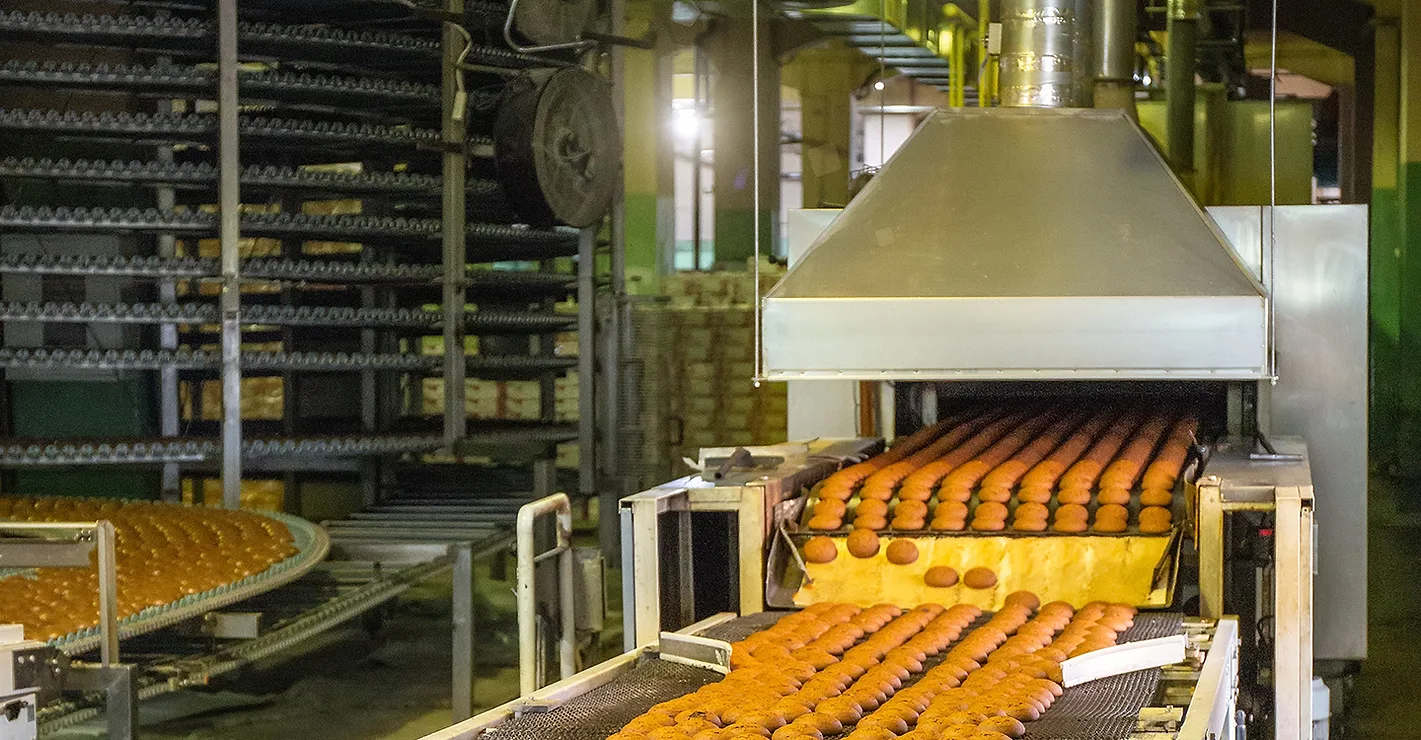
Conventional baking ovens (those which apply heat to the outside surface of a product) are notoriously inefficient when it comes to removing moisture in the final stages of baking. This happens as a product develops loft and crumb structure, it becomes less of a thermal conductor and more of a thermal insulator, which inhibits heat penetration toward the center of a product. Aggravating this problem is that the amount of external heat applied to a product in the final stages must be limited to avoid scorching and over-coloration. This final stage of baking/drying often requires as much as one-third of the oven length or one-third of the total bake-time. By adding an radio frequency (RF) post-baking dryer, band speeds can be increased up to 30% on average.
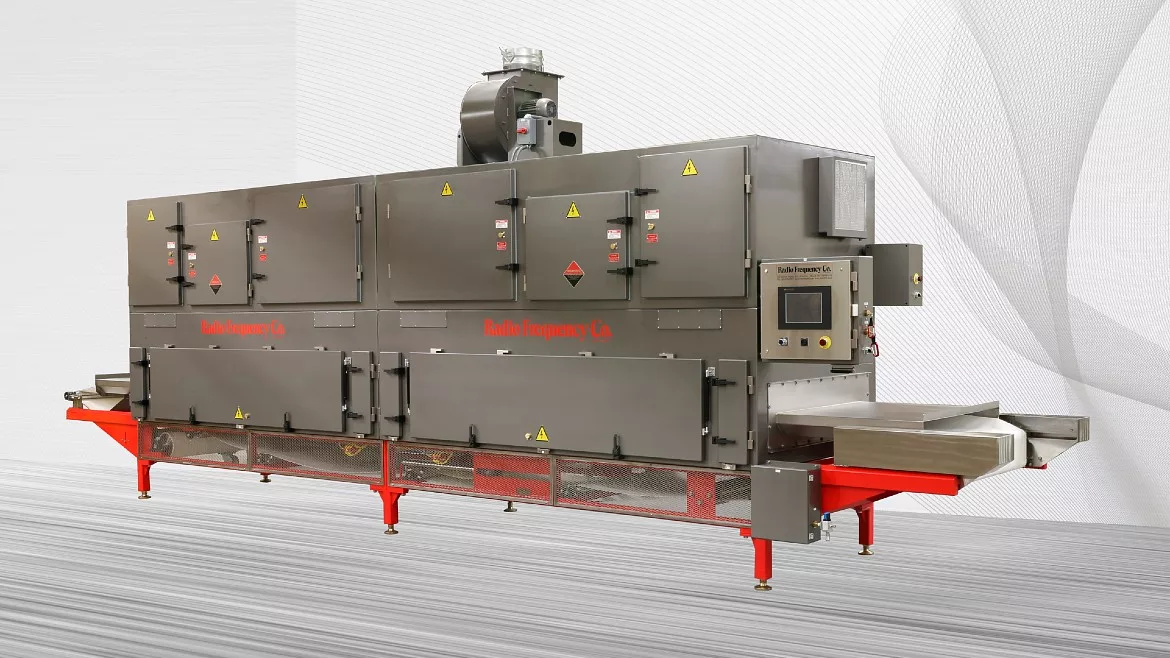
Because water is a polar molecule, it is receptive to RF heating. When exposing a product with an uneven moisture content (moist interior/drier exterior) to a rapidly oscillating RF field, the energy will preferentially target and remove moisture from the moist interior without overheating or discoloring the exterior surfaces.
Also, because RF is a direct form of heating, the drying is 100% efficient, requires no warm-up time and reduces bake time for most products.
Radio Frequency Company, located in Millis, Massachusetts, recently helped a snack manufacturer combine conventional heating with RF heating/drying in the production of a popular cracker. Natural gas consumption of a 300-ft. DGF/convection oven required 6,300 cu. ft. of gas to produce 6,250 lbs. of baked product per hour, representing 1.008 cu. Ft. of gas per pound of product produced.
With the 22% increase in band speed provided by the efficiency of RF drying, the same 6,300 cu. ft. of gas can now produce 8,000 lbs. of product per hour, representing 0.78 cu. ft. of gas per pound of product. This resulted in a 22% reduction in greenhouse gas per pound of product produced.
Looking for a reprint of this article?
From high-res PDFs to custom plaques, order your copy today!