Precision Fermentation: Everything You Need to Know
Through precision fermentation, engineered microbial “cell factories” can generate specific proteins that can serve as next-generation food ingredients.
Fermentation has long been a reliable platform for transforming raw materials into safe and nutritious foods. From bread and cheese to yogurt and beer, it is a process rooted in biochemistry and engineering.
Today, that foundational technology is evolving. Advances in biotechnology, synthetic biology and process design in the 21st century have given rise to precision fermentation — the ability to program microorganisms to produce targeted, high-value food ingredients with exceptional control. Engineered microbial “cell factories” can now generate specific proteins and bioactive compounds that once came only from plants or animals, delivering consistent quality, enhanced functionality, and potentially lower environmental impact.
Although the term may sound new, the foundation is not. The same recombinant DNA techniques used to produce insulin decades ago have matured into robust, scalable biomanufacturing systems. What has changed is their precision and application. These tools now enable the production of everyday ingredients from milk and egg protein alternatives to antioxidants and food protection molecules.
The rapid expansion of the field reflects this shift. As of 2024, the Good Food Institute reports more than 165 dedicated fermentation companies and 210 additional food companies are developing fermentation-enabled products. Market growth mirrors this momentum: Grand View Research valued the global precision fermentation sector at $4.01 billion in 2024, and it projected the market to reach $34.61 billion by 2030.
This article explores how precision fermentation is emerging as a transformative platform for next-generation food ingredients. It distinguishes precision fermentation from traditional fermentation, highlights key applications, examines engineering and economic challenges at scale, and outlines the value proposition driving its role in future food systems.
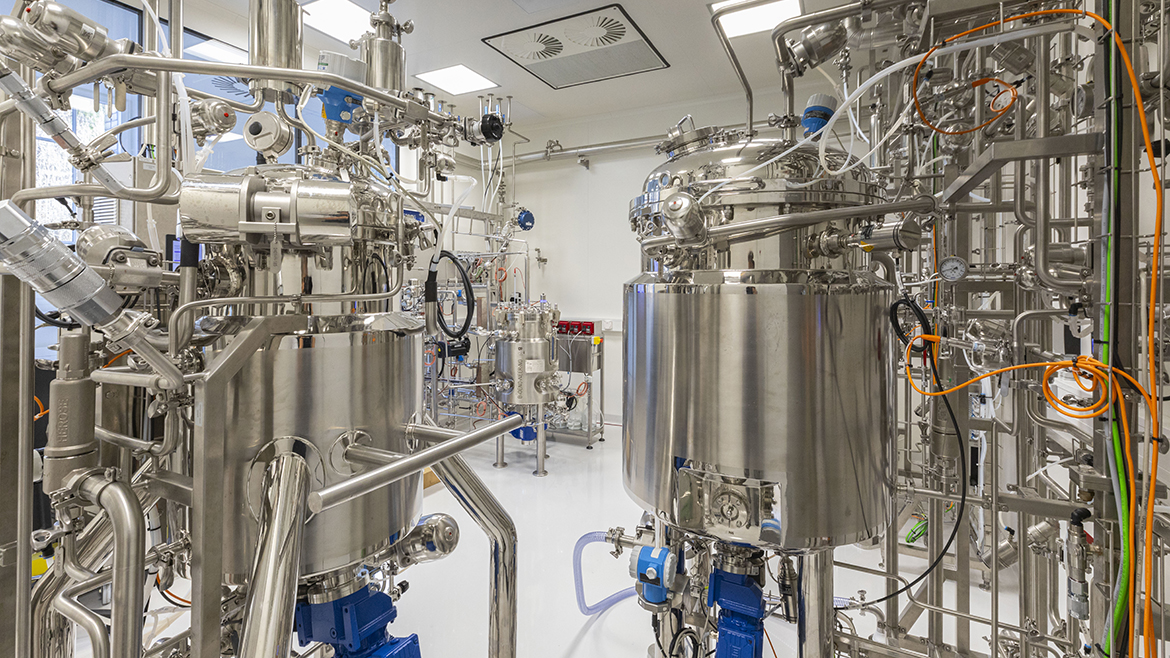
The Cultured Hub, launched in 2024 by Migros, Givaudan and Bühler Group, offers companies a place to scale up their processes from small-scale laboratory experiments to 1,000-liter pilot operations without investing in expensive assets or diluting equity. Photo courtesy of The Cultured Hub
Precision Fermentation Versus Conventional Fermentation
Precision fermentation represents a fundamental shift from conventional fermentation. Unlike traditional fermentation, where naturally occurring microbes perform complex biochemical reactions to yield a mixture of metabolites, precision fermentation focuses on targeted production of specific molecules by leveraging genetic engineering, biotechnology and process design.
Engineered strains of yeasts, fungi or bacteria act as cell factories, efficiently producing desired proteins, fiber or other bioactive compounds. The result is a versatile platform capable of supplying animal-free dairy proteins, bioactive peptides and even specialty enzymes, all with controlled purity, consistent performance and improvement sustainability.
Both approaches share reliance on core biomanufacturing infrastructure such as bioreactors, process control systems and microbial metabolism. Precision fermentation layers strain engineering, advanced automation and enhanced bioreactor design that results in a high degree of specificity, scalability and tunability, where conventional fermentation reaches its limits.
Precision Fermentation in Action
A typical bioprocess leveraging precision fermentation begins with strain engineering, where a suitable microbial host is designed. The engineered culture is then propagated and transferred into a bioreactor with nutrient media, where it converts the feedstocks into the desired compounds.
Depending on the application and process, the target molecule could be intracellular or be secreted into the fermentation broth. Fermented broth is then harvested and subjected to downstream processing to isolate and purify the target molecules, which is then often dried into the final powder. The ingredient is then formulated into a final product.
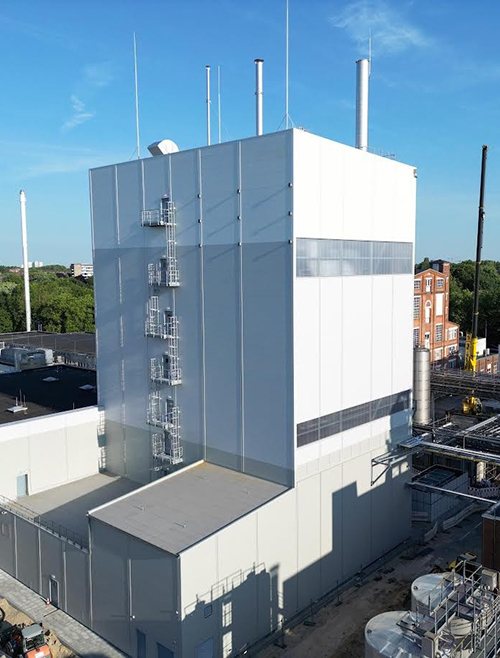
Ohly recently opened a new spray drying tower at its facility in Hamburg, Germany. The company produces, among other offerings, nutritional options for different types of cell factories. Photo courtesy of Ohly
While the core steps remain similar, each application demands tailored design and optimization. Some popular applications include:
Alternative proteins refer to non-traditional sources of dietary protein that replace or complement animal sources. Precision fermentation enables their production with identical or improved nutritional and functional properties as their animal derived counterparts such as meat, dairy and eggs. For example, β-lactoglobulin, the main component of whey protein, is manufactured by Perfect Day, while Ovalbumin, egg white protein, is manufactured by The EVERY company, both offering comparable functional and nutritional properties as their animal sources.
Bioactive ingredients provide specific health or functional benefits beyond basic nutrition, such as supporting immunity, improving gut health and muscle repair. Precision fermentation unlocks access to rare and ethically or dietetically restrictive compounds with high purity, controlled activity and scalable production. Collagen peptides, naturally found only in animals, are now biomanufactured at scale via precision fermentation (e.g. Geltor) as sustainable, animal-free alternatives.
Food protection ingredients preserve food quality and freshness by preventing microbial spoilage, oxidation and nutrient degradation. They have traditionally been derived both chemically and from natural sources, but with the advance of precision fermentation, a more targeted approach is now available that increased the functionality while lowering the dosage. Antimicrobial peptides such as Nisin, a natural peptide long used in dairy and ready-to-eat meats, are now being manufactured at scale by precision fermentation with greater consistency and scalability.
Challenges and Opportunities at Scale
Precision fermentation is an innovative platform for biomanufacturing valuable food products, and the infrastructure is beginning to scale. In 2024, 16 new fermentation facilities were opened or announced worldwide, including several large industrial precision fermentation plants, indicating steady growth in global biomanufacturing capacity, according to Good Food Institute’s state of industry report.
However, scaling from milliliter-scale lab experiments to 100,000-plus liter industrial fermenters is non-linear and introduces engineering and financial constraints.
Bioprocessing at Scale
Large scale bioreactor systems require precise control of oxygen transfer, mixing, media addition rates, temperature and pH — factors that directly affect microbial metabolism and productivity. At scale, risk of shear stress, contamination and production of undesired byproducts increases, making it imperative for the bioreactor design to align closely with the process to create the specificity and precision that is expected from this technology.
Core components of the bioreactor, such as the vessel shape, material of construction and safety systems, can mirror conventional fermenters, but tight guardrails are required on processing parameters. Specialized sparging systems, appropriately designed agitators and precise control of dissolved oxygen and nutrients in high-density environments are essential to ensure cell factories are well fed with the nutrients they need. Reliable temperature and pH control systems will further safeguard the process consistency. As the reactors get larger, accurate measurement of critical process parameters such as dissolved oxygen, temperature and pH becomes vital for systems to work as desired. Proper sensor selection, placement, redundancy and efficient PLC programming can enable efficient operation of all essential systems.
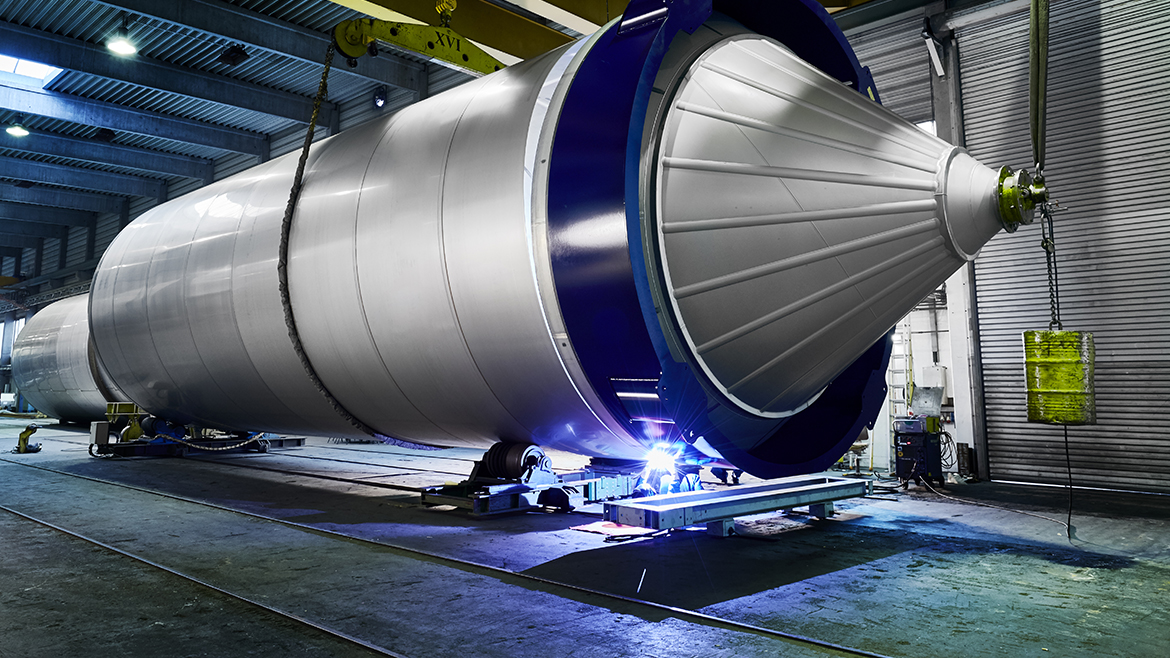
Bioreactors, which play a critical role in precision fermentation, require tight guardrails on processing parameters to achieve quality finished product. Photo courtesy of Ziemann Holvrieka
The specific systems requirements at scale are achievable through rigorous engineering design that is in resonance with process requirements and demand technical diligence and economic discipline throughout the scale-up process.
Navigating Capital and Operational Costs
An opportunity to optimize capital and operational costs lies in integrating process development and equipment design for both upstream and downstream technologies. This can be best achieved at pilot scale, the bridge between lab scale discovery and commercial production. Process engineering at pilot scale studies the impact of various system design components on process outputs, thereby allowing us to test process sensitivities and refine equipment specifications before major investment.
Designing with minimal yet robust components helps maximize uptime and minimize maintenance costs, contributing directly to operational costs. Energy and utilities are also major cost and sustainability drivers, so recovery and recycling strategies should be embedded in the process design. The objective is a system that achieves desired product quality, throughput and efficiency while remaining sustainable and financially viable.
Scale-Up and Continuous Improvement
Precision fermentation technology has been proven to be commercially successful at scale, but the leap from discovery to commercialization requires strategic sequencing. Pilot-scale development (and sometimes demonstration facilities) reduce risk and allow iterative learning before committing to full-scale builds. Companies can accelerate market entry by combining internal R&D with external manufacturing partnerships (CMOs/CROs) to conserve capital and gain operational expertise prior to major capital investment.
Scale-up is often thought to be a linear journey, but a successful scaling operation must have feedback loops to continuously improve the processes. Balancing speed with quality ensures timely market access while leaving room for optimization. Ultimately, success depends not only on technical execution but on consumer acceptance, the final validation that precision-fermented foods have earned their place on the global table.
Techno-economic analysis (TEA) is a powerful tool that can bring all the challenges and opportunities under one umbrella and shed the light on most optimum way forward. It quantifies the commercial capabilities of your process, but more importantly, it can highlight key levers for improvement that can elevate performance and accelerate scale-up success.
Despite challenging investment conditions across the broader food-tech sector, fermentation remained comparatively resilient, attracting $651 million in private capital in 2024 — a signal of investor confidence in the scalability and long-term potential of this platform.
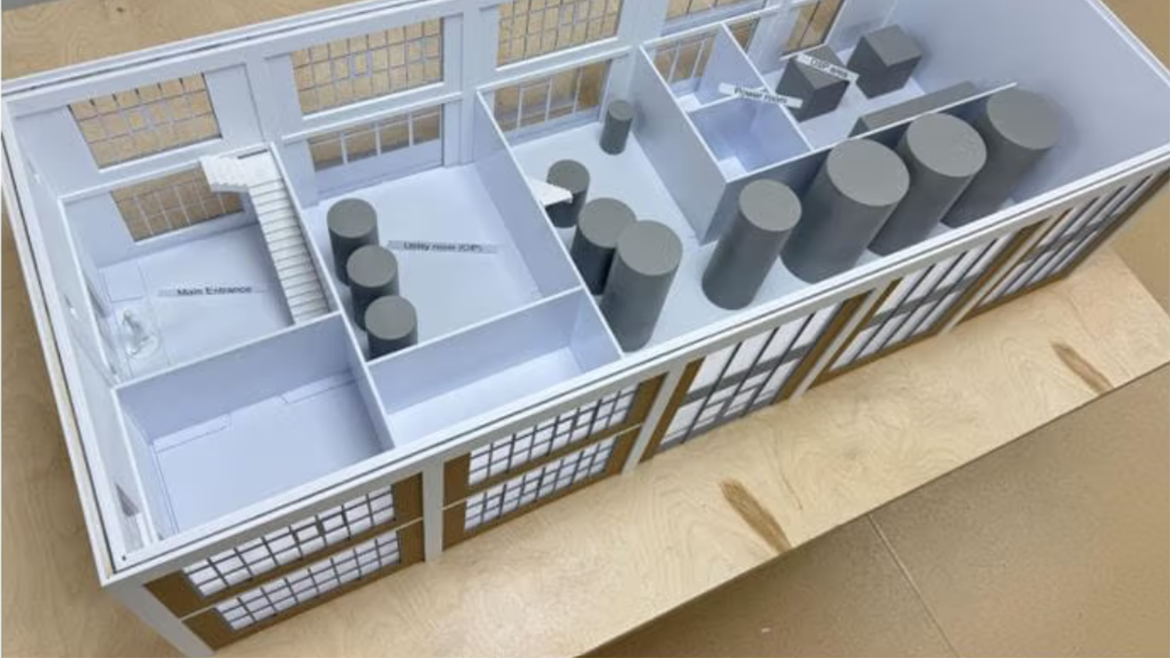
A 3D visualization of NIZO’s biotechnology fermentation factory showing the layout of the precision- and biomass-fermentation pilot line GEA will deliver in 2026. Photo courtesy of NIZO/BFF/Royal Haskoning
Precision Fermentation: A Key Cog in the Future of Food Systems
One might rightfully wonder what this technology has to offer that makes it worth all the brainpower and financial investment. Shalima Sreenath, process engineering manager at Kinovate Life Sciences, says precision fermentation is a promising manufacturing platform because it delivers multiple advantages at once: it decouples production from geography, reduces land, water and energy demands, and provides an animal-free pathway for supply chains.
“Precision fermentation also enables highly targeted engineering of specific molecules with far less waste than conventional methods,” Sreenath says. “Taken together, these benefits make precision fermentation an exceptionally versatile and future-ready approach for food manufacturing.”
Tangible value additions that make precision fermentation stand out include:
Sustainability
Rising food demands, both in quality and quantity, requires innovation. Precision fermentation offers a sustainable, resource-efficient production model. By design, it can reduce land use, lower emissions, and minimize dependency on animal agriculture, making it a key enabler of a resilient and sustainable food system.
Quality and Functionality
Due to its targeted approach, precision fermentation can produce products with high purity and controlled composition, leading to a consistent and premium consumer experience. Moreover, these products can also exhibit enhanced functionality, where lower doses can achieve the desired results.
Adaptability and Tunability
Manufacturing through microbial cell factories enables precise control at the cellular level, which results in a highly tunable system capable of producing products with varied quality and characteristics. With efficient engineering, a single facility can host production multiple microbial strains, broadening production flexibility and enabling rapid adaptation to emerging market needs.
Precision fermentation represents a major advancement, offering a platform capable of addressing many of the complex challenges facing global food systems. The technology’s strength lies not only in what it can produce but in how it produces it: sustainably, consistently and with unprecedented control. Market forecasts from the Good Food Institute estimate that fermentation-enabled meat, seafood, egg and dairy ingredients could reach $15-$74 billion by 2030, underscoring its potential to become a mainstream manufacturing technology.
Like any innovation that pushes beyond current capabilities, precision fermentation faces real hurdles on the path to mass adoption. Yet equally strong opportunities exist to overcome them, and the platform’s inherent advantages position it well to support the world’s growing demand for sustainable, high-quality food ingredients.
Industry pioneers have already demonstrated meaningful progress, introducing precision-fermented products to consumers worldwide. Momentum is now shifting toward a more integrated global biomanufacturing ecosystem — one built on responsible innovation, shared learning and a more resilient food future.
Looking for a reprint of this article?
From high-res PDFs to custom plaques, order your copy today!