How Food Manufacturing Process Visibility Protects Product Quality and Profitability
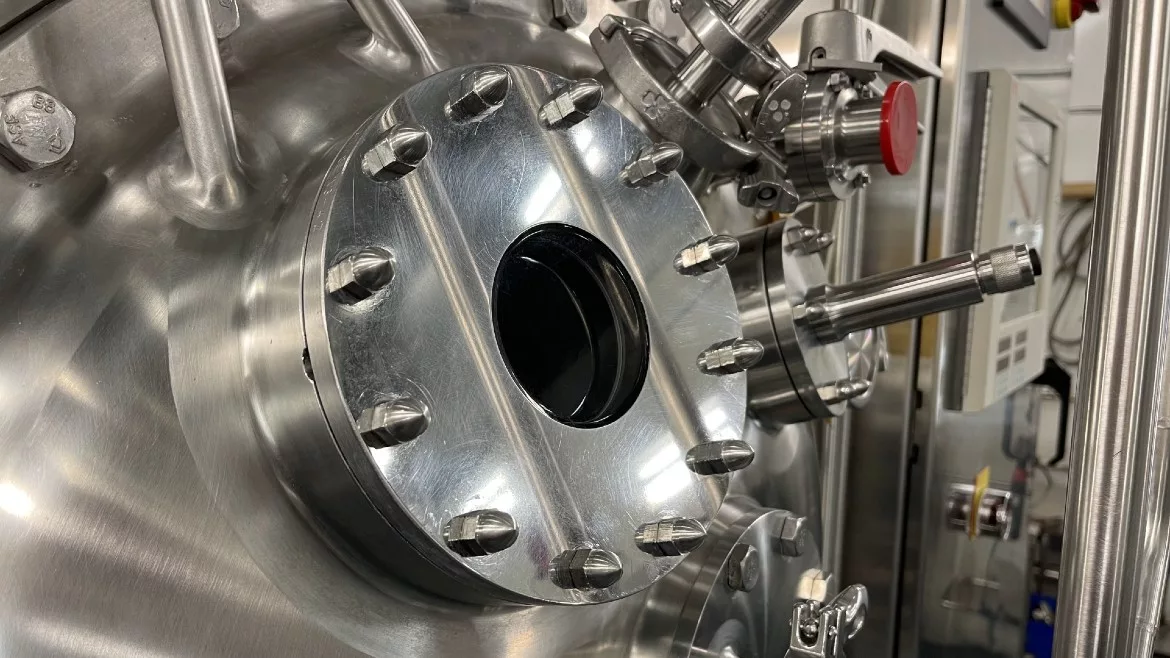
In-tank vision allows food manufacturers to see what they're processing and identify issues before losing critical batches or ingredients.
KEY TAKEAWAYS
- Visual confirmation is critical during production transitions, cleaning cycles and process stages where small problems can lead to bigger quality issues.
- Implementing visibility systems, versus taking a component-by-component approach, can uncover process concerns.
- Investment in visibility systems offers reduced quality holds, faster troubleshooting, improved training efficiency and confidence in product quality.
The food and beverage industry faces an increasingly complex challenge: meeting surging demand for premium products while maintaining the exacting quality standards that justify premium pricing. Whether it's protein-fortified beverages, craft spirits, specialty sauces or pharmaceutical-grade nutritional supplements, processors are discovering that traditional approaches to process monitoring leave critical blind spots that can transform minor deviations into costly batch failures.
The solution often complements advanced automation, sensors and AI-driven analytics — all valuable tools in modern processing. But there's something more fundamental that these technologies depend on: the ability to see what's happening inside your process equipment.
The Visibility Gap in Modern Food Processing
Walk through any modern food processing facility and you'll encounter a paradox. Processors have invested heavily in closed, sanitary systems that protect product integrity. Yet these same closed systems create observation challenges at precisely the moments when visual confirmation matters most; during product transitions, cleaning cycles and critical process stages where small problems can cascade quickly into significant quality issues.
Consider the financial stakes. In commodity food processing, a visibility-related failure might mean cleaning downtime and some wasted product. In high-value segments — nutraceuticals, infant formula, specialty proteins, premium beverages — the same failure can mean scrapping entire batches worth tens of thousands of dollars, extended production halts while investigating quality deviations and potential regulatory complications.
Where Visual Confirmation Matters Most
Certain process stages consistently emerge as critical observation points across food and beverage operations. Understanding these vulnerability zones helps processors prioritize visibility investments where they'll deliver the greatest return.
Heat exchangers and pasteurization systems represent a primary concern. Product fouling, incomplete heat treatment and temperature distribution issues all manifest visually before they trigger alarms or show up in lab results. In beverage production, being able to observe flow patterns and detect early signs of buildup can prevent both quality issues and unplanned shutdowns.
Mixing and blending operations demand visual verification to ensure proper incorporation of ingredients. This becomes especially critical in products with suspended solids, emulsions or temperature-sensitive components. As one example, sauce manufacturers might need to verify that particulates remain properly suspended throughout the batch and that no separation occurs during holding periods.
Product transfer and changeover points create some of the highest-risk moments in food processing. Cross-contamination between allergens, incomplete purging between flavors and residual product that affects the next batch all become visible problems before they become quality failures.
CIP (Clean-in-Place) systems present a particular challenge, due to cycle frequency and the harsh chemicals involved in a thorough cleaning process that require thorough draining prior to commencing the next product batch.
A major brewery experienced this scenario after losing thousands of dollars per batch due to beer with an unexpectedly bitter flavor profile. The problem wasn’t the recipe or the fermentation process. After extensive troubleshooting the brewery discovered that inadequate lighting within their process vessels prevented operators from properly observing the washdown cycle between batches. The CIP cycle had been leaving residue that contaminated subsequent brews.
Once the brewery installed proper process lighting, operators could see that spray nozzles weren't positioned correctly and therefore weren't completing the cleaning process. This visibility issue — incomplete drainage and cleaning verification — is common in food processing, yet it often goes undetected until quality issues appear.
Fermentation and bioprocessing operations in kombucha production, yogurt manufacturing and probiotic supplements benefit from continuous visual monitoring. Operators need to track clarity changes, observe foaming behavior and verify proper mixing without repeatedly sampling.
Beyond the Sight Glass: Thinking in Systems
The traditional approach to process visibility treats each observation point as an isolated decision. But this component-by-component thinking misses opportunities to create visibility systems that answer broader process questions.
Consider a sauce production line experiencing occasional quality holds for texture inconsistencies. A single sight glass on the mixing vessel might show what's happening inside the tank, but understanding the full picture requires coordinated visibility at ingredient feed points, at the discharge and at intermediate holding stages. Add properly positioned LED process lighting, and operators can distinguish subtle color or consistency differences that indicate formulation drift. Include a camera system with recording capability and the facility gains documentation for quality investigations and training.
This systems approach extends to equipment selection. A sight glass in a high-temperature application needs appropriate materials and pressure ratings, but it also needs positioning that accounts for lighting angles, consideration of whether operators will observe it directly or via camera and integration with wiper assemblies if condensation or product coating is likely.
The Equipment Ecosystem
Effective process visibility relies on several complementary technologies working in concert:
Sanitary sight glasses remain the foundation, available in configurations from simple single-pane designs to complex high-pressure multi-port assemblies with integrated lighting and camera ports. Material selection depends on temperature, pressure and chemical compatibility requirements.
Process lighting systems transform sight glasses from barely useful to genuinely informative. Positioned LED lighting eliminates shadows, reveals subtle color variations and allows observation in areas that would otherwise remain dark. For food processing facilities handling combustible dusts (flour, sugar, spices) or alcohol vapors (breweries, distilleries), explosion-proof lighting with ATEX or UL certification provides an extra measure of safety for greater visibility in potentially hazardous atmospheres.
Camera systems and digital imaging extend visibility beyond what operators can see directly, enabling remote monitoring, automated image analysis and permanent documentation of process conditions.
Wiper assemblies address a common frustration: sight glasses that become obscured by condensation or product coating. Automated wipers maintain clear visibility in challenging applications, from high-humidity fermentation environments to processes that generate vapor or splatter.
Level indicators and flow visualization tools complete the visibility toolkit, showing not just what's inside equipment but whether it's moving correctly through the system.
Making Strategic Decisions About Visibility
How should processors determine where integrated visibility delivers the greatest value? Two diagnostic questions help focus investment where it matters most:
- Where do quality deviations typically originate? The answer almost always points to transition moments — between batches, during changeovers, when switching from production to cleaning. These transitions represent exactly when visual confirmation becomes most valuable.
- Which process failures carry the highest total cost? Look beyond repair time and immediate downtime. Factor in lost product value, extended production interruptions while investigating quality issues, potential regulatory complications and the opportunity cost of capacity sitting idle.
The Path Forward
As food and beverage processors invest in expanded capacity to meet evolving consumer demands, maintaining quality at scale requires moving beyond component-level thinking. Process visibility deserves treatment as a system-level capability that supports the quality standards justifying premium positioning in competitive markets.
For processors evaluating their visibility needs, the starting point is straightforward: identify where you can't see what you need to see, understand what that visibility gap costs and design solutions that answer process questions rather than simply installing individual components. The investment in coordinated visibility systems pays returns in reduced quality holds, faster troubleshooting, improved training efficiency and the confidence that comes from actually seeing what's happening inside your process equipment.
In an industry where product quality increasingly determines competitive advantage, the ability to see what you're processing isn't a luxury — it's a fundamental requirement for profitable operation.
Looking for a reprint of this article?
From high-res PDFs to custom plaques, order your copy today!