Improving Packaging Line Efficiency with Automated Technologies
Implementing automation spurs significant operational efficiencies in many areas, including employee headcount, maintenance and changeover time.
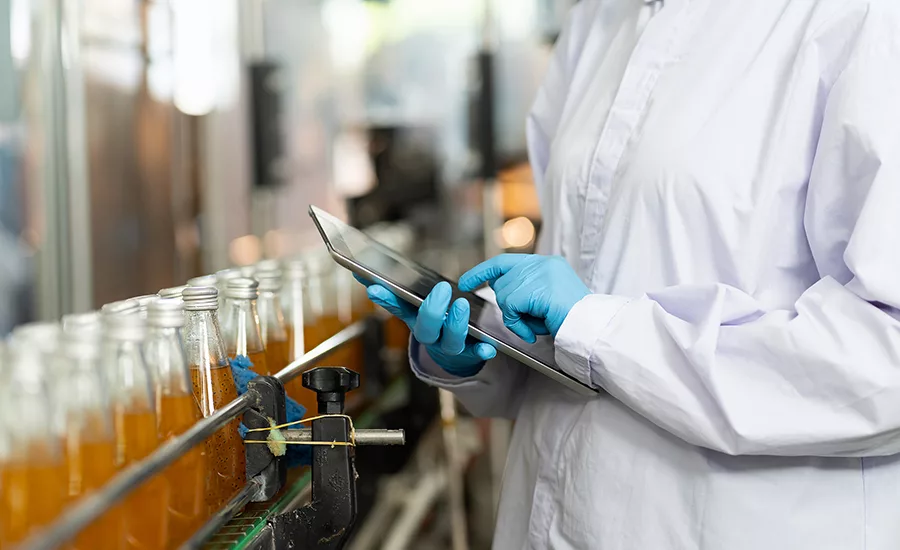
Photo courtesy of Getty Images / Amorn-Suriyan
Food and beverage manufacturers are constantly looking for ways to improve productivity. The great news is that automation is driving measurable productivity gains in packaging operations, according to Performance Optimization: Insights for Packaging Line Readiness, a 2025 report from PMMI, The Association for Packaging and Processing Technologies.
However, labor issues remain a productivity challenge for most manufacturers. As staffing limitations persist across food and beverage facilities, processors are placing more value on automation and operator-free systems, according to PMMI’s 2025 State of the Industry Report.
In past years, customers have focused more on automation as part of broader sustainability or throughput goals. Now, the focus has shifted slightly, with more emphasis on how many operators can be reassigned or how much support a system will require post-install.
EXPLORE MORE


In essence, workforce dynamics are increasingly shaping buyer expectations and machine design. For example, processors serving wholesale outlets such as Costco require machinery that can pack large multipacks and minimize downtime during format changes. And even though these highly automated systems carry a premium price, processors are willing to pay it when the equipment can seamlessly cover a broad product portfolio and eliminate the hidden costs of frequent manual changeovers.
Advances in automation, sensor technology and user-friendly controls have also enabled a significant reduction in the number of operators required per line, according to PMMI’s research. In fact, with some newer machines, a single operator can effectively manage production lines that previously required two or three people. Such efficiency gains are increasingly attractive to processors evaluating total return on investment (ROI) and headcount reduction.
For example, in the beverage industry, processors are facing challenges in end-of-line operations and warehousing. Manual labor is still used in many plants where workers are responsible for keeping pace with increasingly faster high-speed front-end production. As upstream throughput continues to rise, it has become difficult to case, palletize and wrap products fast enough using manual processes alone.
This challenge has driven growing interest in end-of-line automation, with processors prioritizing solutions that reduce both headcount and the number of touchpoints. For instance, food and beverage manufacturers are seeking integrated systems that can handle multiple tasks in a single, streamlined process.
AI Solutions Continue to Expand
Artificial intelligence (AI) is increasingly applied across packaging processes via tools such as machine vision, automated guided vehicles, autonomous mobile robots and predictive maintenance. AI is also being used in administrative operations for knowledge transfer, regulatory compliance and data collection, management and collation, according to PMMI’s 2026 white paper, Building an AI Advantage in Packaging Equipment.
Knowledge transfer and predictive maintenance were identified as the two technologies expected to have the strongest positive impact on the packaging industry over the next few years. Machine vision can also offer significant benefits. As a result, AI tools that enhance machine performance, whether through maintenance or advanced vision capabilities, are set to be priority areas for packaging technology, alongside solutions that address skills gaps and training needs.
Developments across these three technologies will largely shape how the industry adopts and applies AI over the next five years. AI tools supporting regulations and compliance, as well as data transparency, are also expected to see broader adoption as packaging companies recognize the administrative and operational value that AI can bring.
As specialist AI providers increasingly target the packaging industry, the range of available solutions continues to expand. At the same time, packaging companies are becoming more confident in exploring AI tools. However, challenges persist around skepticism, accountability, latency, cybersecurity and ROI. These barriers must be addressed for AI adoption to scale effectively.
For food and beverage operations seeking increased productivity and to assess the latest automated technologies, PACK EXPO International (Oct. 18–21, 2026, at Chicago’s McCormick Place) is the place to be. Here, attendees can discover solutions from 2,600 exhibitors showcasing the latest packaging and processing technologies to fit their specific manufacturing needs.
Looking for a reprint of this article?
From high-res PDFs to custom plaques, order your copy today!