Cultured Meat Faces Old and New Obstacles
As if the cost to produce cultured meat products isn’t a severe enough hurdle, some state governments have made it almost impossible to enter the market.
.webp?t=1781129749)
According to DataM Intelligence, the global alternative proteins market was valued at $34.3 billion in 2024 and is projected to expand to $109.5 billion by 2032, growing at a robust CAGR of 15.6% during the forecast period 2025–2032.
While plant protein remains the dominant source, accounting for 45% of global market revenue, cultured meat represents roughly 7% or $3.1 billion. Other source proteins in the study include mycoprotein (14% market share), insect protein (11%) and algal protein at 9%.
"From a food processing perspective, cultivated meat represents a long-term area of development within the alternative protein landscape, with large-scale commercialization still influenced by factors such as cost, throughput and input availability," says Tyler Lorenzen, CEO, PURIS. "Today, plant-based proteins are a widely used option for alternative protein production, supported by existing processing infrastructure and predictable performance at scale."
Besides addressing the scale-up issue, the cultured meat market faces several hurdles, beginning with some U.S. states banning outright animal cell-based meat (ACBM) products or placing temporary bans until more knowledge is gained about their safety. States that have passed long-term bans often have done so to protect farming in their state. As of early this year and according to the National Agricultural Law Center [1], these states have taken action:
- Alabama: Passed legislation prohibiting sale and production of cultivated meat
- Florida: Ban on lab-grown meat
- Indiana: Two-year moratorium of cultivated meat products (July 1, 2025 to June 30, 2027)
- Mississippi: Legislation passed against sale of lab-grown products
- Montana: HB401 prohibits the sale, manufacture, and distribution of cultured meat.
- Nebraska: Signed legislation (LB246) in 2025 prohibiting the production, sale and distribution of, and executive order 24-09 against state purchasing of, lab-grown meat
- Texas: Banned the sale of cultured meat with penalties for violations
As Lorenzen just pointed out, the major hurdle for the cultured meat/protein industry is indeed the cost of scaleup from bio-lab equipment producing in lab-sized quantities to industrial scale capacity to make it possible to produce cultured meat products that compete in the consumer market. In addition to the cost of scale-up are the environmental questions: Are the energy costs and CO2 equivalents of producing cultured meat actually less than the real-animal equivalent? In addition, how does the industry deal with separating the waste products (endotoxins) the process creates?
State of the Cultured Meat/Protein in 2026
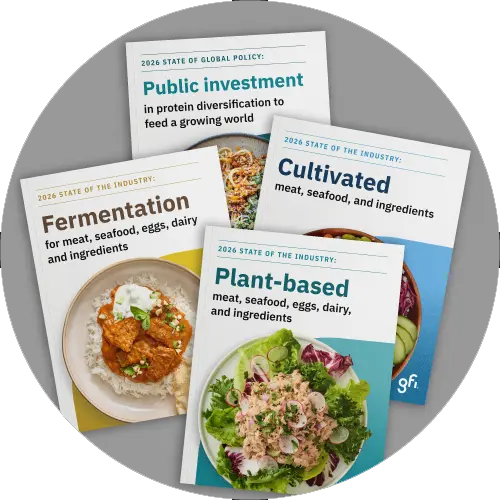
Image courtesy of Good Food Institute (GFI)
According to a "2026 State of the Industry: Cultivated meat, seafood and ingredients" report from the Good Food Institute (GFI), in the sector’s first decade, cultivated meat grew from an idea to a reality just now beginning to reach plates. In 2025, similar to other innovations in their early days, the field experienced both challenges and breakthroughs. Funding constraints, regulatory roadblocks and company closures occurred alongside major cost reductions, production innovations and collaborations critical to scale up and affordability.
- 2025 saw a handful of company closures while regulatory wins in New Zealand and Australia finalized a regulatory pathway for cultivated meat.
- The funding environment proved challenging, however, unprecedented milestones delivered open-access assets like cell lines and cell growth formulations, likely saving significant R&D time and money.
- Questions about profitability surfaced, while behind the scenes, researchers leveraged AI and other technologies to streamline processes, cut costs, and optimize end products.
Cultivated foods and ingredients, including foie gras, pork fat and salmon, broadened the variety of cultivated products available to consumers. In 2025, a growing number of companies and research institutions worked to innovate and optimize cultivated meat products.
While funding tightened, investors are prioritizing companies that demonstrate progress on fundamentals like cost, taste and scale. Cultivated meat and seafood companies raised $73.9 million in 2025, according to a GFI analysis of data from Net Zero Insights (down from $139 million in 2024).
The study found that commercial production is starting to scale, e.g., the largest cultivated meat facility in the world is now open in Sydney, Australia. However, public investment is growing in some places while declining in others. Governments facing supply chain constraints and product shortages are increasingly integrating cultivated meat into their national food strategies and biotechnology plans, recognizing the potential benefits to the economy, food system and national security.
In 2025, the cultivated meat industry earned multiple regulatory green lights. A total of seven companies received regulatory clearance to sell different cultivated meat products, and signals of global market expansion are emerging. As of publication, cultivated meat can be sold in Singapore, the United States and Australia. Private investments, however, are tightening, hindering continued innovation and commercial scale up. Access to critical research tools like cell lines has been made available, but far greater access is needed. Government support is strong in some regions but is being curtailed in others.
The underlying case for cultivated meat is stronger than ever: rising demand for meat, climate and land use pressures, and the need to diversify protein supply chains. Many governments are prioritizing cultivated meat and other alternative proteins in their national food strategies and bioeconomy plans to achieve a range of goals, from climate mitigation and food security to economic competitiveness and public health.
To view or read this study and three others from GFI on plant-based meats, fermentation-based products and the state of global policy, visit the ;Good Food Institute’s 2026 State of the Industry Series.
More Focused Look at the Cultured Meat Market
According to a March 2026 report from Allied Market Research, the cultured meat market is expected to reach $6.5 billion globally by 2033 at a 58.5% CAGR over the period from 2023 through 2033. The report is titled "Cultured Meat Market by Type (Red Meat, Poultry, and Seafood) and End User (Household and Food Services): Global Opportunity Analysis and Industry Forecast, 2024–2033."
The red meat market segment led in 2023, driven by strong global demand for beef products and increasing environmental concerns with conventional cattle farming, though there have been several arguments as to whether cultured beef is more environmentally friendly than beef cattle raised for market. Cultivated beef has attracted significant investment due to its high commercial value and large consumer base.
According to the study, technological advancements in muscle cell cultivation, fat integration and scaffold development have improved texture and flavor replication. Additionally, ongoing research focused on cost reduction and scalable bioreactor production have strengthened the commercial potential of cultured red meat products.
Consumer Acceptance of Cultured Meats/Proteins
Though consumer demand has declined somewhat for plant-based products (such as burgers and the like) due to consumers wanting simple, less-processed foods, what is perceived consumer acceptance of cultured meats/proteins?
"Moore’s framework argues that ‘crossing the chasm’ requires a product to solve a complete, compelling problem for a specific audience, not just appeal broadly," says Ray Wodar, Dassault Systèmes global director of business consulting, CPG and retail. For cultivated meat, progress is constrained not only by product factors like taste, texture and price, but also by non-product barriers like consumer familiarity, food neophobia, cultural perception and evolving regulatory framework. State-level bans in the U.S. are further reinforcing consumer skepticism rather than support informed adoption.
"Recent dynamics in the plant-based category underscore these challenges," Wodar adds. "Early growth driven by product proliferation has slowed, which indicates that long-term market traction depends on price competitiveness, consistent sensory quality, repeat purchase behavior and regulatory clarity. Cultivated meat is at least one adoption cycle behind plant-based [protein] in this trajectory. I believe that the success of cultured protein cannot rely on innovation alone and will require coordinated advancements across product performance, consumer trust and transparent product practices."
Is It Plant-Based or Is It Cultured Meat?
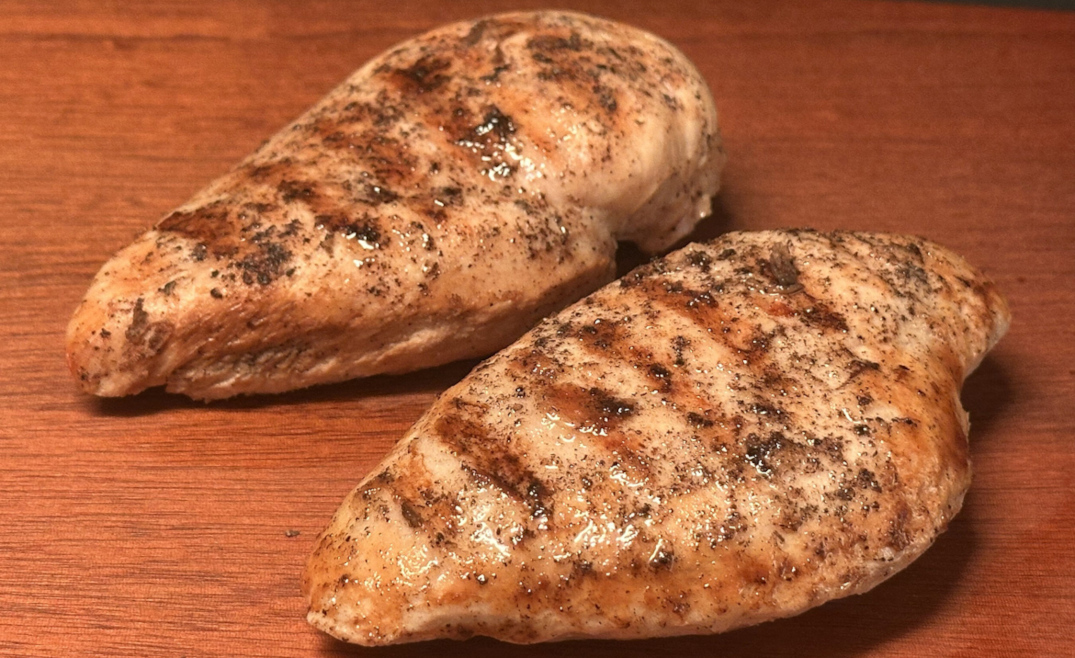
Is it real or alternative protein? DEMOLISH Foods’ Gen4 platform is designed to replicate meat’s hierarchical structure from microscopic muscle fibers to chunky complex whole cuts. Photo courtesy of DEMOLISH Foods
DEMOSLISH FOODS was featured in FE’s March 21, 2024 Company News ;section as having created its Gen3 platform, which is a plant-based platform capable of producing whole cuts of meat, including chicken breasts, fish filets, beef steaks and pork chops.
The platform is designed to replicate the chewiness, sustained juiciness and changing mouthfeel of traditionally harvested meat as it is successively chewed and broken down. To do this, it replicates the hierarchical structure of meat, starting from its smallest perceivable structure, the muscle fiber.
Last year, the company introduced its Gen4 platform, and it claims that most meat eaters can’t tell the difference between its plant-based whole cuts from conventional meat in appearance or mouthfeel.
According to DEMOLISH FOODS, one of Gen4’s most exciting features is its ability to customize meat beyond the species level, and capture the natural variations found in conventional animal cuts. By precisely engineering both juicy and chewy sections within the same piece, they are able to recreate the authentic texture complexity that defines premium meat experiences. Gen4 cuts are also able to fuse multiple muscle structures, such as combining the major and minor pectoral muscles of a chicken breast. The Gen4 platform also has accurate sustained juiciness, which matches conventional meat from the first to the last chew.
The Gen4 platform is fully certified for commercial manufacturing, sale and export, and can produce whole cuts in both chilled and frozen form. Their flagship chicken breast is gluten free, non-GMO and uses eight clean-label ingredients, creating a nutrition profile that matches conventional meat in protein, fat, sodium and caloric content.
Operationally, Gen4 delivers several improvements over Gen3, including a six-time increase in production throughput, a 35% reduction in operational expenditure, multi-vendor ingredient flexibility (enabling supply chain resilience) and cost-optimized formulation options with minimal impact on final product quality.
Scaling from Pharma to Food
Considering that the medical field has grown tissue (e.g., skin replacement for burn victims) for some time, the concept of scaling up from creating grams of protein to tons would seem a major impediment. What are the process/manufacturing issues of scaling up the process? What would be the ramifications of dropping some critical parameters to create a "food process" rather than a pharma process? What level of food company personnel experience would be needed?
Scaling protein production from grams to tons is a significant technological challenge, Wodar says. The upstream process requires harvesting stem cells, proliferating them in a nutrient medium of proteins, amino acids, hormones and growth factors, then differentiating them into muscle cells attached to micro-supports or scaffolds to form fibers. At scale, this raises critical engineering issues around bioreactor design, oxygen and nutrient transfer, shear sensitivity and overall process stability. Bioreactors can carry a significant price tag, so capital efficiency and process optimization can become as limiting as the biology itself.
Moving from a pharma-style process to a food production model introduces necessary trade-offs. Relaxing certain controls can improve economics, but risks increased variability, contamination and quality inconsistency if not carefully managed. The key is determining which parameters are truly safety- and performance-critical versus those that can be optimized for cost, which can be supported by multi-physics realistic simulation solutions to de-risk the pharma-to-food jump. A scientifically accurate digital replica, or virtual twin, of the entire bioreactor facility can be tested for dozens of process parameter changes without a single physical experiment.
Early-stage operations require bioprocess and biochemical engineering expertise rather than traditional food manufacturing skill sets with broader food engineering disciplines becoming more applicable as processes mature and standardize, Wodar says.
And what about seafood? "Seafood presents added complexity due to the different cell types (muscle, fat, connective tissue) and cold-water biology of fish cells, which require different temperature and media conditions than mammalian cells," Wodar says.
As more players and stakeholders enter the market, production of cultivated meat will become more economical and scalable. Lab molecular modeling and simulation tools can accelerate the optimization of growth media and scaffolding materials for each protein type, which is one of the primary cost drivers.
Environmental Impacts: Energy and CO2
According to a UC Davis study, "Environmental Impacts of Cultured Meat," the results indicate that the environmental impact of near-term ACBM production has the potential to be significantly higher than beef if a highly refined pharma-quality growth medium is utilized for ACBM production. This study highlights the need to develop a sustainable animal cell growth medium that is optimized for high-density animal cell proliferation for ACBM to generate positive economic and environmental benefits. [2]
In the above study, UC Davis researchers summed up its findings:
- Cultured meat is not inherently better for the environment.
- Leaping from "pharma to food" product is a significant technological challenge.
"Our findings suggest that cultured meat is not inherently better for the environment than conventional beef. It’s not a panacea," said corresponding author Edward Spang, an associate professor in the Department of Food Science and Technology at UC Davis. "It’s possible we could reduce its environmental impact in the future, but it will require significant technical advancement to simultaneously increase the performance and decrease the cost of the cell culture media."
The study found in using food grade components, cultured meat’s global warming potential could be between 80% lower to 26% above that of conventional beef production. However, if using lab-based, purified media, the carbon dioxide equivalents could be four to 25 times greater than the average for retail beef. [3]
Techno-economic analysis (TEA) and life cycle analysis (LCA) have shown that media components like serum and growth factors contribute to the high cost and environmental impact of cultivated meat, says Dassault Systèmes’ Wodar. Cleaning-in-place (CIP) operations, single-use bioreactor components and the energy demand of maintaining sterile, temperature-controlled environments are also significant cost and waste factors. For cultivated meat and fermentation, the challenge is finding ways to recycle or upcycle spent media.
"Companies can implement manufacturing operations modeling which uses simulation to examine full production lines including CIP cycles, single use versus reusable component strategies, and energy profiling to identify opportunities for waste and costs reduction prior to physical production," Wodar adds. Once operations begin, components of this same technology can be used to monitor production.
The environmental question is genuinely contested, Wodar says. Research finds cultivated meat could cut greenhouse gas emissions by up to 96%, use 99% less land and consume up to 96% less water compared to conventional livestock farming. However, these outcomes depend heavily on the energy infrastructure of the facility. If it’s powered by fossil fuels, the carbon footprint could exceed that of conventional beef. Reducing reliance on livestock production could improve food system sustainability by minimizing adverse environmental effects such as greenhouse gas production, biodiversity loss, pollution and water and land use, but if not carefully planned for, cultivated meat could also have a negative environmental impact.
To best ensure sustainable practices, companies should simulate the full life cycle impact of cultured meat production under various energy scenarios, media formulations and waste treatment options, Wodar says. This equips manufacturers with the information needed to design facilities that optimize environmental performance before production even begins, rather than retrofitting later.
Food Safety Testing
While the USDA and/or FDA have approved products from about a handful of companies, what actually constitutes testing for a food-safe product? Presence or absence of toxic chemicals or bacteria? Nutritional value? What else?
"Food safety testing typically encompasses microbiological safety, chemical/endotoxin absence, nutritional equivalence and allergenicity assessment, which is a broader and less-defined framework than traditional food inspection," Wodar says.
As approval pathways mature, companies will need robust systems to document safety, quality and traceability across the production life cycle. These methods of documentation are modeled similarly to those built for pharmaceutical compliance, Wodar adds.
"Regardless of how the food has been produced, it is the legal responsibility of the producer to ensure that it is safe to be consumed, thus making sure it complies with relevant regulations and it does not pose risk for consumer health," says Dionisis Theodosis, SGS global head of food technical development and governance.
What varies based on the type of product is the range of parameters to be tested, both chemical and microbiological, based on the risk profile of the product, Theodosis adds. For example, cultivated meat — as conventionally produced meat — carries microbiological risks, however they do not always overlap. Fungi, yeast and bacteria present in growth media used in the bioreactors can be of high risk to cultivated meat — in contrast, enteric pathogens can be of high risk in conventional meat due to slaughterhouses, where good hygiene practice during processing is an absolute necessity.
"Chemical risks are also different. Veterinary residues, pesticides and heavy metals should not be areas of concern in cultivated meat; however, growth factors, processing aids and media components must be assessed for safety. That means testing is required, but the type of it would be different," Theodosis says.
What makes safety assessment potentially more complex in cultivated products is lack of enough information of potential hazards such as allergenicity of ingredients used in production, and in order to mitigate these — apart from testing — there is an increasing need of toxicological risk modelling, Theodosis says.
Moving Cautiously to New Products
The Dutch government recently announced that cultivated meat and seafood can soon be taste tested under limited conditions — all while the same government is trying to reduce the number of farms that consumers rely on. [4] Isn’t this akin to the Germans shutting down their nuclear plants, believing that solar and wind can replace energy from the former?
"This is a fair point to highlight," says Dassault Systèmes Wodar. Reducing traditional farming while cultivated alternatives are in limited testing could create a short-term supply gap. The comparison to early nuclear phase-outs has some merit, but the underlying concern in both cases is whether replacement systems will be able to scale in time. While these shifts are driven by long-term sustainability goals, managing this transition can be complex and can place economic and social pressure on existing industries that consumers still rely on.
From an industry perspective, Wodar continues: "The key to easing this transition is accelerating both technological maturity and regulatory confidence. Progress is being made to demonstrate that alternative proteins can be produced safely, efficiently and competitively. Advanced simulation and digital modeling are playing a role in this by enabling companies to generate robust, validated data for regulators earlier in the transition process, which could reduce reliance on lengthy physical trials. Ultimately, the challenge is aligning policy ambition with practical readiness while managing the transition responsibly."
Tough Times for Recent U.S. Projects
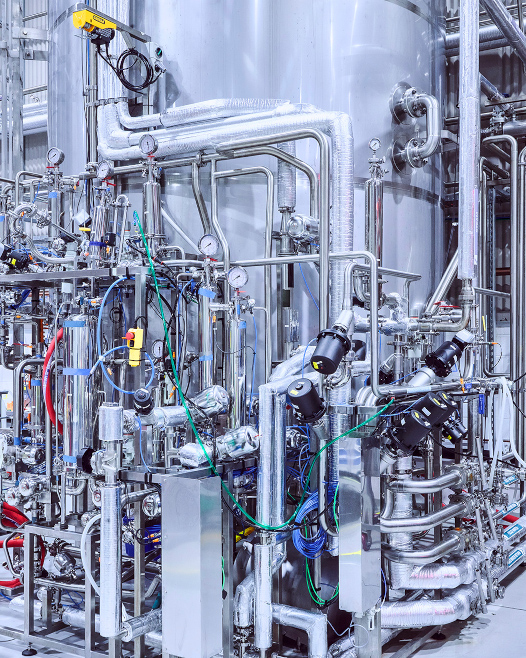
Vow claims that Andromeda recently broke a world record by harvesting 20,000 liters of cell culture in one day. Photo by Nic Walker and courtesy of Vow
Funding for large-scale cultivated meat facilities has become difficult to source, and recently begun projects have stalled, been scaled back or shut down completely.
Believer Meats had begun construction on a large facility in Wilson, North Carolina that was to produce 12,000 metric tons of chicken annually, but according to AgFunderNewsletter, ceased operations on Dec. 10, 2025.
In addition, according to the same publication, UPSIDE Foods’ large-scale cultivated meat facility to be located in Glenview, Illinois was put on hold in deference to expanding its smaller "EPIC" site in Emeryville, California.
In spite of U.S. setbacks, there is some good news. Sydney, Australia-based Vow has a successful cultured meat operation running and making sophisticated cultured Japanese quail products, Forged Parfait and Forged Gras. According to Vow, it is the only company in the world continuously selling cultured meat products anywhere on the planet and has attained product approval to sell its products to Singapore.
Founded in 2019, Vow designed, built and operates its own proprietary end-to-end, food-grade manufacturing platform with a combined capacity of 40,000 liters and a cost 20 to 50 times lower than the nearest competitor. Vow says it has the largest operational food-grade cell culture bioreactor in the world, a 20,000-liter custom vessel at less than 80% of the cost of best market predictions.
Resources:
[1] "Alternative Protein Laws State Compilation," The National Agricultural Law Center; Emily LC Staff Attorney; Jakob Christopherson, NALC Research Fellow; Emily Whitest, NALC Research Fellow, Website
[2] "Environmental Impacts of Cultured Meat: A Cradle-to-Gate Life Cycle Assessment;" Derrick Risner, Patrick Negulescu, Yoonbin Kim, Cuong Nguyen, Justin B. Siegel, Edward S. Spang; December 29, 2024; ACS Food Science & Technology; Vol. 5/Issue 1, ACS Publications
[3] "Lab-Grown Meat’s Carbon Footprint Potentially Worse Than Retail Beef," Amy Quinton, May 22, 2023. UC Davis website.
[4] "Next step for cultivated meat in the Netherlands," Treena Hein, Pig Progress, 21 Aug 2023, Website
"Human Food Made with Cultured Animal Cells," USDA, Web site
"Labeling of Meat or Poultry Products Comprised of or Containing Cultured Animal Cells," A Proposed Rule by FSIS on 9/3/21, Web site
"Formal Agreement Between FDA and USDA Regarding Oversight of Human Food Produced Using Animal Cell Technology Derived from Cell Lines of USDA-amenable Species," 3-7-2019, FDA Website
"Cell-Cultured Meat and Poultry Food Products Sampling Program," USDA FSIS, 11-20-2025, Website; Full FSIS Directive (PDF)
"Lab-grown meat has a P.R. problem," Food & Environment Reporting Network (FERN), Joe Fassler, 2-7-2023, Website
"2026 State of the Industry series," Good Food Institute, Web site.
Looking for a reprint of this article?
From high-res PDFs to custom plaques, order your copy today!