Food Engineering logo
search
cart
facebook twitter linkedin youtube
  • Sign In
  • Create Account
  • Sign Out
  • My Account
Food Engineering logo
  • NEWS
    • Latest Headlines
    • Manufacturing News
    • People & Industry News
    • Plant Openings
    • Recalls
    • Regulatory Watch
    • Supplier News
  • PRODUCTS
    • New Plant Products
    • New Retail Products
  • TOPICS
    • Alternative Protein
    • Automation
    • Cannabis
    • Cleaning | Sanitation
    • Cross-Functional Food Innovation
    • Fabulous Food Plants
    • Food Safety
    • Maintenance Strategies
    • OEE
    • Packaging
    • Sustainability
    • More
  • EXCLUSIVES
    • Plant Construction Survey
    • Plant of the Year
    • Sustainable Plant of the Year
    • State of Food Manufacturing
    • Top 100 Food & Beverage Companies
  • MEDIA
    • Podcasts
    • Videos
    • Webinars
    • White Papers
  • FOOD MASTER
  • EVENTS
    • Food Automation & Manufacturing Symposium and Expo
    • Industry Events
  • RESOURCES
    • Newsletter
    • Custom Content & Marketing Services
    • FE Store
    • Government Links
    • Industry Associations
    • Market Research
    • Sponsor Insights
    • Classified Ads
  • EMAGAZINE
    • eMagazine
    • Archive Issue
    • Advertise
  • SIGN UP!
AutomationPackaging

How Reusable Plastic Packaging Supports the Future of Automation in Food Manufacturing
By Jen Marzano
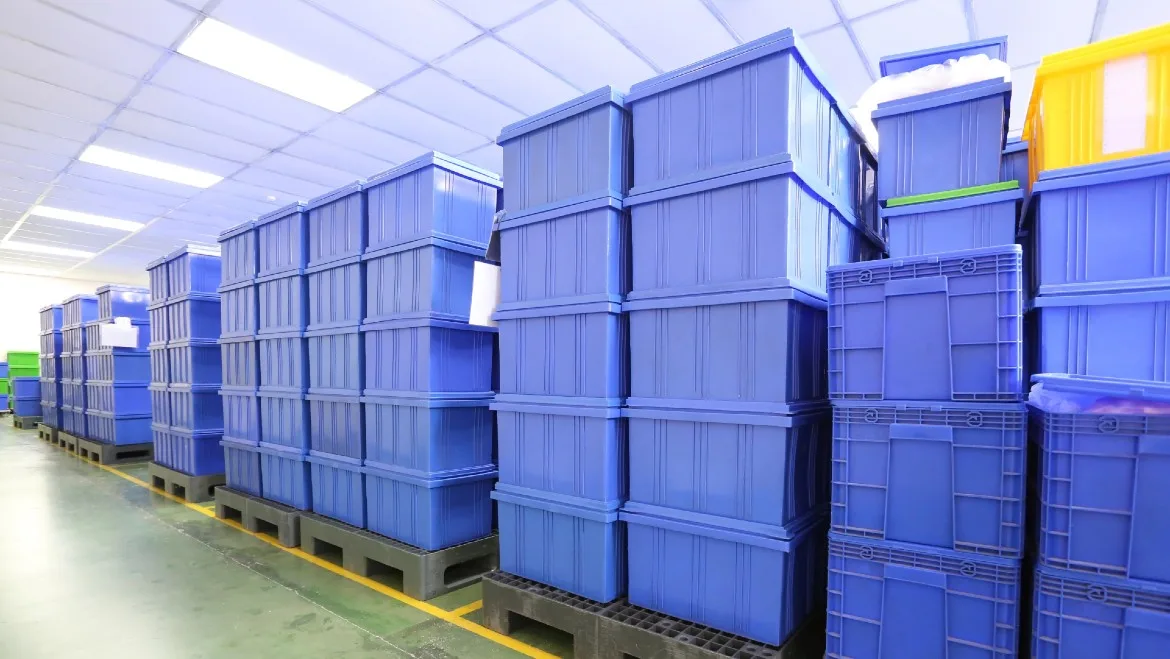
Plastic totes
MeePoohyaphoto/Getty Images
October 2, 2026

Automation, machine vision and robotics are transforming food manufacturing and distribution, helping companies improve efficiency, increase visibility and reduce manual intervention. As these technologies become more sophisticated, the packaging moving through automated systems plays an increasingly important role. 

Reusable packaging has supported food applications for decades, given its durability, washability and sustainability benefits. Yet its value extends beyond those attributes. The repeatability and consistency of reusable packaging can provide predictable interfaces that help ensure automated equipment performs reliably. 

Totes, reusable plastic containers, bulk bins, pallets, trays and crates are commonly used throughout food manufacturing and distribution facilities. Unlike packaging that can vary in dimension or condition, reusable plastic packaging is designed to maintain consistent dimensions, surfaces and handling features through repeated use. This predictability is increasingly valuable as manufacturers implement conveyors, automated storage and retrieval systems (ASRS), robotics and machine vision systems engineered around specific tolerances and repeatable interfaces.

As automation has become increasingly sophisticated, reusable plastic packaging has evolved alongside it. Rather than viewing packaging simply as something that transports products from point A to point B, manufacturers can view it as an integral part of the automated system.


Creating a Consistent Interface

Automation performs best when variability is minimized. Reusable plastic packaging provides a consistent interface between the product and automated equipment. 

One of the unique advantages within the food industry is that the same reusable plastic packaging can potentially interact with multiple processes and automated systems throughout the supply chain. Depending on the application, reusable plastic packaging can move from the field or processing environment through manufacturing, cooling, storage and distribution and ultimately into retail and merchandising.

EXPLORE MORE

Packaging Automation

This means packaging may encounter many different automation interfaces and operating environments throughout its journey. Maintaining consistent dimensions, handling features and performance through those cycles helps equipment reliably convey, identify, lift, stack, store, pick and otherwise interact with the packaging.  

Repeatability and consistency are particularly important because automated systems are engineered around defined tolerances. Reusable plastic packaging can maintain those dimensions and performance characteristics through repeated use. 

Durability and reliability are also important. Rather than continually introduce new packaging into an automated environment, manufacturers can use an asset designed to perform through many cycles, which creates both operational and financial benefits.


Taking a System-Wide Approach

Selecting reusable plastic packaging for an automated application starts with understanding the application rather than simply choosing a container or pallet. Key considerations include the product being handled, load requirements, material flow, equipment interfaces, storage environment, transportation, sanitation requirements and how the packaging will be handled throughout its entire cycle. 

Collaboration is especially important in automated applications, given packaging touches different parts of the supply chain. Working with the end customer as well as automation integrators, equipment manufacturers and all supply chain partners, can help define the requirements at each interface to determine the best solution that can perform throughout the system. 


Incorporating Technologies to Improve Operational Visibility and Asset Management 

Reusable plastic packaging creates an opportunity for the packaging itself to become a trackable asset. Depending on the application, technologies such as barcodes, RFID, Bluetooth Low Energy (BLE) and GPS can be installed on the packaging and incorporated into an asset-management strategy to provide greater visibility into where packaging is located and how it is moving through the supply chain.

That visibility can help companies better understand cycle times, dwell time, inventory levels and asset utilization, while identifying where reusable assets may be delayed or lost. In pooled or closed-loop reusable packaging systems, that information can be particularly valuable because the economics and sustainability benefits of the program depend on keeping assets moving and maximizing productive turns. 

For automated operations specifically, consistent identification locations on reusable plastic packaging also can support scanning, vision systems, readers and other automated identification technologies. Combining a durable, repeatable reusable asset with identification and tracking technologies can give manufacturers greater visibility into both their packaging fleet and the products moving through their operation.


Measuring Success

The success of reusable plastic packaging should be evaluated across operational, financial and sustainability metrics. Operationally, we look at whether the packaging performs consistently within the process, supports uptime, reduces product damage, minimizes manual intervention and moves reliably through the automated system. 

Financially, total cost of ownership is important. This can encompass packaging life, number of turns, asset loss, labor, transportation efficiencies, product damage and other costs associated with the overall system. While reusable plastic packaging typically requires a greater upfront investment than expendable packaging, its total cost of ownership can become attractive when the asset is effectively managed and reused over time. The benefits can extend to improving automation performance, reducing interruptions and minimizing product damage. Additionally, financing programs are now available and companies can bundle the packaging along with the automation equipment.

From a sustainability standpoint, reusable plastic packaging replaces single-use or expendable packaging and supports a circular model in which an asset is used repeatedly throughout its service life. The specific environmental impacts, in terms of energy and water conservation, greenhouse gas (GHG) emission reduction and solid waste prevention, depend on the application, transportation network, number of turns and how effectively the reusable asset pool is managed. 

As food manufacturers continue to automate, reusable plastic packaging has an opportunity to play a pivotal role. Its durability, consistency, repeatability and ability to be tracked can help create a predictable foundation for automated systems while supporting operational, financial and sustainability goals across the supply chain. 

KEYWORDS: barcode reusable packaging traceability vision systems

Share This Story

Looking for a reprint of this article?
From high-res PDFs to custom plaques, order your copy today!

Jen marzano orbis

Jen Marzano is a national accounts manager at ORBIS Corporation focused on technology and automation, where she works with leading manufacturers, retailers and automation partners to develop reusable packaging solutions for complex automated supply chains. She specializes in applications involving robotics, automated storage and retrieval systems, and other advanced material-handling technologies.

Recommended Content

JOIN TODAY
to unlock your recommendations.

Already have an account? Sign In

  • FE Top100 Food & Beverage Companies hero, gold lettering with black background.

    FOOD ENGINEERING’s 2026 Top 100 Food and Beverage Companies

    See where the world’s leading food and beverage companies...
    Top 100 Food & Beverage Companies
    By: Alyse Thompson-Richards
  • CJ Schwan’s Salina facility.

    Recipe for Growth: How CJ Schwan’s Powers Pizza Production with People and Automation

    Blending advanced automation with purposeful design, this...
    Plant of the Year
    By: Alyse Thompson-Richards
  • Paris Baguette rendering

    FOOD ENGINEERING’s 49th Annual Plant Construction Survey

    Food and beverage manufacturers continue to invest in...
    Plant Construction Survey
    By: Alyse Thompson-Richards
Manage My Account
  • eMagazine
  • Newsletter
  • Online Registration
  • Manage My Preferences
  • Customer Service

More Videos

Sponsored Content

Sponsored Content is a special paid section where industry companies provide high quality, objective, non-commercial content around topics of interest to the Food Engineering audience. All Sponsored Content is supplied by the advertising company and any opinions expressed in this article are those of the author and not necessarily reflect the views of Food Engineering or its parent company, BNP Media. Interested in participating in our Sponsored Content section? Contact your local rep!

close
  • Illustration of businessman standing in the middle of a large scale, balancing between two green dollar signs at each end, one larger than the other. Blue background with very small white clouds.
    Sponsored by3-A Sanitary Standards, Inc.

    6 Questions: Before You Buy Food Processing Equipment

  • Construction crews use aerial lifts to install insulated wall panels inside an industrial facility.
    Sponsored byBurns & McDonnell

    Food Manufacturing’s Growth Calls for Integrated Project Delivery

  • Close-up of a group of freshly baked stuffed empanadas being transferred onto a conveyor belt.
    Sponsored byDorner

    Smarter Line Design Improves Food Manufacturing Efficiency and Throughput

Popular Stories

FE Top100 Food & Beverage Companies hero, gold lettering with black background.

FOOD ENGINEERING’s 2026 Top 100 Food and Beverage Companies

Maple Leaf Foods photo

Maple Leaf Foods to Consolidate Plant Protein Production

Smarties Mini

Nestlé Canada Invests $50M in Toronto Confectionery Factory

Graphic with text on the left: ‘Food Engineering 2026 Top 100 - Explore leaders.’ Right side: images of juice bottles and chicken on a conveyor. Bottom text 'View Rankings'.


Promo for the 2027 Plant of the Year Award

Events

October 15, 2026

Exploring FOOD ENGINEERING’s 2026 State of Food Manufacturing

The webinar will examine how these trends are impacting every stage of the manufacturing process, from research and development through production, distribution and fulfillment.

January 1, 2030

Webinar Sponsorship Information

For webinar sponsorship information, visit www.bnpevents.com/webinars or email webinars@bnpmedia.com.

View All Submit An Event

Products

Recent Advances in Ready-to-Eat Food Technology

Recent Advances in Ready-to-Eat Food Technology

See More Products

September 23 FE Editorial Webinar


CHECK OUT OUR NEW ESSENTIAL TOPICS

Alternative ProteinAutomationCleaning/SanitationFabulous Food Plants

Food SafetyMaintenance StrategiesOEE

PackagingSustainability

Related Articles

  • manufacturing automation

    Understanding the Human-Centric Benefits of Automation in Food Manufacturing

    See More
  • Emerging trends at PACK EXPO offered glimpse into the future of food manufacturing

    See More
  • Mapping the Future of Food Plant Automation

    See More

Related Products

See More Products
  • food crime.jpg

    Food Crime: An Introduction to Deviance in the Food Industry

See More Products

Events

View AllSubmit An Event
  • June 18, 2026

    Step-Change Solutions: What’s Next for Automation in Food & Beverage Manufacturing?

    On Demand The session will examine emerging applications for artificial intelligence (AI) in food manufacturing, including how agentic AI could reshape operations, decision-making, and production workflows in the years ahead.
View AllSubmit An Event
×

Elevate your expertise in food engineering with unparalleled insights and connections.

Get the latest industry updates tailored your way.

JOIN TODAY!
  • RESOURCES
    • Advertise
    • Contact Us
    • Food Master
    • Store
    • Want More
  • SIGN UP TODAY
    • Create Account
    • eMagazine
    • Newsletter
    • Customer Service
    • Manage Preferences
  • SERVICES
    • Marketing Services
    • Reprints
    • Market Research
    • List Rental
    • Survey/Respondent Access
  • STAY CONNECTED
    • LinkedIn
    • Facebook
    • YouTube
    • X (Twitter)
  • PRIVACY
    • PRIVACY POLICY
    • TERMS & CONDITIONS
    • DO NOT SELL MY PERSONAL INFORMATION
    • PRIVACY REQUEST
    • ACCESSIBILITY

Copyright ©2026. All Rights Reserved BNP Media, Inc. and BNP Media II, LLC.

Design, CMS, Hosting & Web Development :: ePublishing