Food Engineering logo
search
cart
facebook twitter linkedin youtube
  • Sign In
  • Join Today
  • Sign Out
  • My Account
Food Engineering logo
  • NEWS
    • Latest Headlines
    • Manufacturing News
    • People & Industry News
    • Plant Openings
    • Recalls
    • Regulatory Watch
    • Supplier News
  • PRODUCTS
    • New Plant Products
    • New Retail Products
  • TOPICS
    • Alternative Protein
    • Automation
    • Cannabis
    • Cleaning | Sanitation
    • Cross-Functional Food Innovation
    • Fabulous Food Plants
    • Food Safety
    • Maintenance Strategies
    • OEE
    • Packaging
    • Sustainability
    • More
  • EXCLUSIVES
    • Plant Construction Survey
    • Plant of the Year
    • Sustainable Plant of the Year
    • State of Food Manufacturing
    • Top 100 Food & Beverage Companies
  • MEDIA
    • Podcasts
    • Videos
    • Webinars
    • White Papers
  • FOOD MASTER
  • EVENTS
    • Food Innovation & Manufacturing
    • Industry Events
  • RESOURCES
    • Newsletters
    • Custom Content & Marketing Services
    • FE Store
    • Government Links
    • Industry Associations
    • Market Research
    • Sponsor Insights
    • Classified Ads
  • EMAGAZINE
    • eMagazine
    • Archive Issue
    • Advertise
  • JOIN
Sustainability

Sustainability

PepsiCo Reports 94% of Sourcing for High-Risk, Company-Owned Commodities is Deforestation Free
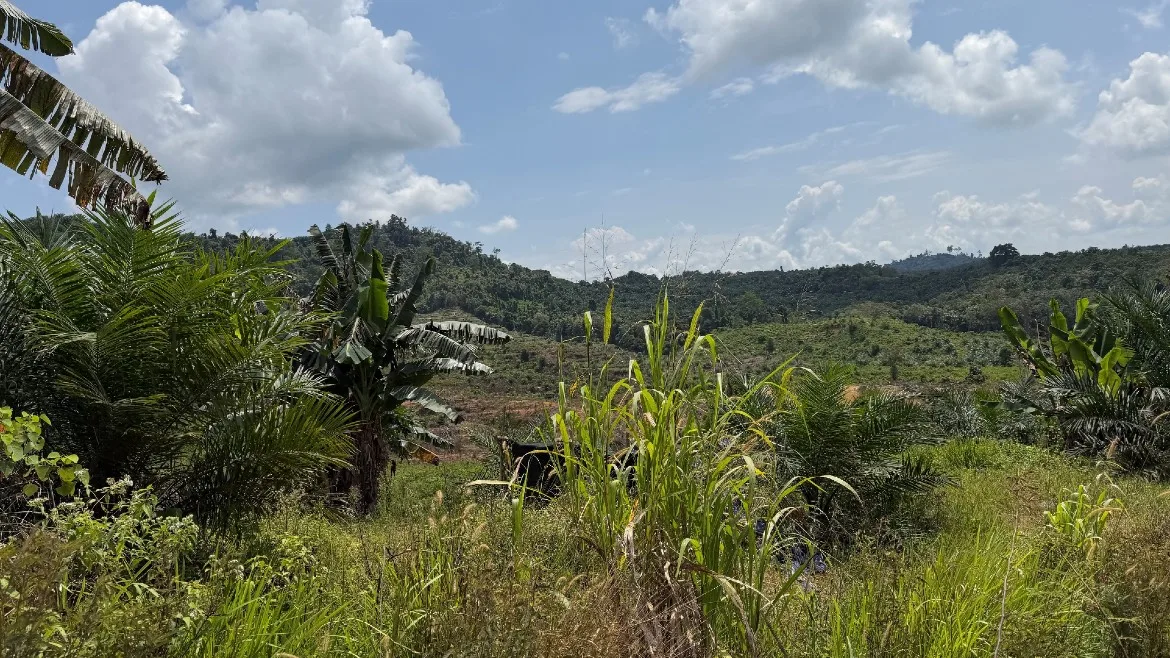
PepsiCo deforestation
PepsiCo
November 27, 2026

PepsiCo reports 94% of its sourcing for high-risk commodities in its company-owned and -operated activities was deforestation-free by the end of 2025. 

PepsiCo says this progress against the company's 2025 deforestation-free sourcing goal demonstrates its ongoing efforts to strive toward deforestation- and conversion-free sourcing by 2030.

"This is an important step in our work that reflects the meaningful progress and efforts with multiple stakeholders across our value chain," says Jim Andrew, chief sustainability officer and executive vice president, PepsiCo. "We also know there is more work ahead. Deforestation and natural ecosystem conversion are complex, systemic challenges, and we remain focused on supporting efforts to protect forests and natural ecosystems and working toward our deforestation- and conversion-free goal."

PepsiCo relies on forests and natural ecosystems for agricultural commodities including palm oil, fiber packaging, sugarcane, soybean oil and cocoa, which are in scope of this goal. For each of these commodities, the company aims to support sector-wide progress through supplier engagement, industry collaboration, on-the-ground initiatives, technology and greater supply-chain transparency.

"The momentum we're seeing across many sourcing regions demonstrates that progress is possible when companies, suppliers, producers and other stakeholders work together in shared landscapes. While significant challenges remain, we believe collaboration, shared learnings, innovation and greater transparency can help drive meaningful change," said Rob Meyers, vice president, global agriculture.

In 2025, PepsiCo reached 94% deforestation-free sourcing for commodities in scope of the goal. The company's results included:

  • Palm oil: 77% deforestation-free, with 100% of volumes covered by Roundtable on Sustainable Palm Oil (RSPO) certification
  • Fiber packaging: 99.5% deforestation-free, with 100% of reported volume traceable to mill
  • Sugarcane: 95% deforestation-free, with 97% traceable to the first point of aggregation
  • Soybean oil: 99.7% deforestation-free, with 100% traceable to refinery
  • Cocoa: 59% deforestation-free, with 77% traceable to country of origin

Industry-aligned methodologies are under development for conversion-free sourcing for most ingredients. There remain differing approaches on conversion-free sourcing among industry groups, which can lead to year-to-year fluctuations in progress. However, PepsiCo says it plans to continue to work toward its 2030 ambition and will assess the scope and timing of future reporting on conversion-free sourcing efforts.

In 2025, PepsiCo advanced work in three priority areas:

  • Improving traceability: Identifying the origins of in-scope ingredients and materials to assess deforestation-free status.
  • Leveraging technology: Using Satelligence satellite monitoring to increase visibility, detect potential deforestation and strengthen grievance assessments.
  • Strengthening collaboration: Working with industry groups and other stakeholders and investing in landscape initiatives to support conservation, restoration, livelihoods and sustainable production.

PepsiCo also maintains a supply-chain grievance mechanism for third parties to raise environmental and social concerns, engaging relevant suppliers to assess allegations, review corrective actions and monitor progress.

The company also works with suppliers, smallholder farmers, industry peers and other stakeholders in an effort to scale solutions that support its pep+ deforestation- and conversion-free ambitions.

  • Consumer Goods Forum Forest Positive Coalition of Action: PepsiCo has been a member since 2019 and co-chair since 2023. The Coalition shares learnings in an effort to help eliminate deforestation, forest degradation and conversion across palm oil, pulp and paper, soy and beef supply chains.
  • Palm Oil Collaboration Group: PepsiCo helped create this platform for companies to share learnings in an effort to address social issues, strengthen forest protection, and improve monitoring and reporting. A key achievement was the rollout of the No Deforestation, No Peat, No Exploitation Implementation Reporting Framework (NDPE IRF), an industry-wide reporting tool.
  • Rimba Collective: PepsiCo is a founding member of this initiative, which aims to deliver $1 billion for forest protection and restoration in Southeast Asia over 30 years. The program seeks to protect and restore more than 1 million acres of tropical forests while supporting local economic development and job creation through long-term conservation financing.
  • Sugarcane Collaboration Group (SCG): In 2025, PepsiCo joined the SCG, which brings together members of the sugar supply chain in an effort to develop practical resources, including tools, methodologies and approaches designed to help address shared challenges.
  • Forests Forward: led by the World Wildlife Foundation (WWF), this program for corporate action focuses on forest-linked supply chains, stewardship, and landscape conservation. Through Forests Forward, PepsiCo is working with WWF on two of the program's action areas: sourcing and funding forest landscape conservation projects.
KEYWORDS: PepsiCo sustainability sustainable farming sustainable materials

Share This Story

Looking for a reprint of this article?
From high-res PDFs to custom plaques, order your copy today!
Recommended Content

JOIN TODAY
to unlock your recommendations.

Already have an account? Sign In

  • Bread going through conveyor belt in manufacturing plant.

    The State of Food Manufacturing in 2026

    Food and beverage manufacturers encounter significant...
    Processing
    By: Alyse Thompson-Richards
  • FE Top100 Food & Beverage Companies hero, gold lettering with black background.

    FOOD ENGINEERING’s 2026 Top 100 Food and Beverage Companies

    See where the world’s leading food and beverage companies...
    Top 100 Food & Beverage Companies
    By: Alyse Thompson-Richards
  • CJ Schwan’s Salina facility.

    Recipe for Growth: How CJ Schwan’s Powers Pizza Production with People and Automation

    Blending advanced automation with purposeful design, this...
    Cross-Functional Food Innovation
    By: Alyse Thompson-Richards
Manage My Account
  • Join Food Engineering
  • Manage My Preferences
  • Customer Service

More Videos

Sponsored Content

Sponsored Content is a special paid section where industry companies provide high quality, objective, non-commercial content around topics of interest to the Food Engineering audience. All Sponsored Content is supplied by the advertising company and any opinions expressed in this article are those of the author and not necessarily reflect the views of Food Engineering or its parent company, BNP Media. Interested in participating in our Sponsored Content section? Contact your local rep!

close
  • Illustration of businessman standing in the middle of a large scale, balancing between two green dollar signs at each end, one larger than the other. Blue background with very small white clouds.
    Sponsored by3-A Sanitary Standards, Inc.

    6 Questions: Before You Buy Food Processing Equipment

  • Construction crews use aerial lifts to install insulated wall panels inside an industrial facility.
    Sponsored byBurns & McDonnell

    Food Manufacturing’s Growth Calls for Integrated Project Delivery

  • Close-up of a group of freshly baked stuffed empanadas being transferred onto a conveyor belt.
    Sponsored byDorner

    Smarter Line Design Improves Food Manufacturing Efficiency and Throughput

Popular Stories

Mars Waco, Texas associates

Mars to Invest $1.4B in U.S. Manufacturing in 2027

Cottage cheese

Saputo to Invest $600M in Manufacturing Network

Kraft Heinz PA HQ

Kraft Heinz to Divest North American Coffee Business for $650M

Promo for the 2027 Plant of the Year Award


Promo for Food Master directory

Events

January 1, 2030

Webinar Sponsorship Information

For webinar sponsorship information, visit www.bnpevents.com/webinars or email webinars@bnpmedia.com.

View All Submit An Event

Products

Food Process Engineering and Technology, 3E

Food Process Engineering and Technology, 3E

Combining scientific depth with practical usefulness, this book serves as a tool for graduate students as well as practicing food engineers, technologists and researchers looking for the latest information on transformation and preservation processes as well as process control and plant hygiene topics.

See More Products
An image of baked bread on a conveyor belt with text promoting the 2026 State of Food Manufacturing report.


CHECK OUT OUR NEW ESSENTIAL TOPICS

Alternative Protein Automation Cleaning/Sanitation Fabulous Food Plants

Food Safety Maintenance Strategies OEE

Packaging Sustainability

Related Articles

  • Cocoa Life

    Mondelēz’s sustainable cocoa sourcing program combats deforestation

    See More
  • Progresso sourcing only antibiotic, hormone-free chicken breasts for soups

    Progresso sourcing only antibiotic, hormone-free chicken breasts for soups

    See More
  • Image of cocoa powder in a wooden bowl

    The FDA Responds to Heath Claim Petition for High-Flavanol Cocoa Powder and Reduced Risk of Cardiovascular Disease

    See More

Related Products

See More Products
  • GlobalData_logo_blue_header.png

    Cooked Meats - Packaged (Meat) Market in United States of America...

See More Products
×

Elevate your expertise in food engineering with unparalleled insights and connections.

Get the latest industry updates tailored your way.

JOIN TODAY!
  • RESOURCES
    • Advertise
    • Contact Us
    • Food Master
    • Store
  • JOIN TODAY
    • Create Account
    • eMagazine
    • Newsletter
    • Customer Service
    • Manage Preferences
  • SERVICES
    • Marketing Services
    • Reprints
    • Market Research
    • List Rental
    • Survey/Respondent Access
  • STAY CONNECTED
    • LinkedIn
    • Facebook
    • YouTube
    • X (Twitter)
  • PRIVACY
    • PRIVACY POLICY
    • TERMS & CONDITIONS
    • DO NOT SELL MY PERSONAL INFORMATION
    • PRIVACY REQUEST
    • ACCESSIBILITY

Copyright ©2026. All Rights Reserved BNP Media, Inc. and BNP Media II, LLC.

Design, CMS, Hosting & Web Development :: ePublishing