AI: In Quest of and Fulfilling the Perfect Batch
Over the years, seeking the perfect batch may have seemed like the quest for the Holy Grail, but today, let AI/ML-based batch serve as your experienced guide.
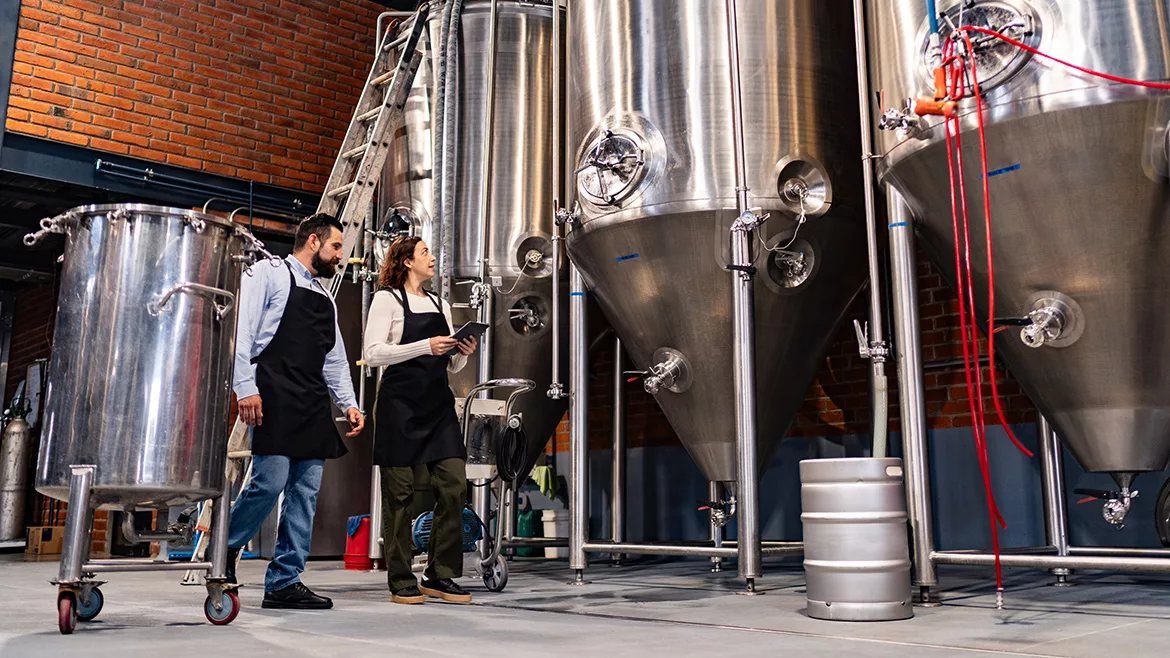
Finding the “perfect batch” does not have to be like a search for the Holy Grail. Today’s batch control systems supplemented with AI/ML make the arduous task of perfecting a batch and precisely reproducing it every time much easier than the trial and error of the past.
In food and beverage, several products are made in batches — especially any product made through a fermentation or a drying process where parameters are difficult to control due to changing environmental conditions or fluctuations in the process itself.
The problem was that in the early days, batch samples were often taken to the lab after the batch was finished — too late to rescue an errant batch. Even when a grab sample was taken to the lab before the batch was finished, it was often too late to turn a batch around once it drifted outside of specified parameters.
Recognizing this issue, the FDA supported PAT (process analytical technology), which was designed to use real-time monitoring of process variables and automated data analysis in order let operators know if a process was going out of control so they could make the necessary changes to correct the process — either manually or automatically. This was all based on the “perfect batch.”
Today, applying artificial intelligence with machine learning (ML) and combined with online, real-time monitoring and control of key process variables can not only fix problems in process, but also predict where the batch is headed at any given moment and prevent future unwanted, divergent changes. AI also provides smarter recipe execution and adaptive setpoint control, precise ingredient management and loss reduction, predictive equipment performance (and maintenance), CIP and energy optimization, improved traceability and batch genealogy, food safety and microbial risk prediction and more. Maybe summed up, AI improves batch control primarily by being predictive, adaptive, consistent and efficient — able to turn on a dime when necessary.
Some batch control suppliers have integrated AI into batch control, and batch processing keeps getting better and better — certainly worth the investment if you’ve spent months or years trying to get consistent batches as the seasons, plant environments and ingredients change.
Already, AI tools can address the challenges of batch processing in the food and beverage industry by combining real-time data capture, intelligent document processing and advanced analytics, says Jon Knisley, head of process AI, ABBYY. “This enables manufacturers to achieve greater control, efficiency and predictability in their batch operations.”
Software tools can integrate seamlessly with existing process control systems to analyze real-time data from sensors and equipment. This allows manufacturers to predict batch outcomes and intervene proactively to prevent deviations from the “perfect batch.” For example, during fermentation or drying processes, AI can identify subtle changes in environmental conditions or ingredient quality that might lead to inconsistencies, Knisley says.
Fermentation: A Difficult-to-Control Operation without AI Supervision
AI is revolutionizing the food and beverage industry, turning batch processing into a precise, predictive and adaptive science. By leveraging real-time data and advanced analytics, AI ensures consistent quality, reduces waste, and sets a new standard for efficiency and innovation. Continuous monitoring powered by AI is the secret ingredient to smarter recipes, safer food and sustainable operations.
This is true especially of applying AI to difficult-to-control batch applications such as fermentation. Batch control has evolved from reactive to proactive, thanks to AI’s ability to see what’s coming and adjust in real time.
A good example is ABBYY’s work with a leading beverage manufacturer, which implemented ABBYY technology to improve the consistency of its fermentation process. By analyzing real-time data from sensors and automating the processing of COAs, the company reduced batch failures by 25% and achieved a 15% increase in production efficiency. The tool also provided actionable insights for optimizing energy usage, contributing to the company’s sustainability goals.
AI solutions enhance traceability by creating a digital thread that links raw materials, process parameters and finished products. This not only supports compliance with food safety regulations but also provides valuable insights for continuous improvement and root cause analysis in the event of quality issues.
— Jon Knisley, Head of Process AI at ABBYY
Batch, Machine Learning and AI
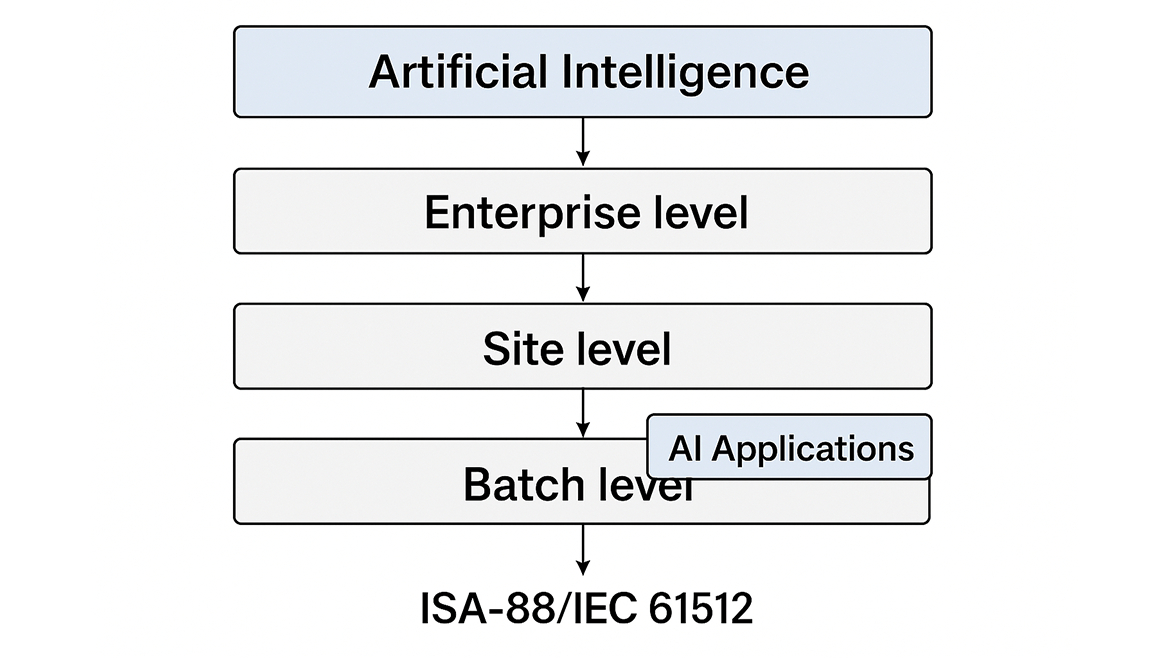
While AI has been successfully applied in enterprise applications — e.g., inventory control, logistics, product and production planning, maintenance, etc. — AI and ML are welcome technologies at the ISA-88/IEC 61512 batch control layers. In recent years, automation suppliers have added new sensor inputs to batch control systems to monitor critical process variables and observe how they affect one another throughout the process. This heralded the beginning of machine learning and was usually applied at the PLC/SCADA/industrial layer. Today AI/ML is an integral part of PLC and industrial PC control.
For example, Siemens provides AI-driven capabilities through its SIMATIC PCS 7 and PCS Neo batch control systems, enhanced by Siemens Industrial Edge, and SIPAT for advanced analytics, says Ed Montgomery, industry manager - RC-US DI S VSP CPG VS. These solutions combine real-time process data with machine learning models to improve batch consistency and efficiency, and are commonly used in:
- Fermentation processes in breweries and dairy plants
- Drying operations for powders and snacks
- High-value ingredient blending in food and beverage
- Batch processes with variable environmental conditions
Additionally, Siemens offers two SCADA-type ISA-88/95 process control and batch solutions: Siemens BRAUMAT — which is short for “BRewing in AUtoMATic” and is marketed to the brewing industry — and SiStar, which is short for “Siemens Standard Tools for Automation of Recipes controlled processes” and is geared towards the entire process control/batch industries. Siemens is invested in leveraging artificial intelligence and machine learning (AI/ML) to enhance industrial processes, moving towards the “Autonomous Plant” or “Digital Enterprise.” When it comes to batch control, the integration of AI isn’t typically a standalone AI-assisted batch control product as much as it is a suite of intelligent functionalities and software tools that augment the BRAUMAT/SiStar batch control system.
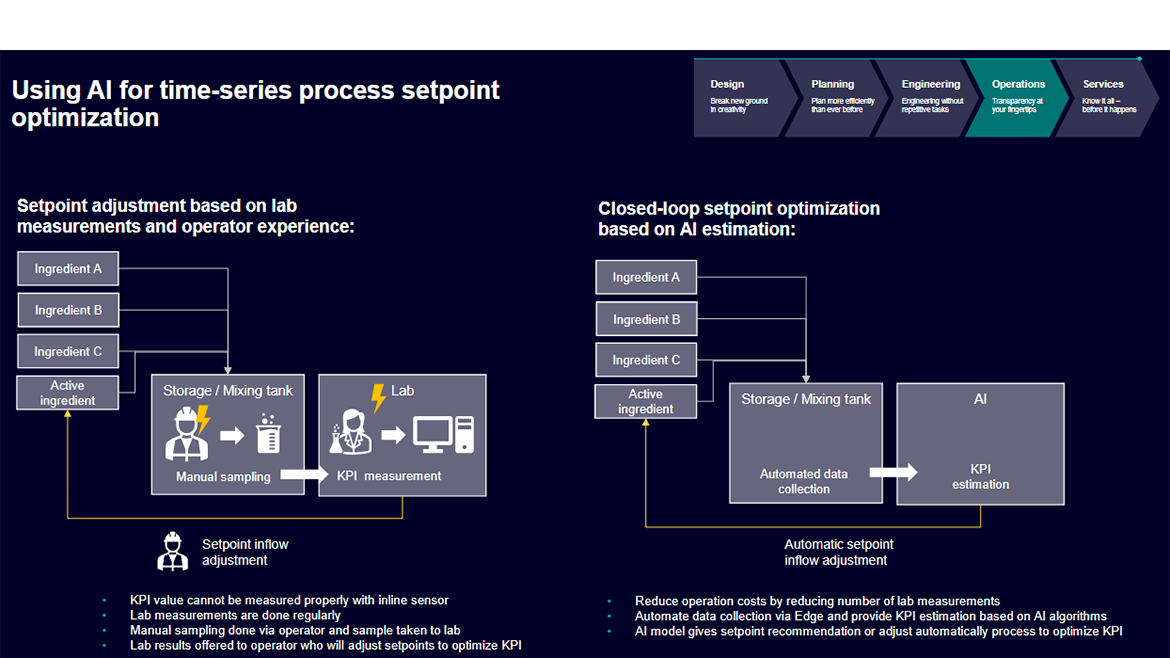
Enhancing batch control with AI/ML begins with models that analyze historical batch data (e.g., raw material properties, process parameters like temperature, pressure, mixing speed, reaction times) and correlate them with final product quality attributes, Montgomery adds. They can learn complex relationships that human operators might miss. The data for these models is acquired from the open interfaces for BRAUMAT/SiStar where every reading from the control system is available for analysis.
Example capabilities include:
- Predicting the quality of an ongoing batch before it’s finished, allowing for early intervention if deviations are detected
- Suggesting optimal setpoints for process parameters to achieve desired quality targets with fewer off-spec batches. This is particularly valuable in industries like brewing for consistent taste and quality, or pharmaceuticals for purity and yield.
- Identifying process conditions that produce higher yields, reducing waste and increasing profitability
Not only can AI monitor the batch process itself, but it can also monitor equipment reliability and maintenance. In these systems, AI algorithms continuously monitor sensor data from equipment (pumps, valves, agitators, heat exchangers) within the batch process. They establish “normal” operating patterns and flag deviations that could indicate impending equipment failure or process issues. This helps plants move from time-based to condition-based maintenance, reducing upkeep costs and extending asset life, Montgomery says.
While traditional batch control follows predefined recipes, AI can enable more dynamic and adaptive control strategies. AI models can learn how the process responds to changes and adjust control actions in real-time to maintain optimal conditions, even when faced with disturbances or variations in raw materials.
Go Takami, manager, Consulting Division, AI Consulting Department, Yokogawa Digital Corporation, describes a project for a craft brewing process. “We utilized our Factorial Kernel Dynamic Policy Programming (FKDPP) technology to develop a temperature setting plan for a production process. Jointly developed by Yokogawa and the Nara Institute of Science and Technology (NAIST), FKDPP is an autonomous control AI protocol that makes use of reinforcement learning technology. In a proof-of-concept experiment, we applied this approach to a craft beer fermentation process and successfully reduced the fermentation time by 28%.”
Takami adds, “When utilizing our FKDPP technology, we proceed through the following steps:
- Build simulator
- Use FKDPP to examine conditions
- Validity checks by human experts
- Application with actual equipment
“We believe this technology can be applied to planning temperature profiles for batch processes,” Takami adds, “and we expect it could be extended to the production of fermented foods such as sake and yogurt, as well as pharmaceuticals like antibiotics that use microorganisms, enzymes or yeast.”
What Processors Expect from AI-Assisted Batch
Food and beverage companies expect AI-assisted batch control to deliver consistent product quality, optimize key performance indicators (KPIs) like efficiency and waste reduction, enable real-time decision-making, ensure compliance with regulations and support sustainability goals, says Robert Purvy, DCS technical consultant manager, Siemens. They also seek scalable and flexible systems that adapt to changing demands and provide actionable data insights for continuous improvement.
“They also expect improved traceability, compliance with FDA PAT and tools that fit into existing automation systems and user workflows without major disruption to maximize productivity and employee retention,” Purvy adds.
“We believe there are the following expectations, says Yokogawa’s Takami:
- Improving production efficiency while maintaining quality
- Standardization and reproducibility to reduce variability in human operations
- Co-creation of new approaches by humans and artificial intelligence (AI)
“To meet these expectations, we aim to use AI to develop temperature plans and provide temperature plan optimization as one of our solutions,” Takami adds.
From Traditional Batch to AI/ML-Based Batch Control
Traditional batch control focused on recipe execution and maintaining setpoints, says Carlos Felipe, Siemens Digital Industries vertical architect, CPG. It worked well for stable processes, but it could not accurately predict deviations or adapt to changing conditions. AI-based batch control adds predictive and adaptive capabilities using these types of sensors:
- Inline quality sensors (NIR, pH, turbidity) for real-time quality monitoring
- Advanced flow and level sensors for precise ingredient dosing
- Condition monitoring sensors for equipment health (vibration, temperature)
- Environmental sensors for humidity and ambient conditions
Modern batch control software typically provides compliance and real-time quality analytics features. Meanwhile, processors are frequently installing edge controllers for local AI/ML processing and cloud applications for advanced analytics, predictive maintenance statistics and operational optimization insights.
In the brewing example described by Yokogawa’s Takami, by manually implementing the temperature setting schedule created by AI, brewers were able to shorten the fermentation process time from 336 hours to 240 hours, (28% reduction) while maintaining the aroma, taste and mouthfeel of the product produced by experienced brewers.
Additional sensors were installed on the existing system to measure specific gravity and temperature data, which were then used as input for developing the temperature plan, Takami says.
Remember: AI/ML is Only as Good as its Data
AI models thrive on data, but if that data is poor quality, incomplete, inconsistent or insufficient, the AI’s insights will be flawed, leading to incorrect recommendations or predictions, says Siemens’ Felipe. To avoid these sorts of issues, processors must establish clear standards for data collection, storage and maintenance from the outset, especially with operational personnel who are manually entering data into any destination.
Implementing automated checks and manual reviews to ensure data accuracy and consistency is desired so that the AI models can adapt to the best set of data. When implementing a new batch optimization strategy, it is best to phase the installation, avoiding a “big bang” approach. Start by integrating a small set of data points and a simple AI application, then gradually expand. By thoughtfully addressing these potential risks, companies can unlock the immense potential of AI-equipped batch control systems, providing more consistent quality, process optimization and a more efficient workforce.
While poor quality data is one issue, Yokogawa’s Takami points out that insufficient or biased data when creating the simulator for AI to develop temperature plans can lead to overfitting and difficulty in assessing the validity of the plans proposed by AI.
Methods to minimize or avoid these risks include collecting a diverse range of data during data aggregation and not accepting AI-generated results blindly, but instead having a human verify their validity, adds Takami.
Planning Expenditures
AI/ML-based systems may certainly appear to be worth the investment, but some preliminaries are needed before taking action. Processors should begin by auditing their current automation system state, says Siemens’ Montgomery. To derive value from AI-based control, data transparency must exist among all levels from the shop floor to enterprise management software. Once this data is in place, AI-assisted batch control systems become remarkably scalable, capable of handling small and hyper-complex batch processes alike.
On the hardware side, the main additional investment will typically be for the collection of data by sensors, but Takami believes that large-scale investments can be avoided by leveraging existing systems.
“Although we cannot provide specific ROI figures,” Takami says, “we believe that the shortening of production time will enable flexible capacity increases during peak periods, and that the provision of insights to plant personnel will help reduce research and development costs, contributing to increased ROI.”
Invisible Threats, Intelligent Control: Building Safer Food Plants Through AI-based Advanced Monitoring and Automation
In modern food manufacturing, safety begins long before the first ingredient enters the line. The invisible threats—airborne dust, biological particles, and microcontaminants—represent some of the biggest challenges facing today’s food processors. As facilities become smarter and more automated, the industry’s ability to detect, isolate and prevent these unseen risks has become a defining factor of operational excellence.
The Hidden Challenge of Airborne Contamination
While machinery and surfaces often receive the most attention, the air itself is a constant variable in food safety. Dust generated during mixing, packaging or material handling can act as a carrier for biological particles that easily cross contamination zones. Even small lapses in air control can compromise clean areas and jeopardize product integrity.
To counter this, leading plants are investing in real-time air-quality monitoring and intelligent ventilation control systems. These systems continuously measure particulate density, pressure differentials and humidity levels — automatically adjusting ventilation rates or triggering localized extraction when conditions move outside of defined limits.
Smart Process Control for Safer Operations
Process control systems are evolving from passive monitoring to active protection. By integrating smart sensors with AI-driven analytics, facilities can identify potential hazards before they escalate. For example, if particulate readings rise near a sensitive production line, the system can immediately isolate airflow, activate filtration units and notify maintenance teams — all within seconds, without disrupting production.
This proactive control not only improves safety, but also ensures compliance with increasingly strict regulatory standards. It transforms food safety from a reactive task into a continuous, automated safeguard.
The Role of Technology in Prevention
Automation and AI are now central to achieving consistency and reliability in food safety. The use of predictive maintenance, AI-based environmental monitoring and digital twin simulations allows plants to anticipate contamination risks long before they occur.
When combined with precise ventilation design and advanced filtration, these systems minimize the movement of dust and biological particles across zones. The result is a facility that doesn’t just meet safety benchmarks — it sets new ones.
Creating a Culture of Controlled Precision
Technology alone isn’t enough; it must operate within a culture of awareness and accountability. Operators, maintenance engineers and safety teams need clear visibility into environmental data, along with systems that provide actionable insights rather than complex dashboards.
When teams understand how process control directly influences air quality and safety outcomes, compliance becomes a natural byproduct of everyday operations.
The Future of Food Safety Intelligence
As AI continues to mature, the food industry will move toward autonomous safety management systems —networks that can detect microscopic changes, learn from past incidents and continuously improve protection protocols.
In this future, ventilation and process control won’t be just about containment; they’ll be about prediction, prevention and precision. The food plant of tomorrow will not only produce quality — it will actively ensure it in every breath of air and every line of code.
— Anant Mithsagar, CEO, Rutamsoft
RutamSoft, a partner member of the Control System Integrator’s Association (CSIA), is a technology-driven organization empowering industries through intelligent automation, digital transformation and process optimization. With deep expertise in control systems, software development and AI integration, the company helps businesses evolve toward smarter, data-driven operations.
Looking for a reprint of this article?
From high-res PDFs to custom plaques, order your copy today!