Food Engineering logo
search
cart
facebook twitter linkedin youtube
  • Sign In
  • Create Account
  • Sign Out
  • My Account
Food Engineering logo
  • NEWS
    • Latest Headlines
    • Manufacturing News
    • People & Industry News
    • Plant Openings
    • Recalls
    • Regulatory Watch
    • Supplier News
  • PRODUCTS
    • New Plant Products
    • New Retail Products
  • TOPICS
    • Alternative Protein
    • Automation
    • Cannabis
    • Cleaning | Sanitation
    • Cross-Functional Food Innovation
    • Fabulous Food Plants
    • Food Safety
    • Maintenance Strategies
    • OEE
    • Packaging
    • Sustainability
    • More
  • EXCLUSIVES
    • Plant Construction Survey
    • Plant of the Year
    • Sustainable Plant of the Year
    • State of Food Manufacturing
    • Top 100 Food & Beverage Companies
  • MEDIA
    • Podcasts
    • Videos
    • Webinars
    • White Papers
  • FOOD MASTER
  • EVENTS
    • Food Automation & Manufacturing Symposium and Expo
    • Industry Events
  • RESOURCES
    • Newsletter
    • Custom Content & Marketing Services
    • FE Store
    • Government Links
    • Industry Associations
    • Market Research
    • Sponsor Insights
    • Classified Ads
  • EMAGAZINE
    • eMagazine
    • Archive Issue
    • Advertise
  • SIGN UP!
Maintenance Strategies

Friction, Flour and Failure: How to Select Bearings for Industrial Bakery Operations
By Chris Johnson
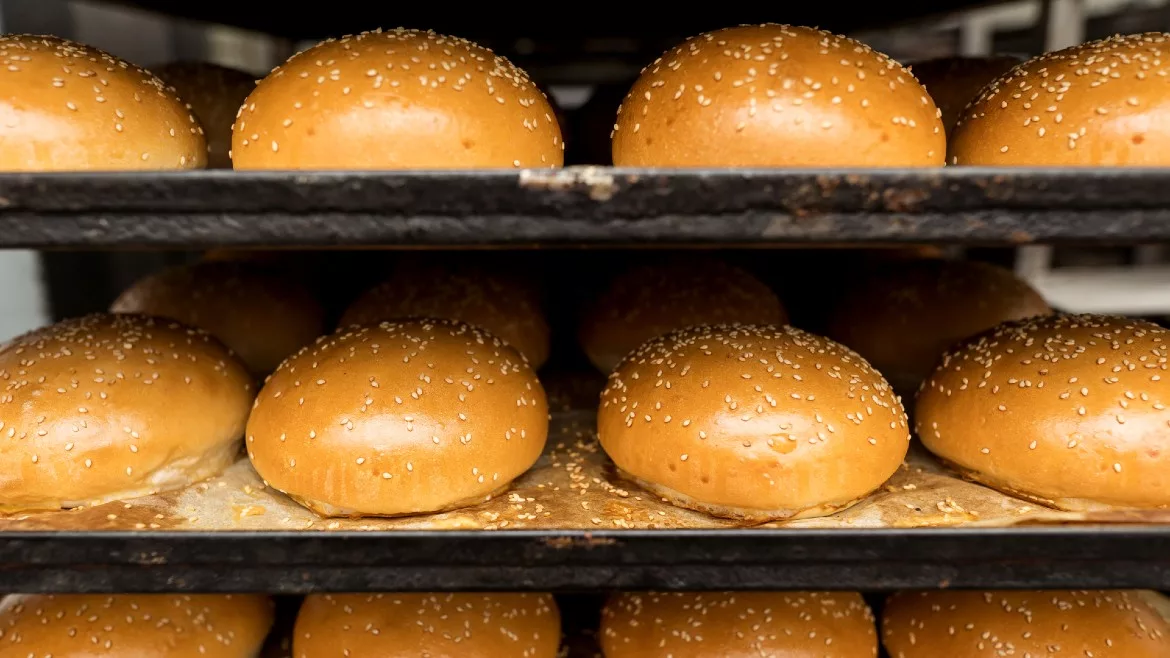
Baked bread
freepik
April 2, 2026

In commercial bakeries, ovens run hot, conveyors rarely stop and a fine layer of flour finds its way onto almost every surface. It’s an environment defined by temperature extremes, contamination and tight production schedules. In this environment, small mechanical components are expected to perform flawlessly, and that includes industrial bearings.

The scale of the commercial bakery sector makes reliability non-negotiable. According to the Food and Drink Federation, food and drink manufacturing is one of the UK’s largest manufacturing sectors. It contributes over £35 billion ($46.3 billion) annually to the UK manufacturing turnover, which is almost a quarter of the total.

Bakeries represent a significant share of that output. Because of this, high throughput production, retailer supply contracts and narrow operating margins leave little room for unplanned downtime.


Reliability Isn’t a Luxury

So, where do small industrial bearings fit into all of this? Industrial bearings are positioned near burners, within oven conveyors or adjacent to industrial dryers. They operate under sustained elevated temperatures, conditions that accelerate lubricant oxidation and degradation.

As oxidation progresses, grease loses its viscosity and film strength. This weakens the lubricating barrier between the rolling elements and raceways in bearings. Friction rises and internal temperatures increase further, creating a cycle that rapidly shortens bearing life.

Maintenance Strategies

Explore More Maintenance Strategies

Production Stoppages

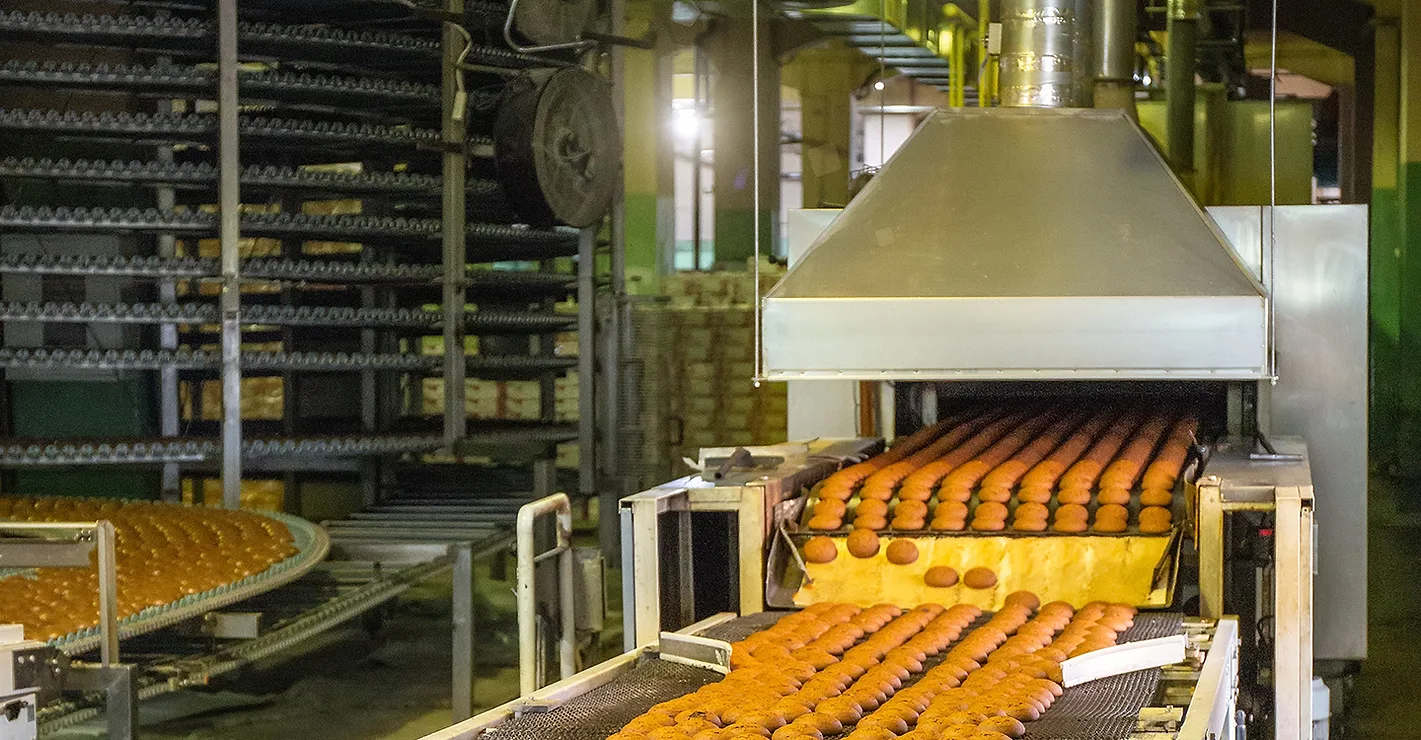
Some bearings are designed specifically for moderate industrial temperatures. But, in many cases, these components only survive a fraction of their intended lifespan inside demanding food manufacturing equipment, such as a tunnel oven assembly. When grease breaks down, metal-to-metal contact increases wear and can result in the bearing seizing up. Production does not slow gracefully in these moments — it stops entirely. 

Another issue is thermal expansion, which introduces a second, less visible threat. As shafts heat up, they expand and can squeeze the bearing internally. That unwanted preload raises friction and stress, shortening service life.

Increased contact stress accelerates fatigue and raises power consumption. Over months of continuous operation, the cumulative effect becomes measurable, both in terms of maintenance frequency and energy demand, as it impacts the reliability of equipment.


Contamination Compounds the Challenge

Not only should food equipment be reliable and well-maintained, it must also be kept clean to prevent contamination, in line with the UK Food Standards Agency’s safer food better business guidance.

Similar rules apply to the United States, where the FDA’s Current Good Manufacturing Practice regulations state that equipment must be adequately maintained and designed to protect against contamination. Mechanical failure is more than an engineering inconvenience. In food production, it’s a major safety concern.

Flour dust is fine, persistent and poses an airborne risk to machinery. Once inside a bearing, flour mixes with degraded grease to form an abrasive compound. This accelerates wear on raceways and rolling elements, particularly in high-speed conveyor applications.

Moisture from washdowns and steam from proofers adds another dimension. Bearings not designed for humid or chemically exposed conditions may begin to corrode. Surface pitting undermines load distribution and reduces fatigue life. What begins as minor surface damage can develop into vibration, noise and early failure.

When failure occurs in a high-throughput bakery, the consequences extend beyond the component itself. Ovens must cool before maintenance teams can intervene safely. Product in process may be lost. Restart procedures consume both time and energy.

For manufacturers operating under strict delivery schedules, even short stoppages disrupt supply chains. 


Specification Should Be Strategic, Not Routine

Reducing friction through specialty bearings for food manufacturing and lubrication contributes directly to efficiency gains. The right bearing choice protects uptime, supports compliance and contributes to energy performance.

Bearing replacements are frequently treated as an unavoidable maintenance routine. In reality, many of these failures stem from specification that doesn’t reflect the true environmental conditions.

By examining operating temperature, contamination levels and washdown exposure in detail, it becomes possible to recommend heat resistant, sealed bearings and corrosion resistant bearings that materially extend service life. 

Heat resistant bearings equipped with high-temperature lubricants are formulated to resist oxidation and maintain film integrity under sustained thermal load. By preserving lubrication stability, they reduce friction and slow wear progression. Specifying appropriate internal clearance for elevated operating temperatures helps accommodate thermal expansion without imposing excess stress.

Sealed designs are equally important in flour heavy environments. Effective contact seals reduce particulate ingress while retaining lubricant within the bearing cavity. In washdown zones, corrosion resistant materials such as 316 stainless steel provide added resilience against moisture and cleaning agents.

Bakeries that view bearing selection through the lens of heat stability, contamination control and energy efficiency will reduce disruption and protect both product integrity and margin.

KEYWORDS: bakery bakery equipment baking bearing

Share This Story

Looking for a reprint of this article?
From high-res PDFs to custom plaques, order your copy today!

Chris Johnson is managing director for SMB Bearings.

Recommended Content

JOIN TODAY
to unlock your recommendations.

Already have an account? Sign In

  • Paris Baguette rendering

    FOOD ENGINEERING’s 49th Annual Plant Construction Survey

    Food and beverage manufacturers continue to invest in...
    Plant Openings
    By: Alyse Thompson-Richards
  • Bottling machine

    How Optical and X-Ray Inspection Supports Bottling Safety and Quality

    By transitioning from legacy single-technology systems to...
    Food Safety
    By: Dan McKee
  • Bread baking in oven

    The State of Food Manufacturing in 2025

    Food and beverage manufacturers are investing in...
    Manufacturing News
    By: Alyse Thompson-Richards
Manage My Account
  • eMagazine
  • Newsletter
  • Online Registration
  • Manage My Preferences
  • Customer Service

More Videos

Sponsored Content

Sponsored Content is a special paid section where industry companies provide high quality, objective, non-commercial content around topics of interest to the Food Engineering audience. All Sponsored Content is supplied by the advertising company and any opinions expressed in this article are those of the author and not necessarily reflect the views of Food Engineering or its parent company, BNP Media. Interested in participating in our Sponsored Content section? Contact your local rep!

close
  • AI-enhanced technology in CIP operations
    Sponsored byEcolab

    Using AI to unlock new value from your CIP processes

Popular Stories

Potato chips in a bowl

Campbell’s to Close Massachusetts Chip Plant

Emerson Pro.Lean Dashboard

Put Contextualized OEE Data to Use Managing Plantwide Processes

snack bars with fruit

Maker’s Pride to Close Two Facilities

Promo for 49th Annual Plant Construction Survey showing a plant construction site and promotional text in white with a blue background

Events

June 17, 2025

Refrigerated & Frozen Foods’ State of the Cold Chain

On Demand Kelley Rodriguez, Editor in Chief of Refrigerated & Frozen Foods, will be joined in this 60-minute webinar by industry experts to help unpack the latest research.

July 23, 2025

Decarbonizing Process Heat: What You Should Know and Next Steps

On Demand Driven by climate goals, business risk, client interest, and resilience considerations, food and beverage companies are increasingly turning their attention to decarbonizing their production processes.

View All Submit An Event

Products

Recent Advances in Ready-to-Eat Food Technology

Recent Advances in Ready-to-Eat Food Technology

See More Products

CHECK OUT OUR NEW ESSENTIAL TOPICS

Alternative ProteinAutomationCleaning/SanitationFabulous Food Plants

Food SafetyMaintenance StrategiesOEE

PackagingSustainability

Related Articles

  • beverage bottling machine

    How to Select the Right Pump for Food and Beverage Processing Environments

    See More
  • Data collection in food manufacturing

    How to Select Automation Technologies for Food Manufacturing

    See More
  • cannabis packaging

    How to select the right packaging for your cannabis product

    See More

Related Products

See More Products
  • 1119775590.jpg

    Thermal Food Engineering Operations

  • Cleaning-in-Place: Dairy, Food and Beverage Operations, 3rd Edition

  • Functionalizing Carbohydrates for Food Applications

See More Products
×

Elevate your expertise in food engineering with unparalleled insights and connections.

Get the latest industry updates tailored your way.

JOIN TODAY!
  • RESOURCES
    • Advertise
    • Contact Us
    • Food Master
    • Store
    • Want More
  • SIGN UP TODAY
    • Create Account
    • eMagazine
    • Newsletter
    • Customer Service
    • Manage Preferences
  • SERVICES
    • Marketing Services
    • Reprints
    • Market Research
    • List Rental
    • Survey/Respondent Access
  • STAY CONNECTED
    • LinkedIn
    • Facebook
    • YouTube
    • X (Twitter)
  • PRIVACY
    • PRIVACY POLICY
    • TERMS & CONDITIONS
    • DO NOT SELL MY PERSONAL INFORMATION
    • PRIVACY REQUEST
    • ACCESSIBILITY

Copyright ©2026. All Rights Reserved BNP Media, Inc. and BNP Media II, LLC.

Design, CMS, Hosting & Web Development :: ePublishing