Smart Packaging: What Is It?
While there might not be one specific definition all can agree upon, the one key thread today is data, which pulls all the loose ends together.
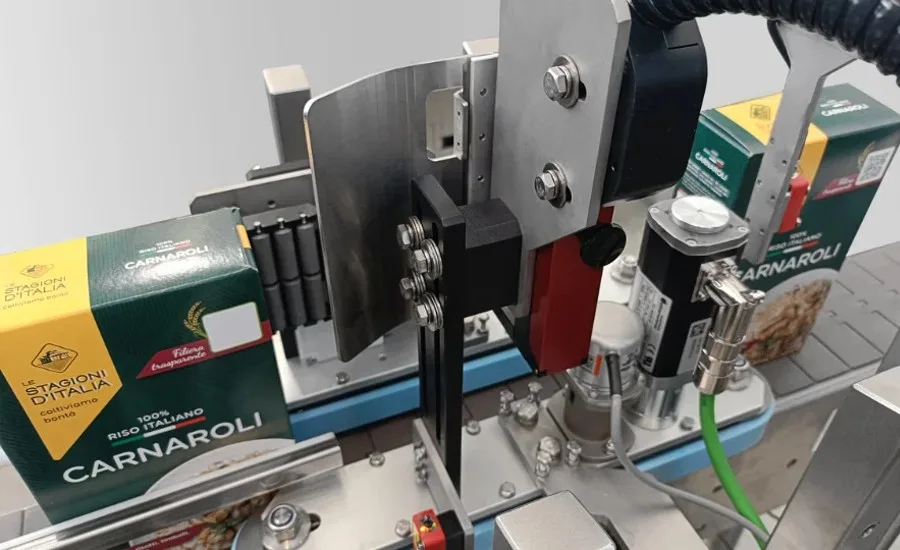
The Antares Vision Group assisted BF SpA and its Le Stagioni d’Italia brand in a “Transparent Supply Chain” project by developing the first rice traceability system, thanks to dynamic QR Codes that give each product package a unique digital identity. Every package of rice will have a QR code on the label, allowing consumers to track the product’s lifecycle through Antares Vision Group’s traceability system.
A relatively recent term, “smart packaging,” has been bantered around recently. But how do you define smart packaging?
As you might expect, depending on whom you ask, you’ll get widely varying responses, and that’s great because it shows an evolving solutions-oriented industry built on data transfer, which aims to inform food and beverage processors, regulators, logistics operations, retail stores and consumers alike with pertinent information on a product’s status anywhere in the supply chain.
According to Liam Selby, senior commercial manager at IFCO Systems, Digital Solutions, smart packaging isn’t just about improving packaging; it can serve as a digital layer of the circular supply chain, unlocking visibility and control that helps improve how the broader supply chain performs.
“Smart packaging can mean different things depending on your perspective,” says Renee Benson, CRB senior packaging engineer, who works with packaging materials selection, packaging line design, as well as installation and startup — and recently presented on the topic of smart packaging as it impacts sustainability at IBIE 2025. “At its core, smart packaging can involve the technology of the material itself, the interaction with information the material contains, or the functionality of the packaging material.”
Smart packaging can apply to labels, including those that incorporate chemical, biological, enzyme or nanoparticle technology to communicate product safety as it relates to shelf life and temperature management — as well as RFID or tamper-evident technology for tracking and tracing.
EXPLORE MORE


Smart packaging also extends to material types that have barrier properties as well as breathability/off-gassing properties. It can include materials that can withstand temperatures to reduce microbial load for food safety, reduce oxidation and manage moisture. Beyond materials, it can involve how a product is dispensed or preserved after opening — and managed through manufacturing, distribution management and product protection.
“All aspects of the production and distribution chain, as well as the retailer and consumer can benefit from different types of smart packaging,” Benson says. “This is dependent on the smart packaging choice as to which groups see the most advantages, but everyone will see some sort of gain.”
Ray Wodar, Dassault Systèmes’ global director of business consulting, CPG and retail, approaches the term in detail. “I believe that smart packaging is best understood as a variety of capabilities rather than a single technology. In its simplest form, smart packaging can be a passive container made more functional through materials or structural improvements. At its most advanced, it’s a real-time digital interface between the product and every stakeholder in its lifecycle.”
Smart packaging can be viewed in three converging layers: intelligent packaging, connected packaging and sustainable smart packaging, Wodar says.
- First is intelligent packaging, where the package holds knowledge about the product or its condition through time-temperature indicators (TTIs), freshness or colorimetric sensors, gas detection films and tamper evident closures, often supported by technologies like RFID, QR codes, NFC and sensors that enable real-time monitoring and tracking throughout a product’s lifecycle. Labels are a critical component of intelligent packaging as they are the lowest cost entry point for embedding digital identity.
- Connected packaging enables real-time communication across the supply chain. Embedding QR codes, NFC tags, sensors and RFID enable the package to transmit data upstream to supply chain operators and downstream to consumers, boosting efficiency, traceability and trust.
- Sustainable smart packaging brings together material choices and communication of those choices into one strategy. More sustainable materials that are fiber-based, PFAS-free or compostable are matched with digital IDs that verify and communicate packaging sustainability claims.
“I believe that who benefits most from smart packaging depends on the layer,” Wodar says. Intelligent sensing features primarily benefit food producers and distributors through waste and spoilage reduction. Connected features benefit all parties by strengthening traceability and recall capability for producers, inventory and cold-chain visibility for supply chain operators — and transparency for consumers. Sustainable materials most directly support producers on compliance and brand differentiation while giving consumers an opportunity to align their products and values.
“Smart packaging integrates data and connectivity, such as IoT-enabled RPCs (reusable packaging containers), to provide near-real-time visibility and control across the fresh produce supply chain,” says IFCO’S Liam Selby. A key benefit is their ability to directly reduce cost-to-serve for retailers by addressing the root causes of loss, waste and supply chain inefficiency.
RPCs improve asset tracking to minimize shrinkage and theft, support temperature compliance to help maintain shelf life, help reduce loss, waste and unnecessary movements, and drive faster, more efficient asset turnaround by managing dwell and return flows. While producers, logistics providers and pooling operators all gain operational efficiencies, retailers benefit through improved on-shelf availability, lower operating costs and stronger accountability across the network, ultimately protecting margin and increasing sales, Selby says.
According to Rachel Kelley, customer service and design manager, for Tetra Pak U.S. and Canada, “Smart packaging is packaging that extends beyond containment and protection to include data, connectivity, responsiveness or interaction. We achieve this through our Tetra Pak Custom Printing solution.”
“Our aseptic packaging and processing technology, coupled with Tetra Pak Custom Printing, creates unique advantages, including:
- The physical packaging ensures product protection, a long shelf life and logistics efficiency through aseptic carton technology.
- A digital engagement layer has the power to transform packaging into an interactive communication medium by driving awareness and building brand equity.
“This shifts packaging from a static container to a dynamic touchpoint, enabling brands to connect directly with consumers,” Kelley says. “With Tetra Pak Custom Printing, the strongest immediate benefit is to brands and consumers, with engagement tied directly to the printed package.”
“One additional area becoming increasingly relevant in smart packaging is anti-counterfeiting and diversion prevention for certain food applications,” says Matt Ramsdell, TricorBraun vice president, design and engineering. “These technologies are already used in industries like pharmaceuticals and luxury goods, where authenticity and traceability are critical.”
“The value of smart packaging depends on the application,” says Samantha Juna, TricorBraun insights and enablement director. “Consumers benefit when packaging reduces uncertainty around freshness and safety. Food processors and producers gain efficiencies through better quality control and waste reduction. Supply chains benefit from improved tracking, monitoring and recall precision.”
Smart Packaging as a Data Platform, Connected to PLM
“Smart packaging should be seen as a data platform; it effectively becomes the near-real-time input layer for tracking product and asset condition, location and flow across the product lifecycle,” says IFCO’s Selby. Its value extends into supply chain optimization, shrinkage reduction and temperature compliance by turning previously hard-to-track areas such as transport legs, store backrooms and reverse logistics into measurable, more controllable processes.
“It’s important to remember that smart packaging is a data platform, and I believe reframing it as such is one of the most important shifts in how the food industry should be thinking about the packaging investment,” says Dassault’s Wodar. “When smart packaging is driven by an integrated and cloud-based labeling platform that pulls dynamic data from business systems like ERP, MES, WMS and PLM, companies are in the best position to ensure products are correctly labeled, tracked, and compliant across the supply chain.”
In that model smart packaging is not simply the input side of PLM; the relationship is bidirectional. The PLM system, typically the design record, is the master data source that populates everything consumers and operators see when they scan a connected package. Every ingredient change, supplier update, regulatory compliance revision or sustainability attribute update flows through PLM outward to the connected packaging data layer. If that data infrastructure isn’t managed, smart packaging can become a liability with a QR code pointing to inaccurate information, Wodar adds.
Currently, the industry is in early-majority deployment for QR and serialized barcodes, early adoption for NFC and embedded sensors — and in the innovation phase for truly integrated, closed-loop smart packaging ecosystems where scan-data loops back into PLM and manufacturing systems, Wodar says.
“Smart packaging functions as a distributed data platform, especially when enabled by offerings such as Tetra Pak’s Custom Printing, Kelley says. Packaging can act as a data carrier with dynamic QR codes linking to cloud systems that have the potential to collect engagement data or geographic consumption patterns. The future could include fully digitized packaging ecosystems, AI-driven insights from packaging interactions, or even synchronization between products, consumers and supply chain systems.
Smart packaging absolutely has the potential to function as a data platform across the supply chain, especially with technologies such as RFID, says TricorBraun’s Ramsdell. Rather than serving as a direct input into a Product Lifecycle Management (PLM) system, RFID is better viewed as an agnostic technology that can capture and share information across the supply chain, depending on when it is integrated into the finished product.
Data Platform Challenges
However, one ongoing industry challenge has been standardization, including aligning on platforms and ensuring devices can be universally read across retailers and distributors, Ramsdell adds. There are also technical limitations in certain applications, as RFID readability can become more challenging with liquids and bulk formats.
But standardization isn’t the only problem, according to IFCO’s Selby. Today, most tracking technologies remain fragmented, such as RFID, temperature loggers or track-and-trace systems, and they often lack integration and near-real-time data. The future of smart packaging lies in continuously feeding actionable insights into supply chain, commercial and sustainability systems, enabling better decision-making, stronger accountability and a supply chain that helps reduce loss, waste and unnecessary movements while supporting cost reduction and margin improvement.
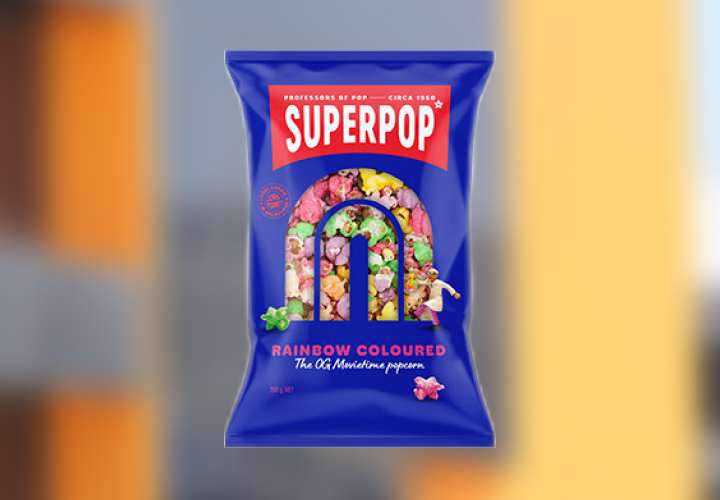 Using GS1 2D barcodes and Kezzler’s SmartFacts solution, Australia’s SUPERPOP popcorn is connecting physical packaging with trusted digital product information. By scanning the on-pack QR code (reverse side), consumers can access product details including ingredients, allergens, nutrition information, storage guidance and recycling information. Image courtesy of SUPERPOP
Having the right hardware to obtain needed data needed is key, says Dan Feeney, Harpak-ULMA automation application engineer. “If a customer wants to use QR codes, 2D barcodes, serialized labels, case or pallet tracking, or inspection data as part of a broader traceability platform, the automation system needs to apply, inspect, verify, reject, aggregate and communicate that information reliably.”
Another stumbling block for some companies is cost, says CRB’s Benson. While some companies have the volume and the capital to invest in managing smart packaging data platforms, others do not have the capability. However, as costs are driven down, and manufacturers can see how beneficial data is collected to improve manufacturing, transportation, storage and consumer interest, more companies will be able to justify the implementation.
Supply Chain Benefits and Issues
Smart packaging can improve traceability, manage the product environment and confirm temperature control, says CRB’s Benson. These are all great benefits to improve food safety and shelf life. Confidence in the carrier relationship is one of the obstacles to overcome that will help improve the supply chain. Some examples that smart packaging supports are confirmation that refrigeration trucks were kept at the optimal temperatures during transport, packages were not tampered with during transit, moisture ingress did not occur and products did not freeze.
“I believe that one of the most significant advantages is improved cold chain integrity through real-time monitoring capabilities,” Wodar says. Smart packaging powered by IoT enables continuous tracking of temperature and environmental conditions throughout transportation and storage. AI systems can also analyze external variables like weather, traffic and transit disruptions to predict delays and recommend rerouting. Additionally, blockchain technology ensures sensor data remains tamper-proof, building trust amongst supply chain partners. Wodar lists other supply chain benefits:
- Advancements like temperature-triggered alerts and freshness indicators allow distributors to reroute, discount or prioritize product before spoilage, significantly reducing food loss as products move through the supply chain
- Smart packaging also strengthens recall capabilities, which are becoming increasingly important as high-profile contamination and allergen-related incidents continue to rise. Serialized smart packaging can dramatically reduce the scope and cost of recalls with the ability to compress a recall from a broad production range to a specific batch, even including the exact line, shift and distribution channel.
- Inventory intelligence is another important advantage. RFID-enabled packaging allows real-time inventory counts without manual scanning, simultaneously reducing out-of-stocks and over-stocks.
However, despite these benefits, there are several obstacles that can limit a smooth supply chain process, Wodar says. These include technology interoperability, infrastructure gaps and unit cost barriers. First, technology interoperability presents as a significant challenge since producers, retailers and distributors typically use incompatible scanning and data systems. Organizations like GS1 are helping to drive standardization, however, adoption of these guidelines remains uneven across the industry. While automation is on the rise, 80% of warehouses globally remain unautomated, which limits the ability for companies to act on the real-time data smart packaging provides. Smart tags or sensors like RFID are also very expensive, and their high costs paired with integration costs can make it difficult for low-margin producers to adopt this technology.
“What elements of smart packaging can make the supply chain smoother?” asks Harpak-ULMA’s Feeney. “Packaging systems need to reliably apply, inspect, verify, reject, aggregate and communicate information across the line so that products, labels, cases and pallets remain connected as part of a larger production and traceability workflow.”
Nevertheless, Kelley points out efficiency improvements on the labeling side. “Tetra Pak Custom Printing makes the supply chain more agile and efficient by enabling production flexibility, especially with the ability to run multiple brands or designs within a single mother roll of paperboard, enabling smaller orders, yielding optimized inventory and a faster response to market demand. The custom printing process is done in our converting factories, and rolls of printed material are delivered to the customer’s facility ready to use. There’s no need to invest in new equipment. What’s more, smaller minimum order requirements make business more agile and reduce resource waste.” Benefits include:
- Product waste reduction, thanks to lower minimum order quantities
- Less working capital tied up since less packaging material needs to be kept in stock
- Less space required to store material reels
- Easier production planning as there’s no need to predict demand months in advance
Benefits of Smart Packaging
“Smart packaging systems only become effective if the automation infrastructure supporting them can execute reliably at production speed,” says Harpak-ULMA’s Feeney. “Integrating inspection, verification, reject handling, traceability and communication systems helps manufacturers reduce errors while improving production consistency and data integrity.”
“The biggest benefit comes from visibility with minimal manual intervention,” says IFCO’s Selby. IoT tracking provides low-cost, scalable tracking across high volumes of crates, enabling accurate location data, dwell management and inventory control. It creates a continuous data layer that addresses major cost drivers, including asset loss, poor utilization, delays and lack of accountability.
IoT tracking should be prioritized early because it directly improves asset control and flow at scale, creating immediate operational ROI while also enabling additional capabilities such as temperature monitoring and predictive optimization as the network matures, Selby says.
Looking for a reprint of this article?
From high-res PDFs to custom plaques, order your copy today!