Will Predictive Maintenance Lead to Data Standardization and AI Wins?
Food manufacturers have invested in predictive maintenance technology and analytics for the last ten years in search of more uptime. Now, food industry leaders are witnessing partnerships for data contextualization that could be the missing “ingredient” to successful AI projects.
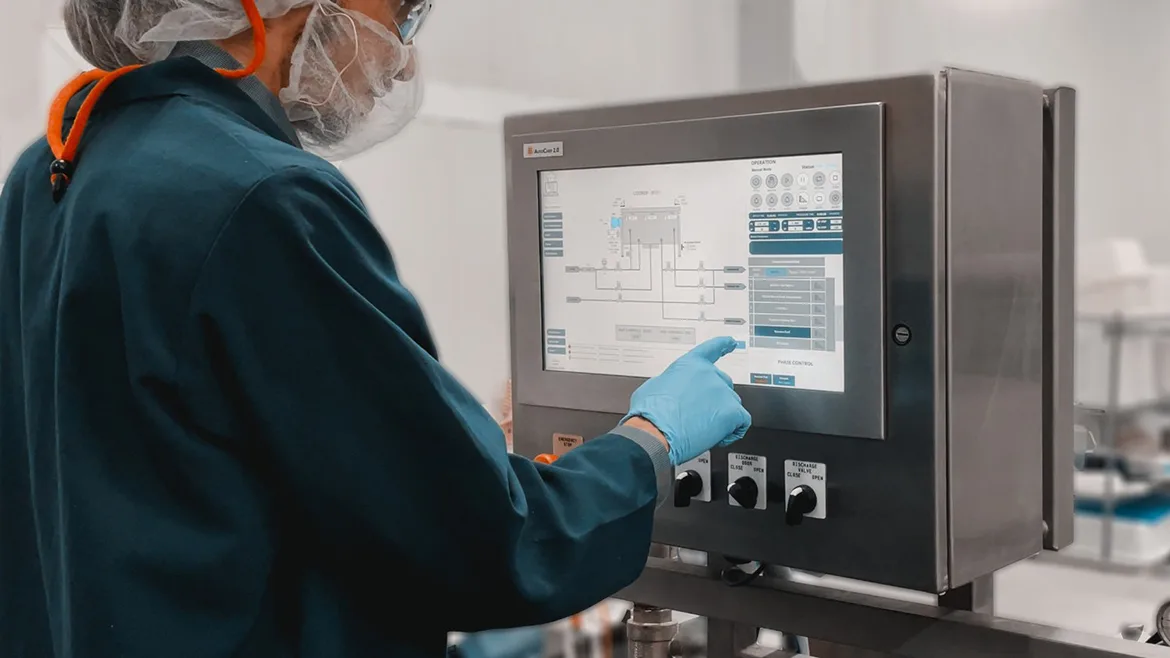
: Blentech delivers recipe systems integrated into quality steps so operators will not move forward with the recipe or discharge the product unless it meets quality criteria.
The hunt for greater operational margins has been elusive. A Schneider Electric survey from April 2026 reveals operational inefficiencies such as downtime, delays and equipment failures account for more than 20% of final product cost for consumer packaged goods (CPG) companies, while manufacturers report losing an average of 15.2% of revenue to operational issues such as rework, quality deviations and underutilized assets.
Capital expenditures have varied across the food and beverage segment over the last decade, with many companies closing plants to build greenfield facilities and add digitalization. Legacy plants joined the Industry 4.0 wave by adding advanced sensors, such as condition monitoring, vibration and other sensing. to provide actionable data for analytics.
Many CPGs are leveraging this advanced maintenance data and see it as low-hanging fruit for contextualization or standardization projects — essential next steps for AI-based strategies. In the process, data contextualization specialists are emerging and partnering with system integrators, automation and system software companies to address ontology — asset relationships — contextualization and unified naming of assets.
So, how many manufacturing layers are part of this challenge?
"A useful way to look at it is three layers that all have to be covered: industrial data, platforms that organize and contextualize data, and systems and people that make decisions and take action on it," says Maria Araujo, industry principal – consumer packaged goods (CPG), Rockwell Automation. "A gap in any one of those layers means the investment does not produce a return."
Many food majors have standardized industrial data, including Ruiz Foods, which started with its research and development business unit in 2024. "The first step provided regulatory, compliance and track-and-trace benefits," says Michael Warter, SVP and CIO at Ruiz Foods Products, Inc., in 2024.

However, today, AI-based manufacturing foundations show that systems need ontology to succeed. David Ariens, founder of IT/OT Insider, has described ontology simply as "a formal way of saying how things relate to each other, and what those relationships mean."
"Very few companies have adopted a full manufacturing ontology — a machine-readable model that explicitly defines how equipment relates to processes, how processes consume materials, how batches follow recipe and so on," Ariens noted in early 2026.
To fill this void, data specialists and advanced operations intelligence companies have emerged: HighByte, Haystack Data Solutions and Litmus Automation are just a few. These data specialists have partnered with Microsoft, Siemens, Rockwell Automation and others.
HighByte announced a partnership with Siemens in June, and the collaboration accelerates data modeling for manufacturing, including food, beverage and dairy. HighByte’s Intelligence Hub can receive process or factory data from Siemens Industrial Edge platform and then perform data modeling and contextualization.
In the announcement, HighByte cited it as a Unified Namespace provider that can standardize data access across the organization. Enterprise-wide reach is the rub for early AI projects, as many have not been scalable.
Reaching across the manufacturing footprint has caught Microsoft’s interest. "Microsoft previewed Fabric IQ with an ontology feature that lets you define once what a line, an asset and a batch actually are, then bind those definitions to the underlying data so people and AI agents work from the same vocabulary," said Pedro Medina, founder and chief data farmer, Haystack Data Solutions, in a recent FOOD ENGINEERING article. "For multi-plant work it matters a lot, real ontology is what turns other plants into a configuration exercise instead of a new project."
Mars implemented a data anomaly maintenance program across multiple chocolate-production plants with Datadog, a digital twin solution that runs on the Microsoft Azure IoT Edge platform – reported on by FOOD ENGINEERING. During the question-and-answer session, Luiz Fraga, senior lead, AIOPS and data production architecture at Mars, alluded to next steps are moving forward with this technology.
System integrators are another source for these predictive data projects. "Manufacturers are increasingly turning to system integrators and specialized consultants who can bridge the plant floor and the enterprise/cloud layer," says Pradeep Paul, director of manufacturing intelligence, E Tech Group.
E Tech Group, a system integrator, announced an expansion on an existing relationship with SmartSights, a provider of production intelligence, reporting and issue management.
"The manufacturers seeing the most success aren't implementing disconnected solutions for data collection, storage and analytics," Paul adds. "Instead, they're looking for a partner who can own the full IT/OT architecture end-to-end, including PLCs, DCSs, and SCADA systems through historians and edge connectivity using OPC UA or MQTT/Sparkplug B, all the way to cloud platforms such as Azure or AWS."
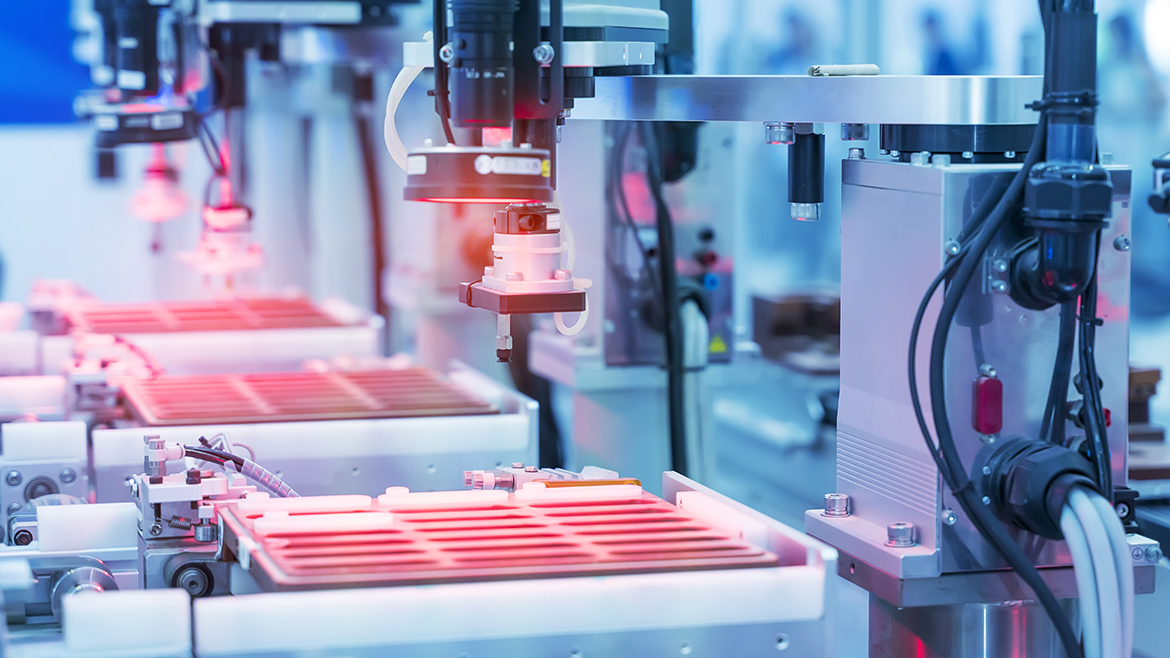
Blentech delivers recipe systems integrated into quality steps so operators will not move forward with the recipe or discharge the product unless it meets quality criteria. Image credit: kynny / iStock / Getty Images Plus via Getty Images
Equipment Providers and 'Sophisticated Automation'
The next step in data context includes partnerships with original equipment manufacturers (OEMs). Blentech, a food technology supplier focused on equipment, uses Inductive Automation’s Ignition platform to communicate machine data to middleware and enterprise software in the food processing segment.
"Food manufacturers are looking to their partners to do more and searching for how to find more useful data," says Blentech CEO Daniel Voit. "If you want to offer value to a processor, you need to be experts with equipment, data and help them interpret and access it from equipment."
Blentech identified over 10 years ago the need for "sophisticated automation" from Inductive Automation without the expensive price tag. The equipment maker delivers recipe systems integrated into quality steps so operators will not move forward with the recipe or discharge the product unless it meets quality criteria. "We wanted to create a system that could deliver high-quality data analytics at a fraction of the cost," Voit adds.
Ontology for mid-size and co-manufacturers is essential. "The key is data context and whether the data streaming into the systems can be consumed by the AIs," Voit says. "Can the servers recognize what that data point actually is, and did you label the temperature ‘TT01" or did you say "temperature probe such and such?"
Voit believes "if the programs, software and context engine is structured to contextualize the data properly, you can make the data far more consumable and valuable for AI."
"As more equipment gets instrumented, manufacturers are building the foundation for AI to understand not just an asset’s condition, but its role in the process around it," says Anoop Mohan, chief product and technology officer, Augury. "That context is what makes the data useful beyond a single machine and allows AI to connect an equipment signal to its potential impact on production and the action that should follow."
Rockwell Automation and Augury announced a strategic partnership in late July, combining Augury’s Industrial AI Workforce with the automation giant’s software portfolio, including Fiix (CMMS system) and FactoryTalk Optix. A key component of this agreement is the planned integration between Augury’s Reliability Agent and Rockwell’s Fiix MAX, an AI-powered assistant.
The integrated workflow addresses machine condition analysis, recommended corrective actions, maintenance planning, work order creation and executive coordination. "AI in and of itself does not create value, and data alone does not create value either," Araujo adds. "What creates value in manufacturing is decisions, decisions that lead to actions, and actions that lead to value."
These partnerships are worth noting due to the foundations of predictive maintenance and the investment already made in advanced sensing and automation. The next question is whether these partnerships can acc
Looking for a reprint of this article?
From high-res PDFs to custom plaques, order your copy today!