Some new ERP providers are building their systems from scratch totally on AI, but can their systems fulfill all the demands that manufacturers have expected from conventional ERP over the years?
What if the smartest equipment is not the most advanced, but the most dependable? Dave Cobb examines how quality, maintenance, and long-term reliability truly intersect.
Food and dairy producers evaluate digital twin technology to improve quality and yield as operators begin to optimize real-time data analytics. As data modeling matures and adoption grows, operators are the essential players to support innovation and higher throughput.
AI may dominate industry conversations, but data modeling is delivering measurable results today. Discover how food, dairy and pet food manufacturers are using real-time production data to improve quality, increase throughput and give operators the insights needed to drive smarter decisions.
La Tropical, a Miami brewery with deep Cuban roots, uses a Qdos 60 peristaltic pump to precisely dose small amounts of tetra hop extract and to meter chemicals in its CIP system.
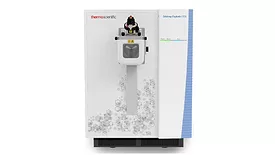
The new system addresses challenges around food and water quality testing in the face of contaminants such as per- and polyfluoroalkyl substances (PFAS), pesticides and other pollutants.
Achieving a high OEE score has been elusive in the past as processors grapple with where to begin in troubleshooting OEE issues. The future of OEE, with the help of AI technology, will help manufacturers find the most miniscule of line problems and be on top of their game.
Food safety and quality management systems are a necessity for getting audits together for unannounced food safety inspections, and suppliers of these systems have seen the need to expand coverage to include functionality handled by other software systems. Working together in concert, they save processors repetitive, manual input operations.
By embracing TSN, food and beverage companies not only improve their OEE but also set the stage for a future where production lines are not just automated but intelligently interconnected and extremely flexible.
AI looks to be a panacea for making better inspection choices, but knowing specifically what the inspection criteria should be needs to be in place before employing an AI-based system.
AI looks to be a panacea for making better inspection choices, but knowing specifically what the inspection criteria should be needs to be in place before employing an AI-based system.
Cannabis Products Insider recently spoke with Andrew Dorf, VP of sales, and Vandana Kothari, director of quality, about CV Sciences’ approach to developing hemp-based ingestible products and its process for ensuring product quality.