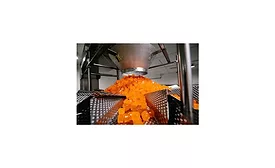
We in the trade press have been extolling the virtues of automation for a long time, and you’re probably sick of hearing us ramble on about it. Nevertheless, if there were any other reason to take a hard look at implementing automation—at least partially—in your facility, it would be now. COVID-19 has certainly created some practical problems: Short-staff due to people at home sick with coronavirus, social distancing impossible on cutting/protein lines, changeover time killing production output…and the list goes on.
Recent trends caused mostly by the COVID-19 pandemic have put the squeeze on food processors and the supply chain to get food where it needs to go. Now as some states and cities are “opening up,” restaurants and other food service establishments are beginning to see their business increasing, which will mean a gradual shift in the supply chain—something that most processors and logistics providers will be able to handle, compared to a year ago when supply chains broke everywhere.
The Alliance for Beverage Cartons and the Environment (ACE) and its members SIG Combibloc, BillerudKorsnäs, Elopak, Stora Enso and Tetra Pak, have set the industry’s vision for the future: to deliver the most sustainable packaging for resilient food supply systems which is renewable, climate positive and circular.
The ice cream company is voluntarily recalling the products as a precaution due to the potential to contain Listeria monocytogenes, an organism that can cause serious, and sometimes fatal, infections in young children, frail or elderly people, and others with weakened immune systems.
Global natural and organic foods retailer Whole Foods Market has adopted Honeywell’s Solstice N40 (R-448A) lower GWP refrigerant in its stores across the U.S. as it seeks to reduce refrigerant emissions under the EPA’s GreenChill program.
On April 29, the FDA will launch its first in a new quarterly podcast series that focuses on the development and use of new technologies to strengthen the ability of FDA, regulated industry and others to accelerate prevention, speed outbreak response and more swiftly adapt to crises that could affect the human and animal food supply.
Water. We can’t live without it, and you can’t run a food or beverage plant without it. However, having it available for all earth’s inhabitants worldwide in the next 20 to 30 years will be a challenge—as already two-billion of the planet’s population live in areas where water is scarce. Unsurprisingly, the food and beverage industry is one of the largest water users, so it’s well worthwhile to minimize waste wherever possible. Water treatment companies are only too aware of the importance of conserving this precious resource, which in some areas can be more valuable than oil.
Food Lion is recalling select lots of Taste of Inspirations Parmesan Garlic Wing Sauce because they were mislabeled and contain an undeclared allergen (fish).