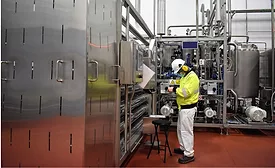
SunOpta, which produces organic, non-GMO snacks and plant-based beverages, worked with Dennis Group to expand a production facility to meet demand for oat milk.
Cybersecurity may seem only for enterprise systems and critical infrastructure, but at the control system level there are too many gaps in the food and beverage industry.
There are several methods to reduce energy needs, usage and costs. Some are basic and simple; others are more sublime. Four recent news items show how processors can take steps to decrease energy inputs, improve their carbon footprint and look smarter and be more sustainable.
Once a hacker connects via RDP to any computing system, unless operators take immediate action, the hacker can use this connection to log in at any time in the future, extort money, install ransomware on the computer, and/or sell the connection login/password and other data on the dark web, making an unprotected system available to anyone who wants to purchase the information.
Recent developments from energy providers and equipment suppliers are providing new ways to reduce energy usage and costs. We look at developments on the AI (artificial intelligence) front from Constellation (an Exelon company) and integrating process with heating/cooling systems from GEA, supplier of manufacturing equipment to the food and beverage industry.
A M King has partnered with ALDI U.S. to provide property consulting, design, and construction of ALDI's new facility in Loxley, Alabama. The 570,660-sq.-ft. divisional headquarters and distribution center will service more than 100 stores in southern Alabama, Mississippi, Louisiana and the Florida panhandle, which will mark the company's presence in 38 states.
The FDA released its annual Inspection Observation Data for Fiscal Year (FY) 2020, and once again the data shows an increase year-by-year since 2017 of violations on the Foreign Supplier Verification Programs (FSVPs).
After a lot of experimentation and research, SoRSE Technology developed a water-soluble, clear CBD isolate that has an improved sensory experience, better homogeneity and accurate dosing