While most food processors aren’t yet relying only on plants for protein sources, the tools now exist to make more sustainable use of animals as food sources, and highly nutritious ones at that.
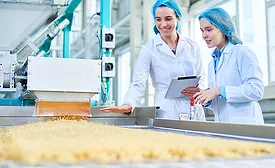
Security technology such as video surveillance, alarm systems and access control optimize manufacturing plant safety and productivity. Food manufacturers have used video surveillance to support their operations, reinforce health and safety, and comply with regulations.
Frozen food sales have rocketed in the United States over the course of the Covid-19 pandemic, with a corresponding boost for equipment makers estimated to be worth millions of dollars in extra orders. Past experience has shown that the frozen food sector will continue this spectacular growth in the future as it has done since frozen green peas and fish fingers hit supermarket shelves in the 1950s.
At this time last year, we at Refrigerated & Frozen Foods (the sister publication of Food Engineering) decided to put our annual Foodservice Distributor of the Year Award on hold. The COVID-19 pandemic precipitated unprecedented shutdowns in foodservice—restaurants, hotels, schools, caterers, stadiums, and other volume venues—leaving behind thousands of shuttered businesses. To put it lightly, there was very little to celebrate in foodservice last year.
Two well-known uses are in the making of non-stick frying/cooking pans and the foam used in fighting primarily aircraft fires (or other petroleum-based fires), hence PFAS subsurface ground contamination tends to be prevalent around military air bases where foam firefighting has been taught and practiced.
ACTEGA, manufacturer of specialty coatings, inks, adhesives and sealing compounds for the print and packaging industry, launches Signite™—a revolutionary, ACTEGA patented, premium decorating solution, designed to significantly reduce waste in label production.
Not to be confused with UHT and HTST pasteurization techniques, MST combines the effects of a temperature spike with a drop in pressure to accomplish pasteurization in milliseconds
Suppose you want a process to pasteurize milk without shearing it—while keeping the flavors in and killing any bugs along the way, extending the shelf life beyond ordinary pasteurization. This new technology, Millisecond Technology (MST), offers dairy producers long-life products with the same nutritional values that consumers want.