Alternative Protein
Alternative Protein in 2026: Key Trends and Industry Updates
The alternative protein sector has had a difficult year, but there have been bright spots amid declining investment and technological challenges.
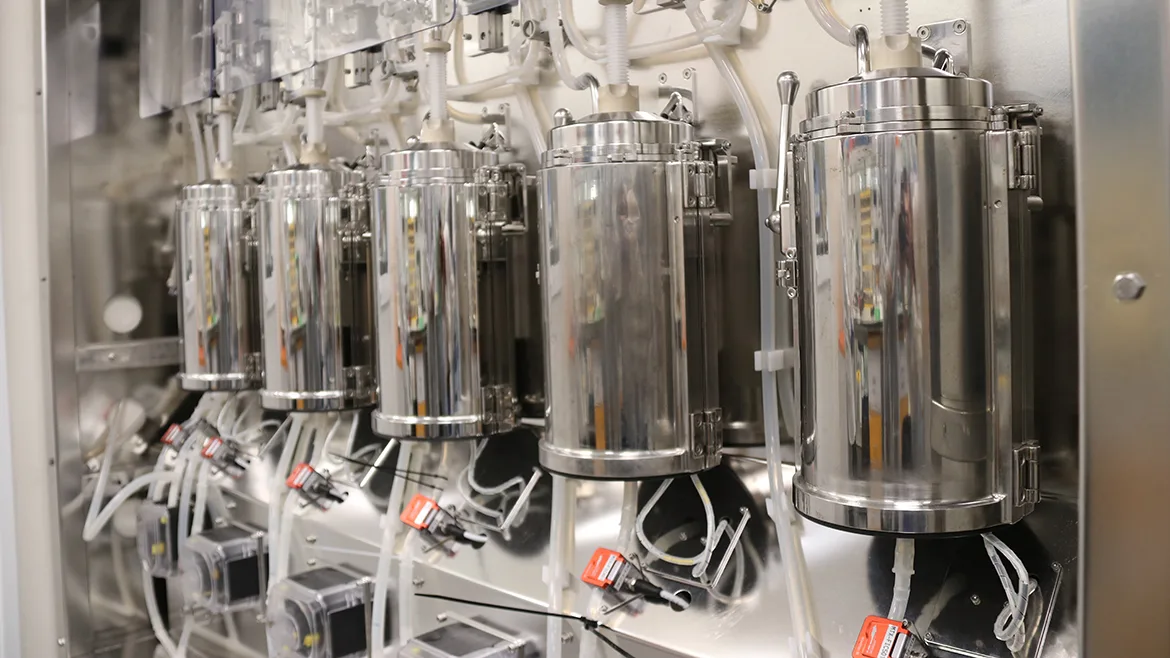
Ever After Foods acquired Fishway, adding aquatic cell lines, animal-component-free media and an experienced scientific team to EAF’s industrial protein manufacturing platform.
Need to Know
- Plant-based food sales have dropped slightly, and investment in cultivated meat and precision fermentation has declined.
- Ever After Foods acquired Fishway and partnered with Roslin Technologies to test protein and dry biomass creation.
- The plant-based beverage market is projected to grow from $2.62 billion in 2021 to nearly $8 billion by 2030.
While the alternative protein sector continues to face significant headwinds — including evolving consumer tastes, declining investment and difficulty in scaling production — the sector has experienced some positive developments in 2026.
Citing a projection from Euromonitor, the Good Food Institute (GFI) noted in its State of the Industry reports that global retail sales of plant-based meat, seafood, milk, yogurt, ice cream and cheese reached an estimated $28.9 billion in 2025, up 3% from 2024. Market research firm SPINS valued the U.S. plant-based food market at $7.9 billion, which GFI says is double from 2017 but down about 2% from 2024.
Meanwhile, the cultivated meat sector raised $73.9 million in 2025, down from $144 million in 2024. GFI notes investors are "showing increased discretion, prioritizing companies who demonstrate progress on fundamentals like cost, taste, and scale." Precision fermentation companies raised $352 million last year, down 43.5% from $632 million in 2024.
With this dynamic environment, FOOD ENGINEERING looks at the latest industry updates and investments, as well as recent alternative protein product introductions.
Industry Updates
Rebellyous Foods, maker of plant-based chicken, marked the end last year with the full commercial launch of its proprietary Mock 3 Production System. The system converts conventional batch production of plant-based meat substrates into fully continuous and automated production.
The Mock 3 is now capable of reaching over 5,000 lbs. per hour, comparable to high-volume conventional processed chicken production.
"It was a momentous final week of 2025 to see that plant-based meat can be made fully continuously, automated in high volumes and with considerably reduced labor compared to conventional methods — commercially," says Christie Lagally Bradburn, founder and CEO of Rebellyous Foods.
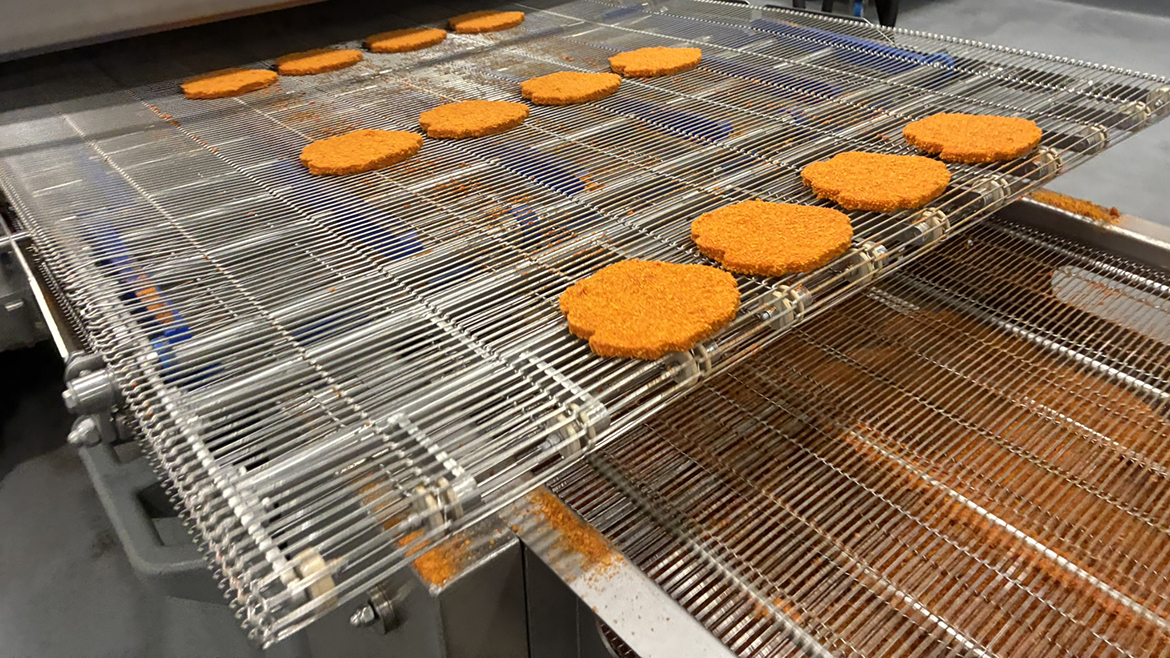
At the end of 2025, Rebellyous Foods announced the full commercial launch of its Mock 3 Production System, which allows for fully continuous and automated production. Image courtesy of Rebellyous Foods
Meanwhile, Omeat rebranded as Evergreen Select. Last year, the company raised $6 million with the goal of integrating its cultivated beef platform into existing workflows through blended products that help partners manage volatility, stabilize pricing and forecast with confidence.
"Evergreen will supply fresh, 100% beef to meat producers and partner with them to reach consumers," says Jim Miller, president and CEO of Evergreen. "We’re focused on strengthening how it’s supplied. By delivering predictable quality and pricing of real beef at scale, we help our partners build more resilient supply chains and keep beef affordable for consumers."
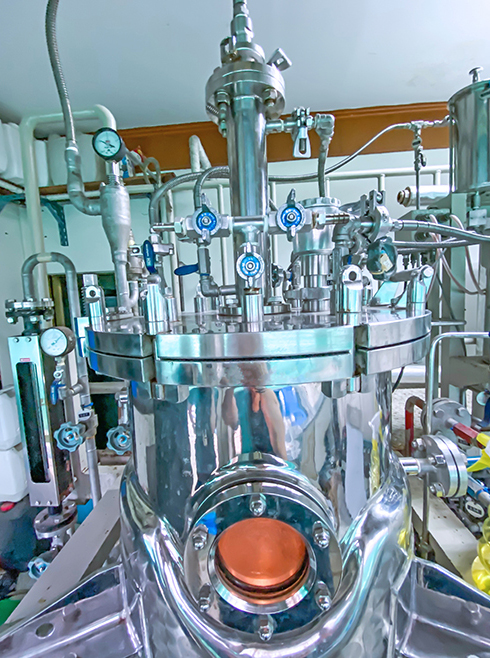
Image credit: Kallayanee Naloka / iStock / Getty Images Plus
In August, Ever After Foods (EAF) acquired Fishway, adding a portfolio of aquatic cell lines, expertise in animal-component-free media and an experienced scientific team to EAF’s industrial protein manufacturing platform.
EAF operates a species-agnostic manufacturing platform that combines advanced bioprocess engineering, proprietary edible scaffold technology (PlantriX) and its Edible Packed-Bed (EPB) production system to enable efficient, industrial-scale manufacturing. The company also secured an additional $2 million strategic investment to support continued commercialization and platform expansion.
To demonstrate enhanced manufacturing economics, EAF also recently partnered with Roslin Technologies to test Roslin’s porcine cells in the Edible Packed-Bed (EPB) production system. The study revealed cells cultivated within the EAF tissue-forming environment produced up to four times more protein and dry biomass per cell than the same cells grown in conventional suspension-based cultivation.
"The industry has become very good at growing cells," says EAF CEO Eyal Rosenthal. "The next challenge is turning those cells into meat efficiently and at scale. What is particularly important in these results is that we didn't simply achieve higher cell density. The cells produced significantly more protein and biomass on a per-cell basis. Together with Roslin, we have demonstrated how advanced cell biology and a tissue-focused production environment can work together to materially improve manufacturing productivity. We believe this represents an important step toward making cultivated meat production more commercially viable."
While investment and progress toward scalability continue, some producers have faced challenges. Believer Meats, which announced plans in 2024 to build a cultivated meat production facility in North Carolina, fell into insolvency and ceased operations in 2025.
Additionally, Canada-based Maple Leaf Foods said it would consolidate its U.S. plant protein production into a single Plant Protein Centre of Excellence at its Indianapolis, Indiana facility and wind down production at its plants in Seattle, Washington and Turners Falls, Massachusetts.
The transition is expected to occur in phases over approximately 12 to 18 months, with targeted completion in the fourth quarter of 2027.
"Over the past several years, we have taken significant action to improve the performance of our plant protein business, and we have made meaningful progress," says Curtis Frank, president and CEO of Maple Leaf Foods. "But the category has changed significantly, and declining volumes have left our manufacturing network substantially underutilized. Maintaining three facilities at these utilization levels creates structural costs that are not sustainable over the long term. Consolidating production in Indianapolis will significantly improve the economics of our manufacturing network and is an important step toward creating a structurally stronger and sustainably profitable plant protein business."
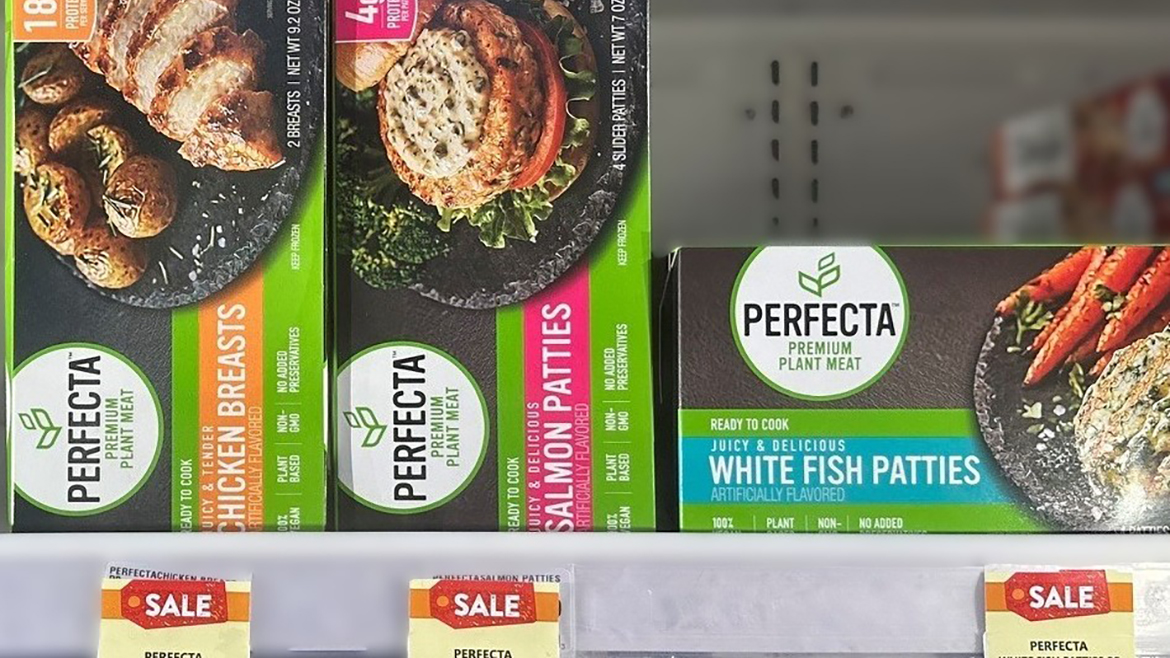
Image courtesy of Steakholder Foods
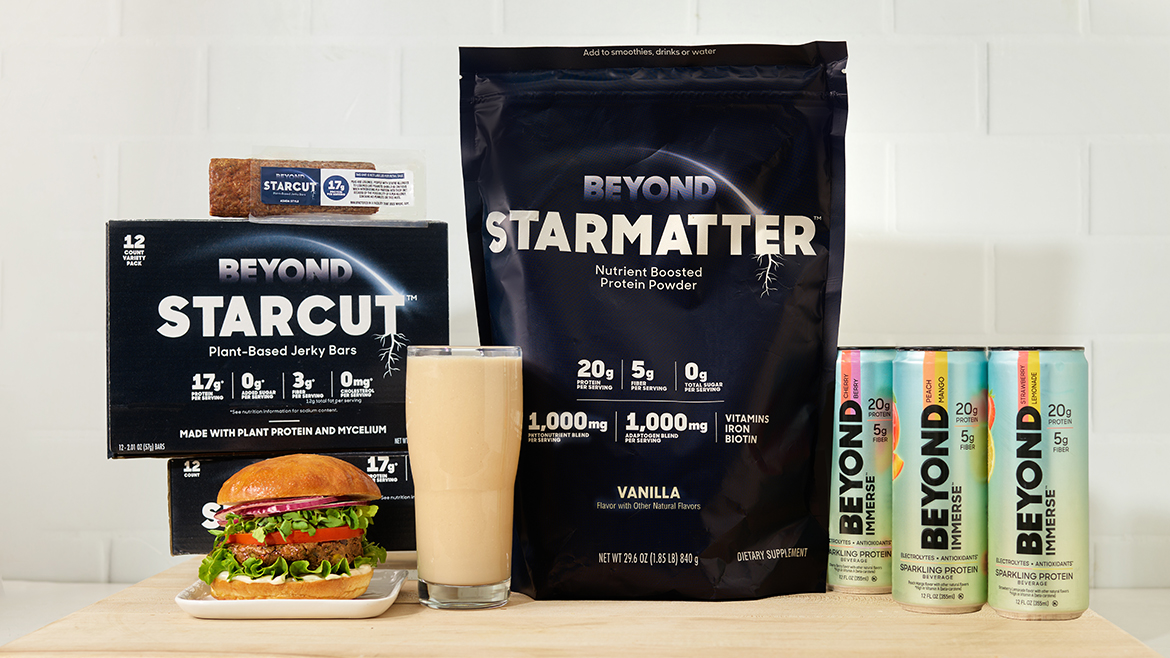
Image courtesy of Beyond Meat
Product Innovations
When it comes to new product introductions, the plant-based beverage category continues to shine. In fact, Grand View Research reports U.S. plant-based beverage sales are expected to grow from $2.62 billion in 2021 to nearly $8 billion by 2030.
Earlier this year, Danone U.S.’s Silk brand launched Silk Protein, a plant-based beverage with 13 grams of complete plant protein per serving. Available in Original and Chocolate varieties, the product 50% less sugar than regular dairy milk and one-third less sugar than value-added conventional milk.
"Protein is here to stay, yet convenient, great-tasting plant-based choices have been limited – until now," says Kallie Goodwin, senior vice president of plant-based beverages, Danone U.S. "Our new Silk Protein not only delivers the protein consumers crave but also offers added benefits like fiber, calcium and less sugar to support balanced nutrition."
Ripple Foods followed with Ripple Organic Plant-Based Milk, offering 5 grams of plant-based protein per serving. Available in Original and Vanilla, Ripple Organic is made with five ingredients or fewer, contains no gums or oils, and is suitable for everyday use, including cereal, smoothies and drinking by the glass.
Meanwhile, Planet Oat introduced Humble Edition Oatmilk, which features five ingredients and is inspired by homemade plant-based milk. Made with oats, water, banana puree, salt and baking soda, the product aims to offer a smooth and creamy texture. It features 4 grams of sugar per 8-oz. serving.

Image courtesy of Danone U.S.
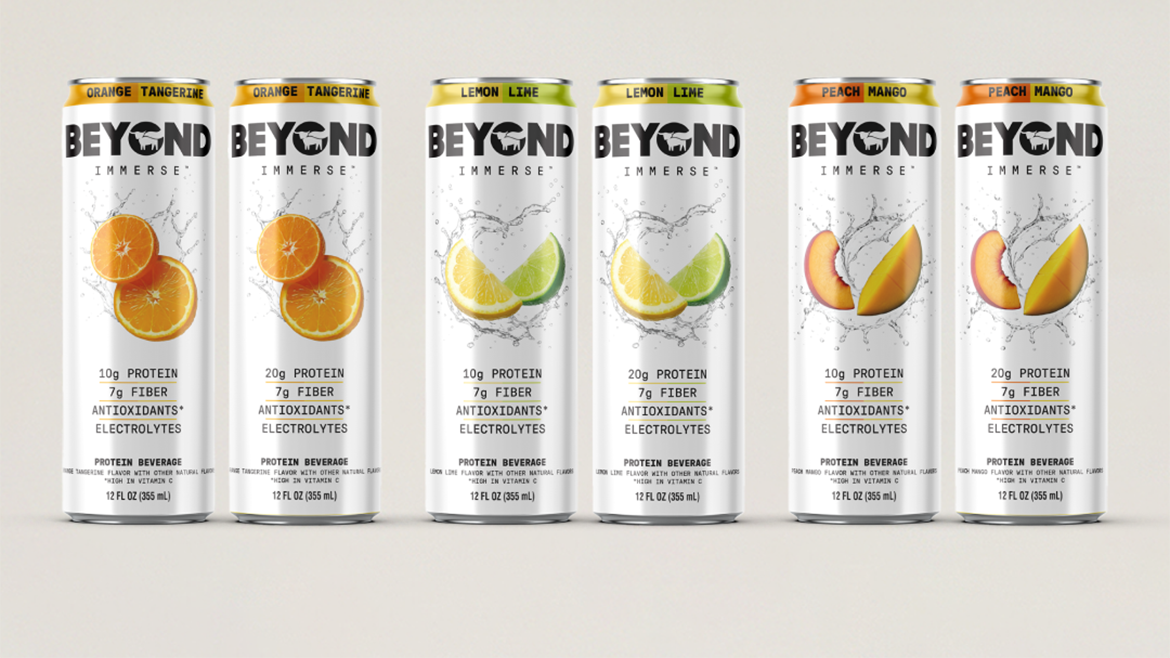
Image courtesy of Beyond Meat
Beyond Meat, a longtime player in the plant-based food space, also tapped into the beverage category with the launch of Beyond Immerse protein drinks. Available in Peach Mango, Lemon Lime and Orange Tangerine flavors, the beverages feature protein from peas and fiber from tapioca. The beverages are also available with either 10 grams or 20 grams of protein per 12-oz. can.
"With Beyond Immerse, we are bringing our pioneering expertise in unlocking the power of plants to a functional beverage line," says Ethan Brown, founder and CEO of Beyond Meat. "Our intent is simple: immerse the consumer in the remarkable nutrition of plants — from protein to fiber, with the addition of antioxidants and electrolytes — all in a single refreshing and satisfying drink. Beyond Immerse has been specially and carefully designed to provide nutrients that are critical to muscle health, gut health and immune function, so that whatever the goal is, consumers can Go Beyond."
That’s not the only departure Beyond Meat made from its core product portfolio. In September, the company introduced Phytosphere, a line of powders, bars, beverages and center-of-plate offerings designed to help consumers to stack nutrients — from plant protein and fiber to polyphenols and phytosterols.
Specifically, the portfolio includes:
- Beyond Starmatter: A protein powder that delivers plant protein, fiber, probiotics, extracts with polyphenols, plant sterols, biotin, adaptogens, vitamins, minerals and more. Beyond Starmatter will be available in Vanilla, Salted Caramel, Strawberry Banana, Golden Latte and Plain.
- Beyond Starcut: A savory plant-based jerky bar made with plant protein and mycelium, delivering 17 grams of protein and 3 grams of fiber with 0 grams added sugar, 0 mg of cholesterol, no added antibiotics or hormones and no added nitrates or nitrites. Available in Asada Style, Spicy Southwest BBQ Style and Classic Dill Flavored.
- Beyond Veggie: A burger made with more than 10 fruits and vegetables, legumes, seeds, plant protein, extracts with polyphenols and plant sterols. Each serving delivers 12 grams of protein and 6 grams of fiber, with 0 mg of cholesterol. Available in Chipotle Black Bean and Spiced Chickpea, Beyond Veggie is a good source of protein, iron, potassium and magnesium.
As the cultivated meat sector continues to face challenges around commercialization, Israel-based Steakholder Foods, known for using 3D-printing technology to produce whole cuts of plant-based meat, announced plans in May to launch plant-based products in the U.S.
The company’s Perfecta line, developed with a proprietary production process, features whole-cut plant-based formats replicating steak and chicken breast-style products and extruded formats such as salmon, white fish and hamburger patties. Steakholder Foods launched the Perfecta line in September with support from KeHE Distributors.
"Our launch in the Northeastern United States represents an exciting step forward as Perfecta begins reaching consumers through retail shelves for the first time," says Steakholder Foods CEO Arik Kaufman. "We believe the plant-based category is ready for a new generation of products that deliver on taste and eating experience without compromise. We are on track with our launch, and the Northeast is just the beginning of our commercial journey. We intend to expand both our retail footprint and our distribution network as consumer demand grows."
Looking for a reprint of this article?
From high-res PDFs to custom plaques, order your copy today!