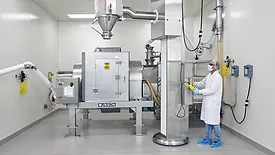
While the mixing and blending of liquid ingredients into a liquid product is an exact, controlled process, combining dry ingredients has unique challenges that have been difficult to control with automation. Finally, sensors and automation are here to help.
The cultivated meat sector faces many challenges, especially in scaling production. AI — and in particular hybrid model digital twins — can help overcome critical hurdles to industry viability.
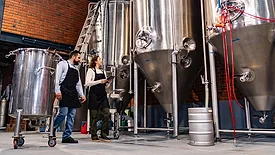
Over the years, seeking the perfect batch may have seemed like the quest for the Holy Grail, but today, let AI/ML-based batch serve as your experienced guide.
You don’t have to go it alone when searching for and maintaining the perfect batch. Through machine learning and AI-based batch control, the arduous search becomes easier to realize.
Many food manufacturers may not know where to begin implementing AI, and new research from IFS shows they’re not alone. However, to realize gains and stay competitive, getting started is key.
Combining advanced sensing technology, auto-learning capabilities and an intuitive touchscreen interface, the X8 aims to deliver accurate and reliable detection of ferrous, nonferrous and stainless-steel contaminants.
For its 10th annual State of Smart Manufacturing Report, Rockwell Automation surveyed 1,560 manufacturing leaders about the internal and external challenges they face and how they’re using technology to address them.
The TOMRA 4C is the first TOMRA machine to allow packers and processors to run multiple forms of artificial intelligence — including LUCAi Deep Learning and traditional machine learning — in tandem.
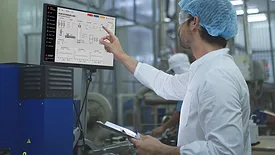
From machine vision and predictive maintenance to digital twin simulations and connected worker platforms, cutting-edge automated systems are redefining what’s possible in food manufacturing.
With manufacturing barely expanding and costs tightening, companies are looking to squeeze every bit of efficiency from their operations. AI-driven optimization of OEE metrics is becoming an essential lever for doing exactly that.