Redesigns to reduce a package’s footprint and the production of thinner packaging are on the rise, but will legacy machinery be ready to handle the emerging materials?
Food safety underpins every aspect of food manufacturing, yet new CRB research shows cost and competing priorities continue to hinder improvements. This month's From the Editor explores why investing in hygienic design and facility planning remains essential.
As product portfolios expand and production requirements become increasingly complex, manufacturers are under growing pressure to maintain efficiency with systems originally designed for predictable, repetitive production.
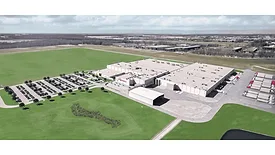
EIC Alyse Thompson-Richards highlights recent food and beverage industry developments, including Ferrara’s South Carolina plant, Ferrero’s line installation, Conagra Brands’ expansion in Arkansas, Walmart’s new milk processing facility, Kraft Heinz’s investment in Canada, and Swaggerty Farms’ expansion.
Effective environmental monitoring programs are defined not by how much data they collect, but by how quickly they trace data forward and backward to isolate the source and analyze the impact.
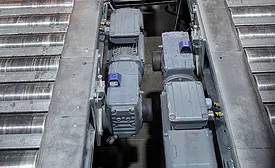
With unplanned downtime costing up to hundreds of thousands of dollars per hour, food manufacturers are rethinking how they monitor and maintain the systems that keep production moving. Conveyor systems offer a scalable and cost-effective starting point for predictive maintenance.
You know the origins of all your ingredients and everything that happened during the processing, cooling and freezing of your product, but what can you know about your product once it leaves your premises? This is the job of the track part of track-and-trace.
Women are increasingly pursuing careers in the STEM fields, and to celebrate this growth, the UK-based Women’s Engineering Society is marking the 13th International Women in Engineering Day on June 23.
Dharma Prime and Halak Mehta are inspiring examples of women thriving in STEM careers, particularly in engineering and food science. As they share their experiences and insights, they highlight the importance of diversity and support in these traditionally male-dominated fields.
Food and beverage plants require predictive, remote and machine-embedded tools on packaging machinery to ensure uptime, but operator shadowing and hands-on repetition are equally important for operational efficiency.
Food and beverage management is sold on data standardization in plants to support AI-based strategies. This early wave of data standardization projects and solutions is delivering increased context on traditional metrics, such as OEE.
In an evolving manufacturing landscape, leaders are leveraging AI and advanced analytics to enhance efficiency and decision-making. Contextual data and real-time insights are driving innovation, allowing companies like Ruiz Foods and Kraft Heinz to unlock significant value and optimize operations.